
Last updated November 21, 2026
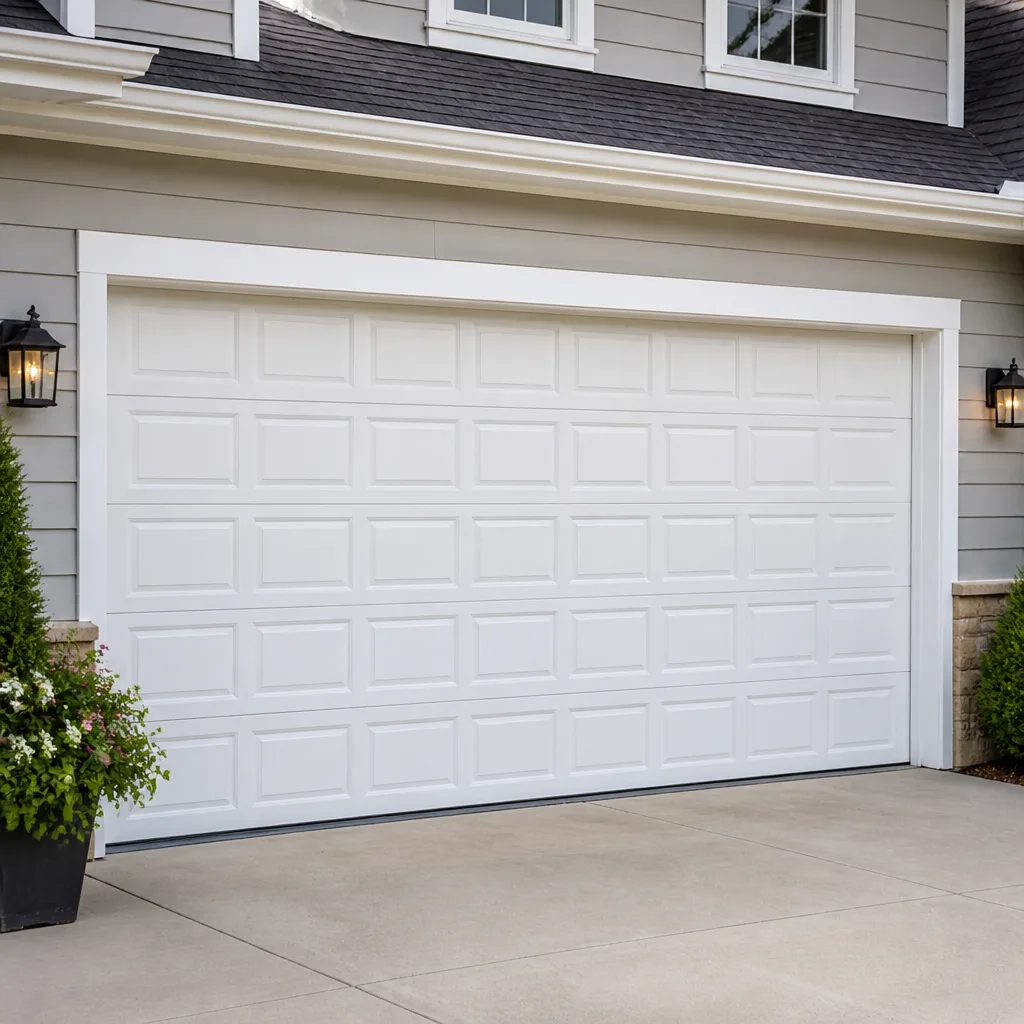 Raised-panel steel
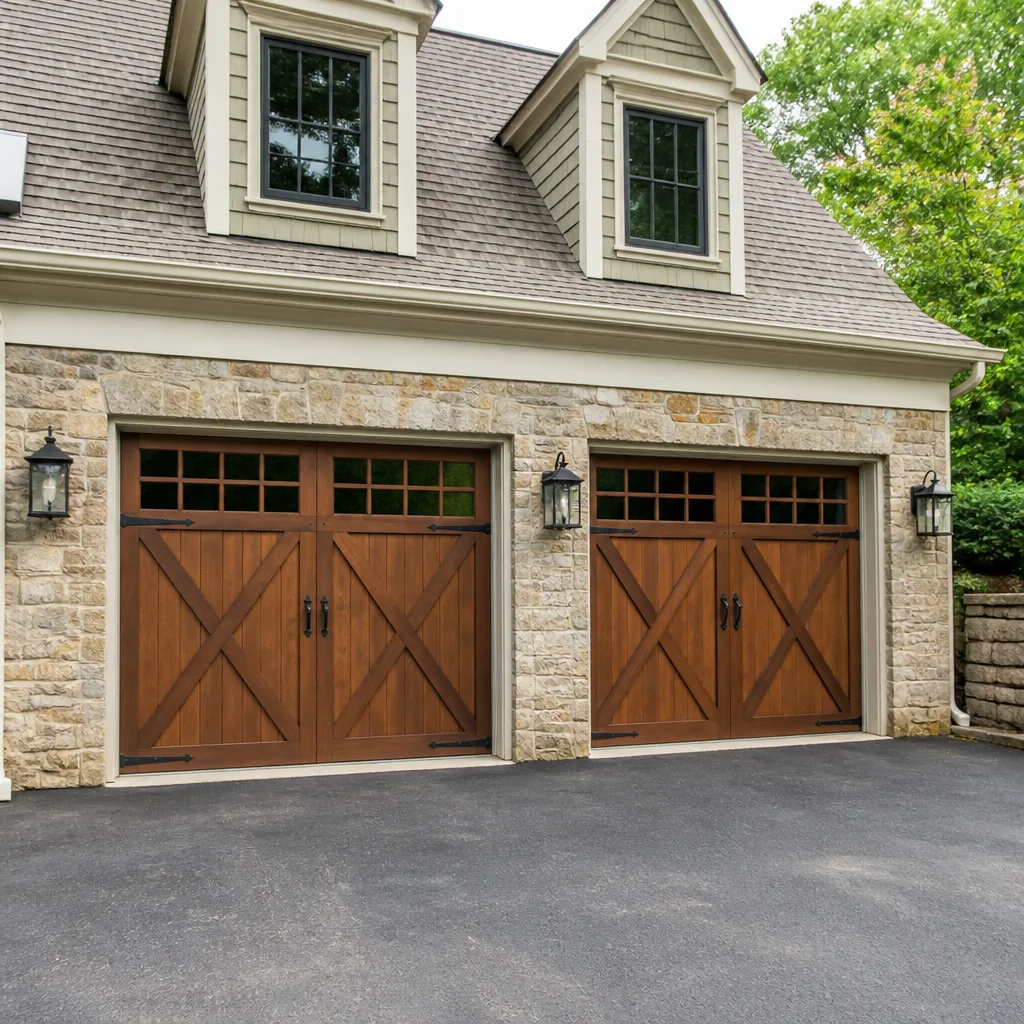 Carriage house
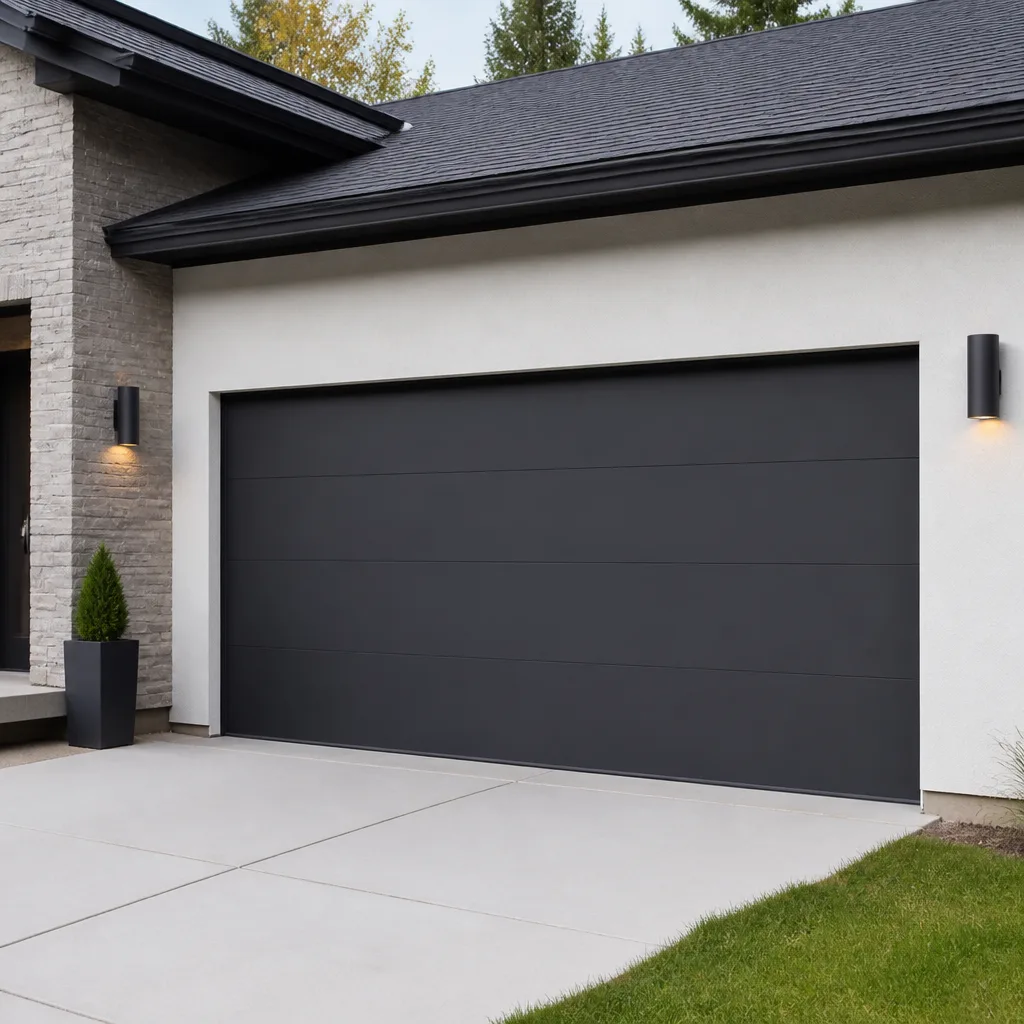 Modern flush
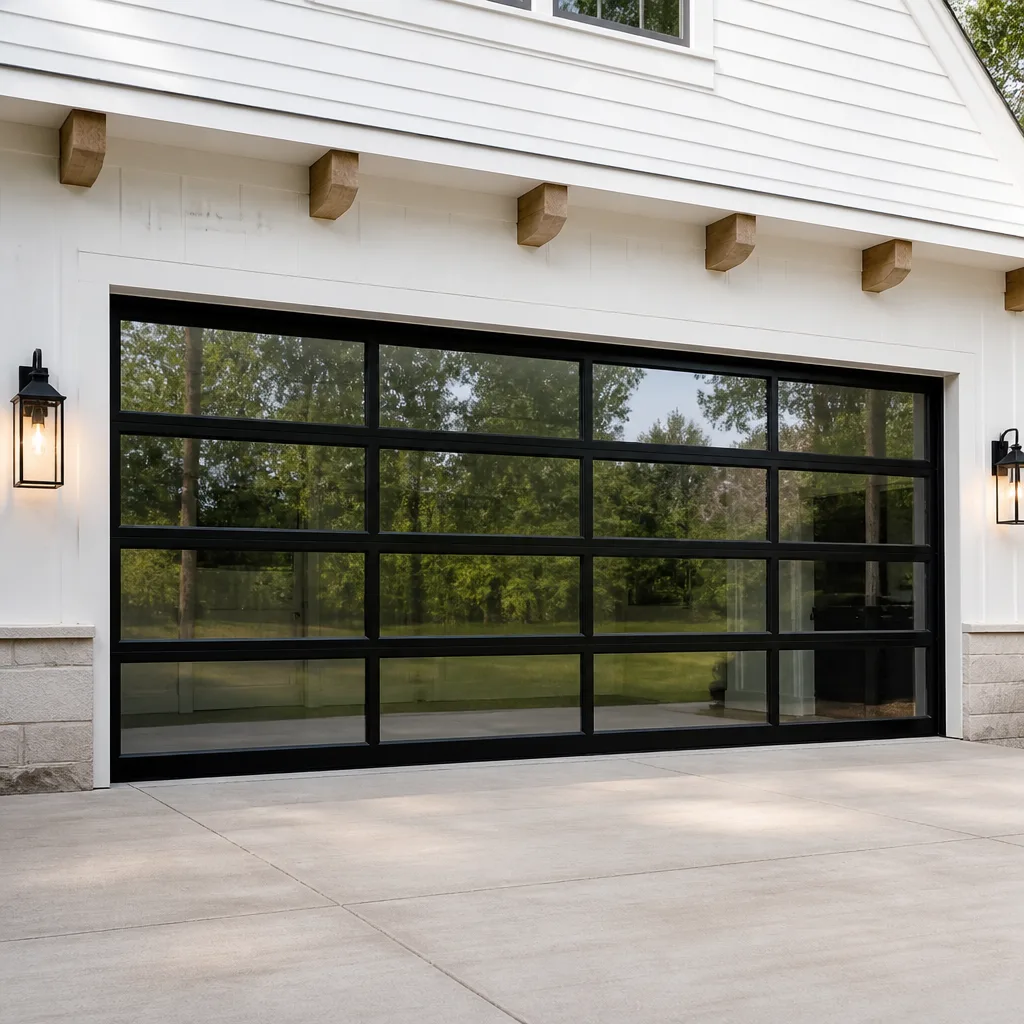 Full-view glass
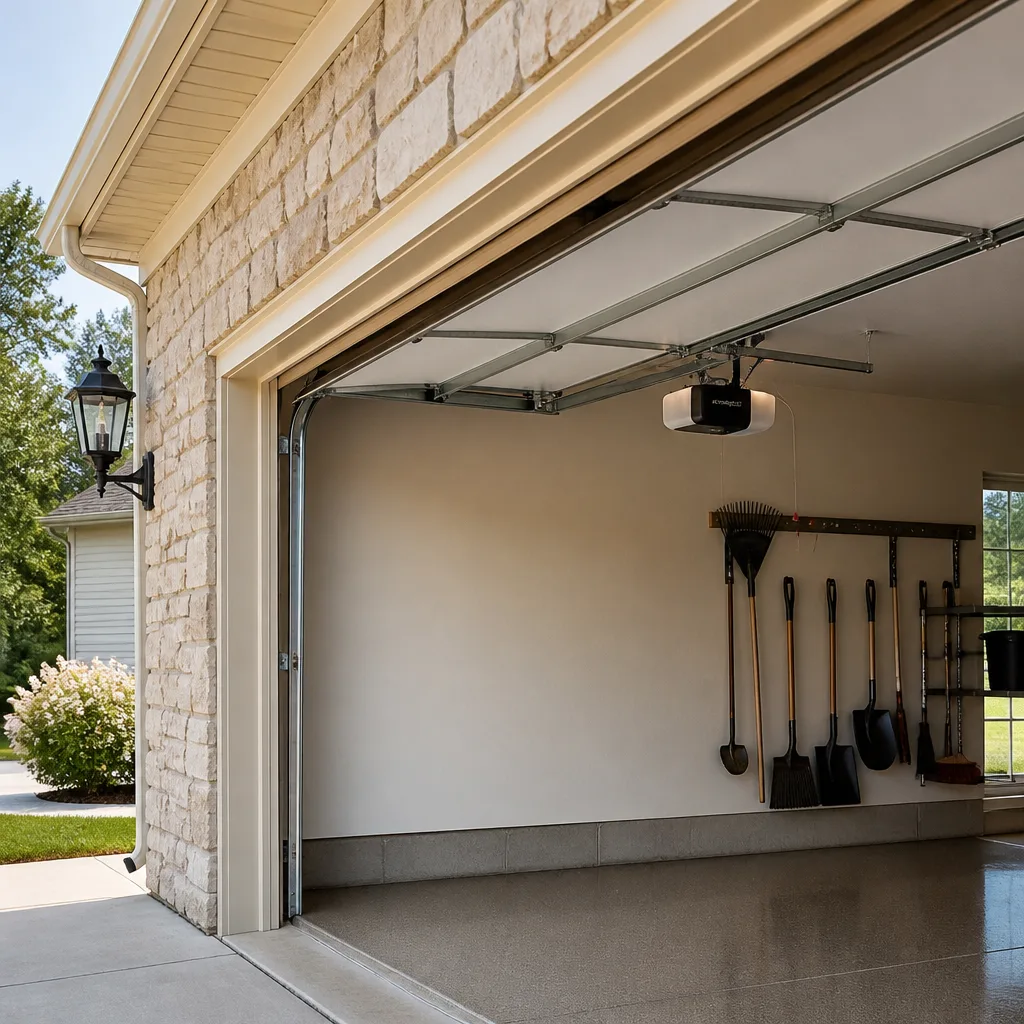 LiftMaster openers
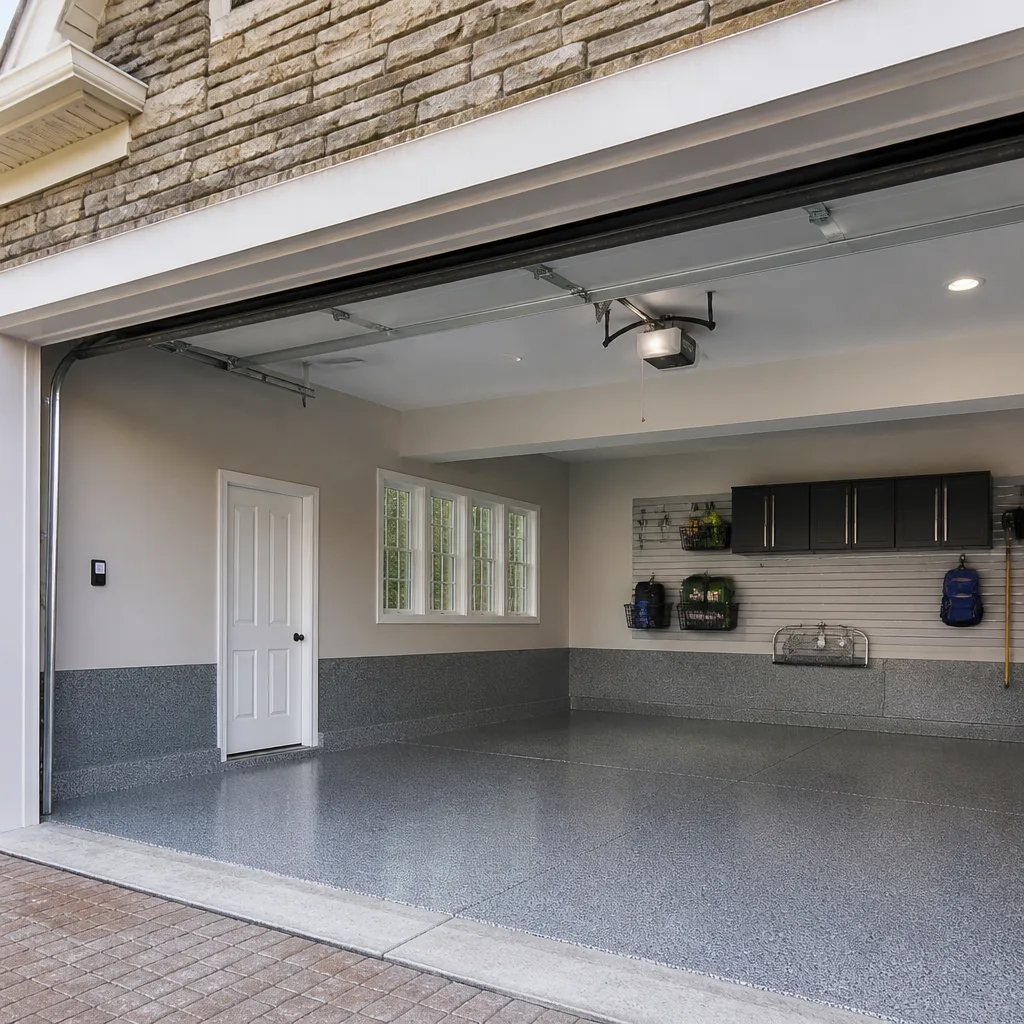 Chamberlain openers
Full 25-point door and opener safety check with every visit - springs, cables, rollers, tracks, and your LiftMaster or Chamberlain opener included
You get a price before we start. It does not change when the pro arrives.
Get your free estimateSeasonal Garage Door Care for Memorial: Year-Round Homeowner’s Guide
Most garage door maintenance advice you’ll find online was written for places with four hard seasons and a long, freezing winter. Memorial doesn’t have that. Our year splits into two threat windows and two maintenance windows instead: a storm season that runs from June into November, a sustained summer heat load that stresses openers and seals for months on end, and two calmer stretches where the real preventive work gets done. That changes what you check and when. You don’t need a winter garage door guide here. You need a pre-storm guide and a post-summer guide. The rest of the year is when you set the door up to survive both. This guide walks through all four windows, the hardware and opener checks that actually matter in Memorial, and the mistakes we most often see.
Quick Answer
Seasonal garage door care in Memorial comes down to two anchors: a pre-hurricane-season inspection in late spring that covers hardware tension, bottom seal integrity, and a manual release drill, and a post-summer assessment in fall that checks heat-stressed opener behavior, Wi-Fi reliability, and weatherstripping wear. January, when ambient temperatures are stable and metal behavior is most predictable, is the best window for a spring tension check. Everything else is routine observation.
Styles & brands we work with
- Raised-panel steel
- Carriage house
- Modern flush
- Full-view glass
- LiftMaster openers
- Chamberlain openers
Table of Contents
- Why the Memorial Maintenance Calendar Looks Different
- The Pre-Storm Checklist: Spring Through Early June
- Heat Season: What Summer Does to Your Opener
- The Post-Storm Inspection Protocol
- The January Window: Spring Tension Checks
- Humidity, Weatherstripping, and the Wear You Can’t See
- The Fall Reset: Closing the Year Right
- Common Mistakes to Avoid
- When to Call a Professional
Why the Memorial Maintenance Calendar Looks Different
Garage door care in most of the country is organized around winter: clear the snow, watch for frozen hinges, watch for ice under the bottom seal. None of that applies here. What applies is heat load running for five or six straight months, and a storm season that produces wind-driven rain and the kind of gusting that tests every fastener on the door.
That’s a different set of failure modes. Heat softens and dries out rubber and vinyl seals, and it pushes opener circuit boards into their thermal protection behavior. Wind-driven rain finds gaps in the bottom seal and at the sides and works its way into the door cavity and the hinge plates. Sustained humidity does slow, patient damage to the metal fasteners and the weatherstripping. None of it announces itself. All of it accumulates.
The seasonal logic that works in Memorial is:
- Late spring (May to early June): get the door ready before storm season peaks. This is the highest-value maintenance window of the year.
- Summer (June through September): monitor the opener. Heat is the stressor, not the door.
- Fall (October and November): post-storm and post-summer assessment. Catch what the season did.
- January: the narrow, quiet window for a proper spring and hardware tension check, when metal behavior is most consistent.
Homes across Memorial, from the older established streets to the newer builds on the edges of the area, sit in the same climate envelope. The timing is the same. What differs from house to house is the door’s age and the brand. A Wayne Dalton or Raynor torsion system in a 15-year-old home carries a different risk profile than a newer door with a LiftMaster opener, but the calendar is the calendar. We’ve seen both types go through the same cycles here.
The Pre-Storm Checklist: Spring Through Early June
The pre-storm inspection is the single most valuable piece of seasonal work in Memorial. It’s also the one most homeowners skip. Do it in May or the first week of June, before the storm season is fully active.
1. Hardware tension and fastener check
Work through the door with the power disconnected and the door in the closed position. You are looking, not disassembling. Check every hinge plate, every roller bracket, every lag bolt into the jamb and header, and the center bearing plate.
- Hinges: look for play. A hinge that wiggles at the plate is a hinge that’s loosening under wind load.
- Roller brackets: make sure they’re snug. Loose brackets are the first thing to walk out under repeated vibration.
- Lag bolts and jamb fasteners: check for backed-out or stripped fasteners, especially on older doors where the wood may have softened.
- Center bearing plate and spring anchor: visual check only. Do not touch a torsion spring or its winding bars. That work is for a trained technician.
If you find loose fasteners, a screwdriver and a wrench will handle the hinges and brackets. If a lag bolt pulls out and the hole is stripped, that’s a sign the jamb is compromised and worth a professional look before storm season.
2. Bottom seal integrity
The bottom seal is your primary defense against wind-driven rain. It’s a rubber or vinyl astragal that runs the full width of the door and seats against the threshold. Press down on it with a thumb. It should feel pliable and spring back. If it feels hard, cracked, or compressed flat, it’s not sealing, and storm-driven rain will find the gap.
Look for:
- Visible cracking or deep compression set
- Gaps between the seal and the floor at any point along the width
- Separation at the ends where the seal meets the jamb
- Seal pulling away from the retainer groove
A bottom seal replacement is straightforward and one of the highest-value pre-storm tasks you can do in Memorial.
3. Manual release drill
Storm season means power outages. When the power goes, the opener stops and the door has to be operated by hand. The manual release (the red handle and cord) is the mechanism that disengages the carriage from the opener.
Do this drill once in the spring, before you need it:
- With the door closed and the opener disengaged, pull the manual release cord once. The door should release from the opener carriage cleanly.
- Lift the door by hand and lower it slowly. It should move smoothly with reasonable effort. If it’s hard to lift or falls on its own, the spring balance is off and should be checked.
- Re-engage the carriage by running the opener up and letting the door ride the carriage back into the engaged position.
- Confirm the door operates normally on the opener again.
Doing this drill in May means the household knows how to get the car out during a power failure in August. It also reveals balance problems early.
Heat Season: What Summer Does to Your Opener
Your garage in Memorial is an unconditioned box. In the height of summer, the interior temperature runs well above ambient, and the opener components sit in that heat for hours every day. That heat load is the single biggest seasonal stressor on the opener itself.
Thermal cutoff behavior
Most modern openers have a thermal protection feature built into the motor or circuit board. When internal temperatures get high enough, the opener will refuse to run until it cools. If your door suddenly won’t open on a hot afternoon and works fine the next morning, thermal protection is a likely explanation, not a dead opener.
That behavior is normal, but repeated thermal shutdowns are a signal. It means the heat load is high and the motor is working hard. A door that’s running out of balance, or a chain or belt that’s over-tensioned, increases heat and shortens the window before the opener cuts out. Before you replace an opener that keeps thermally tripping, check the door balance and the opener tension first.
Wi-Fi connectivity drops from heat-stressed boards
Smart and connected openers, including current LiftMaster and Chamberlain models, are the ones that show heat trouble first. The circuit board runs the Wi-Fi radio, and a board that’s been heat-cycled repeatedly can start dropping the Wi-Fi connection intermittently. The symptoms are specific:
- The door still opens from the wall control but not from the app
- The app shows the door as offline at the hottest part of the day and reconnects after dark
- Home network sees the opener, but the opener times out of the app
If your opener only loses Wi-Fi on hot afternoons, that’s a heat diagnosis. If it’s offline all the time, that’s a network diagnosis. Worth knowing the difference before you call about garage door opener repair.
What temperatures void opener warranties
Manufacturers publish operating temperature ranges for their openers, and most designs assume a garage that stays below a certain threshold. In an un-conditioned Memorial garage, that threshold is a real consideration in July and August. Installing an opener of any brand in a garage that routinely exceeds the operating range is a warranty question, not just a performance question. If you’re planning opener replacement, ask the installer to confirm the operating range against the garage’s actual summer temperature. That’s a fair question to ask anyone doing garage door installation.
The Post-Storm Inspection Protocol
After any high-wind event in Memorial, the door deserves a look before you assume everything is fine. The door can look normally closed and still have a bent track, a loosened bracket, or a panel that took an impact and shifted.
Visual walk-around (door closed)
- Stand outside and look at the full door. Check that all panels are aligned and the door sits square in the opening. A single panel sitting proud or recessed is a sign that the panel connections took a load.
- Check the track alignment. Tracks should be straight and parallel on both sides. A track that bows inward or out is visible from a few feet back. Look down the length of the track, not at it from an angle.
- Look at the jamb and header fasteners. Wind load on the door transfers to the fasteners. Check for pulled lag bolts or separated hardware.
- Check the top section and header seal. A gap at the top is a path for wind-driven rain on the next storm.
Functional test (power on)
- Run the door up and down once. Listen for scraping, grinding, or a change in sound. Any new sound after a storm event is worth diagnosing.
- Run the safety reverse test. Place a solid object (a 2×4 laid flat is standard) under the door’s path. The door should reverse. If it doesn’t, the safety reverse needs adjustment before you use the door again.
- Check the photo-eye alignment. If the door won’t close and the opener is beeping or flashing, one of the safety eyes may be out of alignment from vibration. A nudge with a finger and a both-eyes-visible check will tell you.
What a technician sees that you won’t
Track alignment, spring balance, and panel impact damage are the three things that most commonly go undetected after a storm. A bent panel can be visually subtle but changes the door’s weight distribution and loads the opener unevenly. A track that’s off by a quarter inch isn’t visible from outside but is measurable with the door in motion. Our technicians have up to 11 years of experience reading those signs on a post-storm inspection, and it’s usually the difference between an adjustment and a replacement.
The January Window: Spring Tension Checks
January in Memorial is the quietest month on the maintenance calendar. It’s also the best month to have the spring system checked. That’s not a coincidence. The door’s torsion springs and steel hardware behave most predictably when ambient temperatures are stable and moderate. Spring tension that reads slightly off in July heat can be within tolerance in January, and vice versa. If you want an accurate read on spring condition, January is the month to get it.
What a spring tension check involves
Spring tension is measured against the door’s operating weight and balance, not just the spring’s visible condition. A technician will run the door and verify the balance point, check the number of turns on the spring to the door’s spec, and confirm the door holds position at the halfway point when manually released.
A balanced door, manually released, holds at roughly the halfway point with minimal effort. If it drops on its own, the spring tension is low. If it rises on its own, tension is high. Both are unsafe and both accelerate wear on the opener and hardware.
Why we don’t recommend a do-it-yourself spring check
Torsion springs are under significant stored energy. A wound torsion spring that fails or is released incorrectly can cause serious injury. Spring work – adjustment, replacement, or repair – is a professional task. This is not a cautious-sounding warning. It’s the single most dangerous component on a residential garage door, and manufacturers consistently advise against DIY work on it. Our garage door repair service treats spring replacement as a dedicated, explicitly separate job for that reason.
What a homeowner can do in January: listen for a change in sound during operation, watch for a faster door drop or a door that starts hard, and call for a spring check if anything sounds or feels different from last year. That’s a reasonable annual habit. Do not touch the spring itself.
Humidity, Weatherstripping, and the Wear You Can’t See
Weatherstripping and seals in Memorial age on a predictable timeline driven by heat and humidity cycling. Rubber and vinyl degrade faster in sustained heat and humidity than in dry, cool climates. Understanding the degradation curve helps you replace seals before they fail visibly.
The degradation timeline
- Years 1-3: seals hold up well. Visual inspection once a year is enough. Look for a pliable feel and no cracking.
- Years 3-5: the first signs of degradation. Bottom seals start to show compression set – they stay flattened after a compression rather than springing back. The sides of the door may show minor cracking at the corners where the seal meets the jamb.
- Years 5-7: visible wear. Cracks, stiffened material, small gaps at the floor line. The bottom seal is the first to show it, the jamb seals follow. This is typically the replacement window – before the seal visibly fails.
- Years 7+: the seal is no longer sealing. Gaps at the bottom and sides allow wind-driven rain in, and the interior of the door gets wet during storm events. The opener and hardware start showing rust or corrosion.
That timeline is for seals installed and maintained correctly. A seal that’s been installed in direct summer sun exposure on a west-facing door ages faster. A north-facing door typically gets more years.
What to check each fall
Run your thumb along the bottom seal and the side seals. Pliable and springy: fine. Hard, cracked, or flat: replace before the next storm season. Also check the threshold where the bottom seal meets the floor. A visible gap under the door, or light showing through, means the seal is compressed and no longer sealing.
Weatherstripping replacement is a low-cost, high-value task. In Memorial’s humidity, a seal that’s failing on the outside will let moisture into the hardware on the inside. Replacing it on a 5-to-7 year cycle is cheaper than the rust damage it prevents.
The Fall Reset: Closing the Year Right
October and November are the counterpart to spring. The storm season is winding down, summer heat is off the opener, and the door has been through its hardest six months. This is the window to catch what accumulated and set the door up for the quiet winter stretch.
Fall checklist
- Post-storm visual pass: repeat the same walk-around from after any storm event in the previous season. Track alignment, panel condition, fastener status.
- Opener behavior audit: run the opener several times in a row and note any thermal trips, Wi-Fi drops, or new sounds. What you observed in summer needs a decision now.
- Weatherstripping assessment: the thumb test on the bottom and sides. Note any seals approaching the replacement window.
- Hardware lubrication: a light application of a garage-door-safe lubricant on the hinges, rollers, and the spring (never the track itself – track lubricant collects dust and gums up the rollers).
- Safety reverse test: the standard test with a solid object under the door.
- Manual release drill: one more run-through so the household is familiar with it before winter.
The fall reset is the last clean look at the door before January. If anything needs a technician, October and November are when to schedule it – ahead of the January tension window and well before storm season starts again.
Common Mistakes to Avoid
- Treating garage door maintenance like a winter project. Most homeowners in Memorial search for garage door care in November or December, when the actual risk windows are June and August. Move the primary inspection to late spring and you’ll catch the problems that matter.
- Ignoring a thermal trip as a sign the opener is dying. A hot-afternoon trip that resets by evening is thermal protection doing its job. Replacing the opener without checking door balance and opener tension first is expensive and doesn’t fix the cause.
- Skipping the manual release drill. When a storm-season outage hits Memorial, you need the door to work by hand. If nobody in the household has ever pulled the release cord, the first attempt in a power outage is not the time to learn the mechanism.
- Replacing the bottom seal after the first storm gets rain in. The seal that fails is already visible in May – flat, cracked, or gapped. Check it in spring, not after the water is in the door.
- Assuming a door that opens and closes “looks fine” after a high-wind event. Track alignment and panel impact are frequently invisible from the driveway. A door that functions and a door that’s undamaged are not the same diagnosis.
- Touching torsion springs. The single most dangerous miscalculation we see. Spring adjustment is not a homeowner task. When a spring is involved, or when the door starts hard or drops fast, call for a technician.
- Lubricating the track. A track needs to be clean and dry. Lubricant on the track holds dust and makes rollers bind. Lube the hinges, rollers, and spring, not the track.
- Running an opener in a garage above its rated operating temperature. If July heat routinely pushes your garage past the opener’s rated range, that’s a warranty and reliability question worth resolving before the opener fails, not after.
When to Call a Professional
A few situations in Memorial’s seasonal calendar call for a technician rather than a homeowner check. If the door has a broken or visibly stretched torsion spring, if the door drops fast or rises on its own when released, or if the opener repeatedly shuts down on hot afternoons even after you’ve checked the door balance, that’s a professional call. Post-storm, if you see any track misalignment, panel displacement, or a changed sound during operation, have it assessed before using the door regularly – the failure mode is often the door coming off track, not the door failing closed. Repeated Wi-Fi drops that track with temperature are also an opener service issue, not a network issue.
Garage Door Repair Memorial offers free estimates in Memorial – call (877) 492-2056. We work on the brand already on your home, from LiftMaster openers to Wayne Dalton and Raynor doors, and our technicians have up to 11 years of experience with the full range of residential systems. Garage doors are our only business.
See the difference
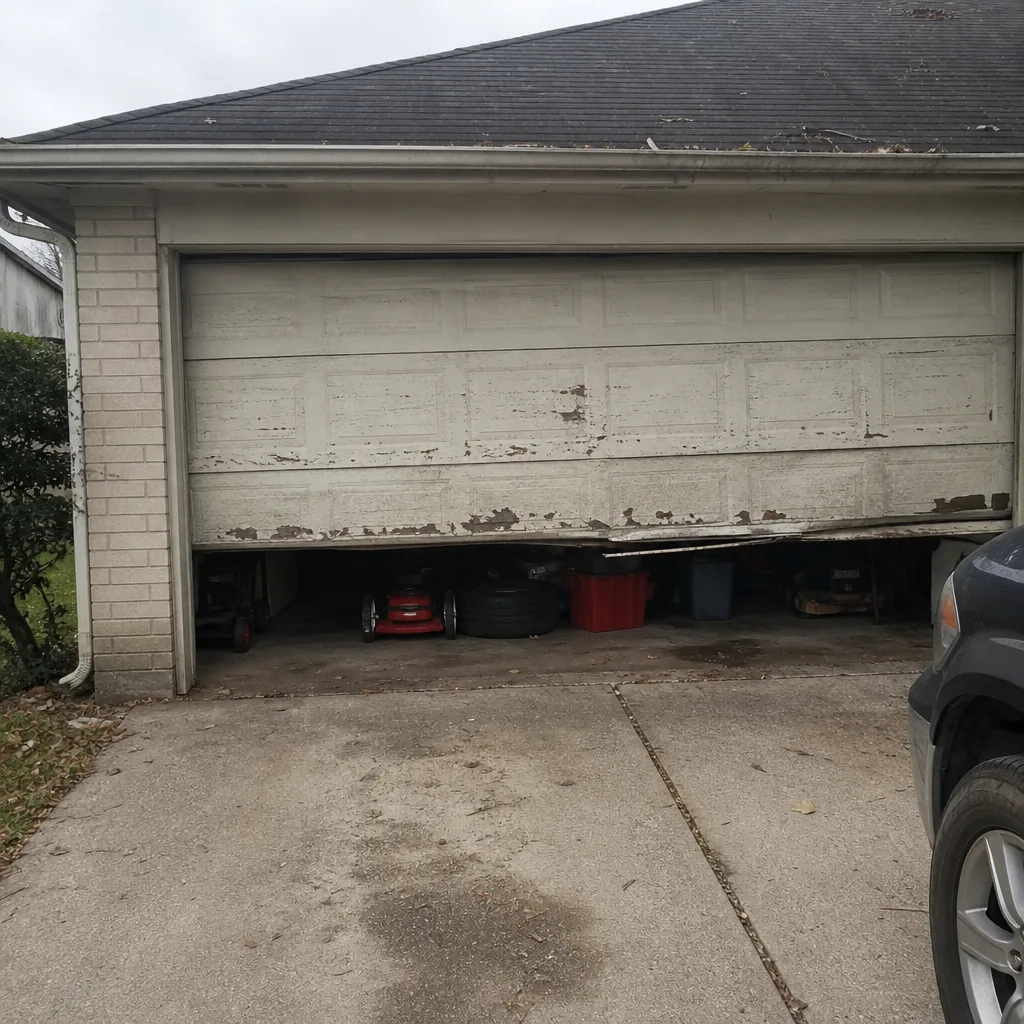 Before
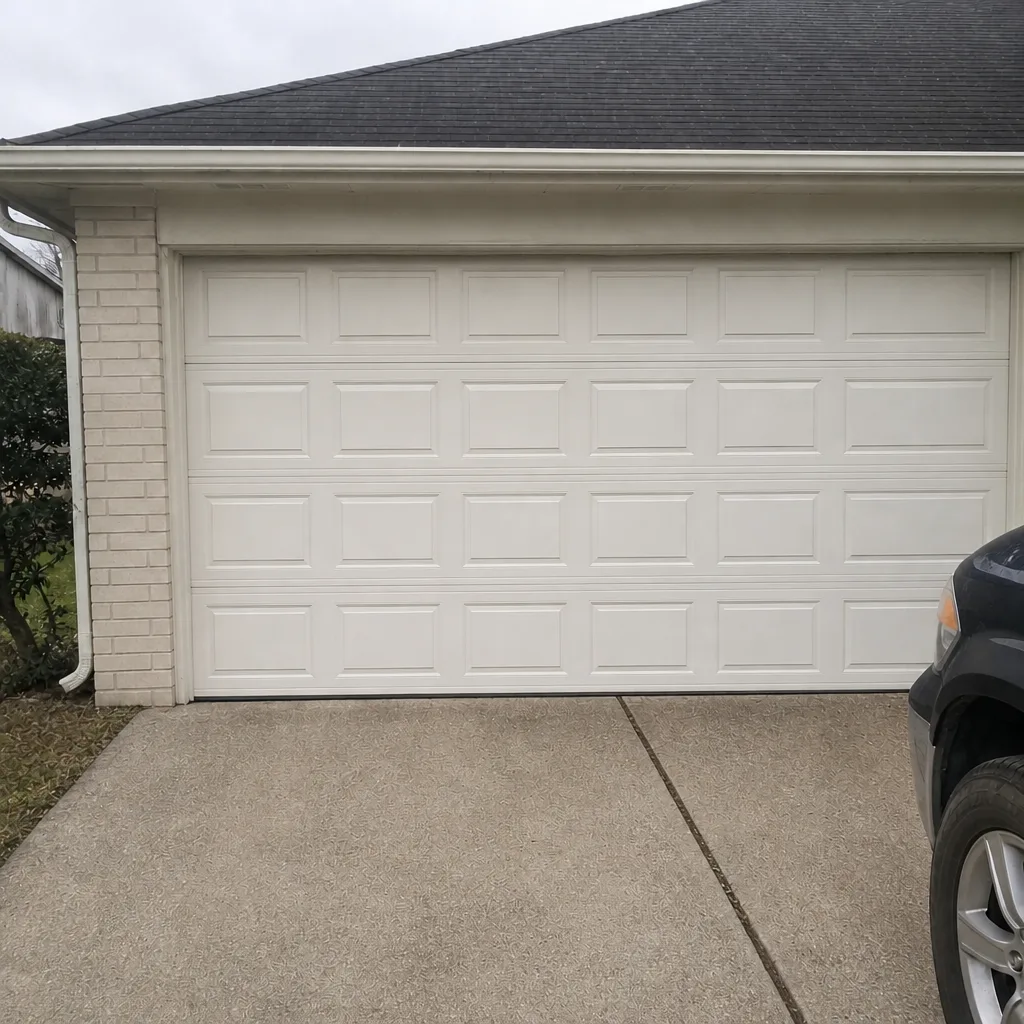 After
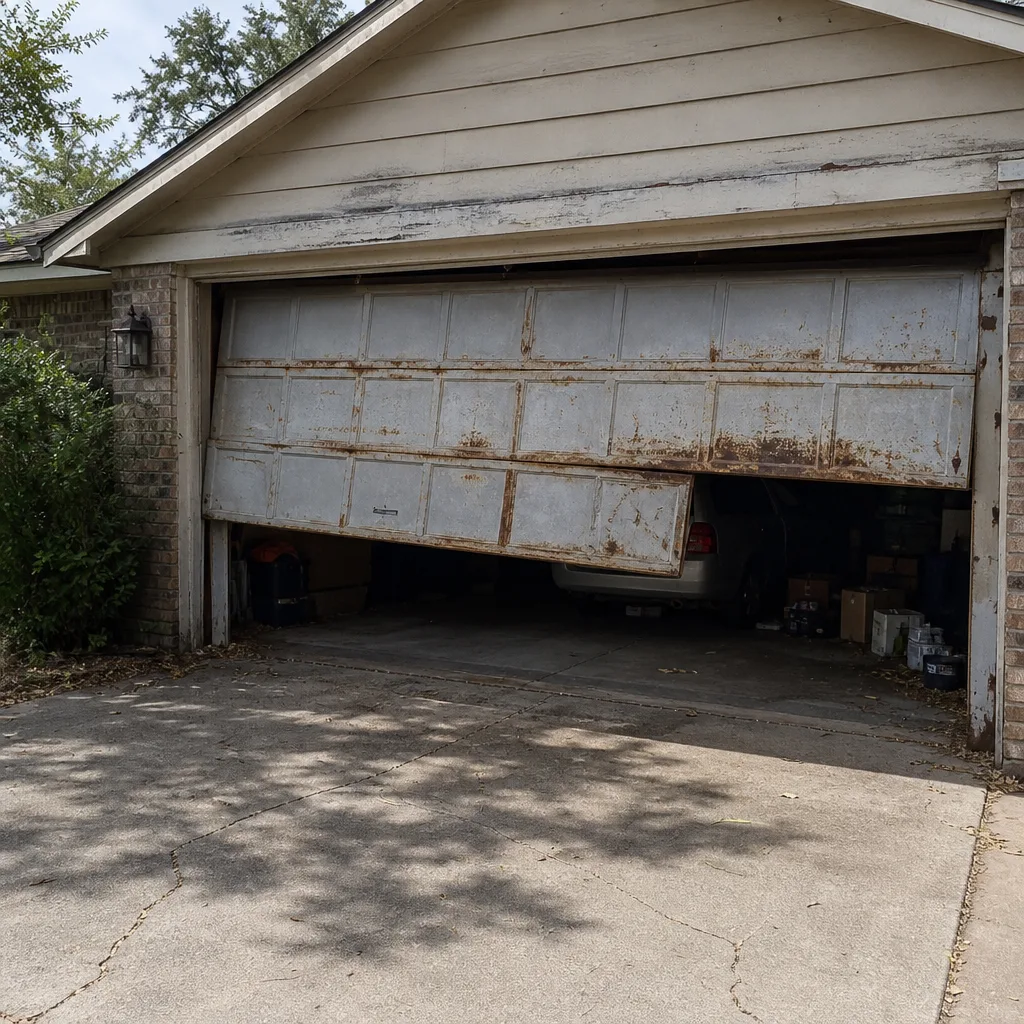 Before
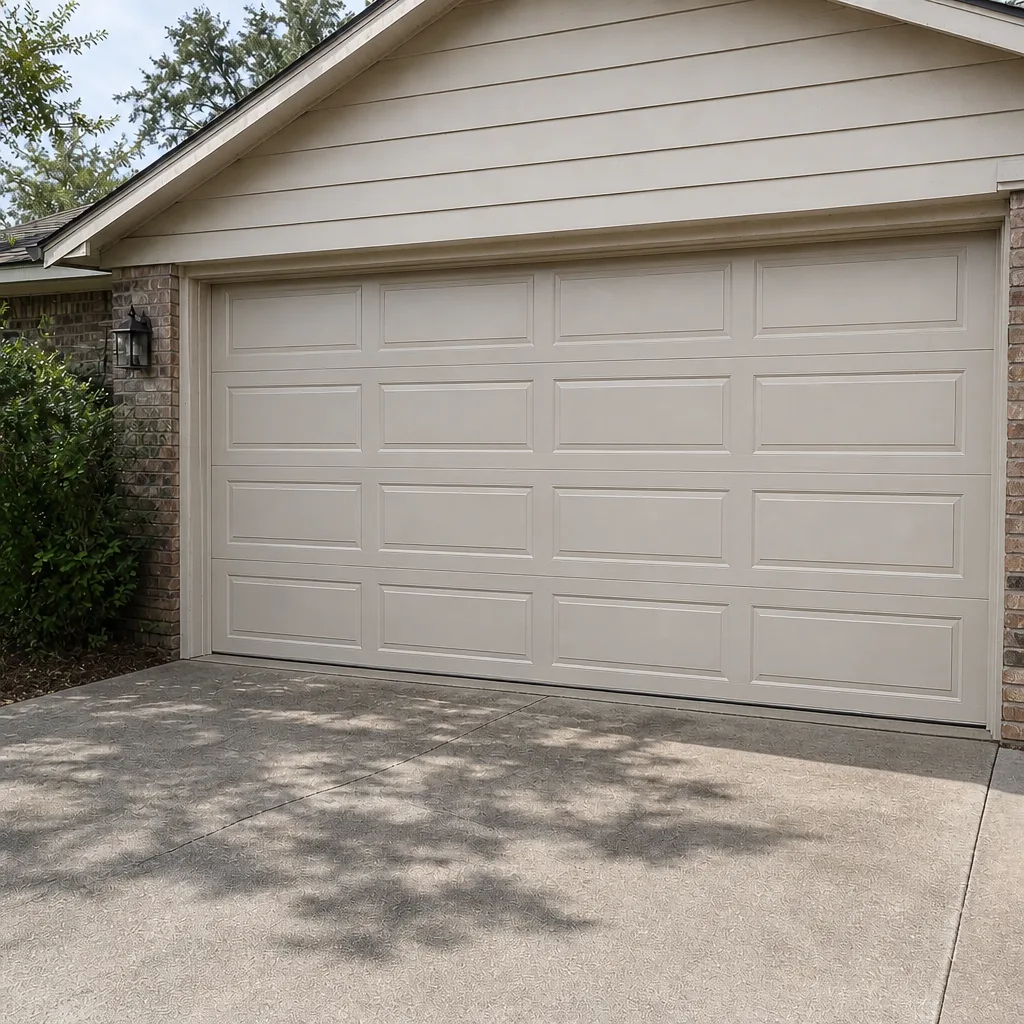 After
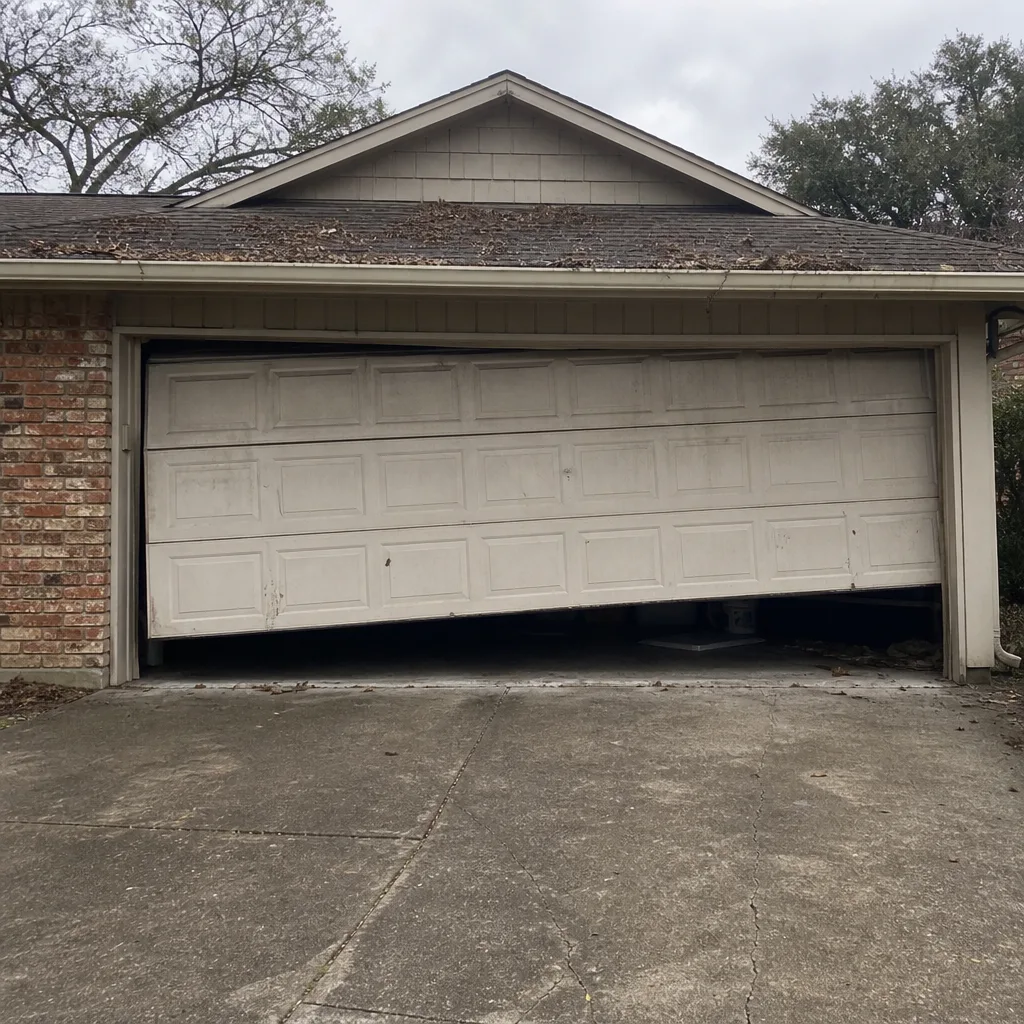 Before
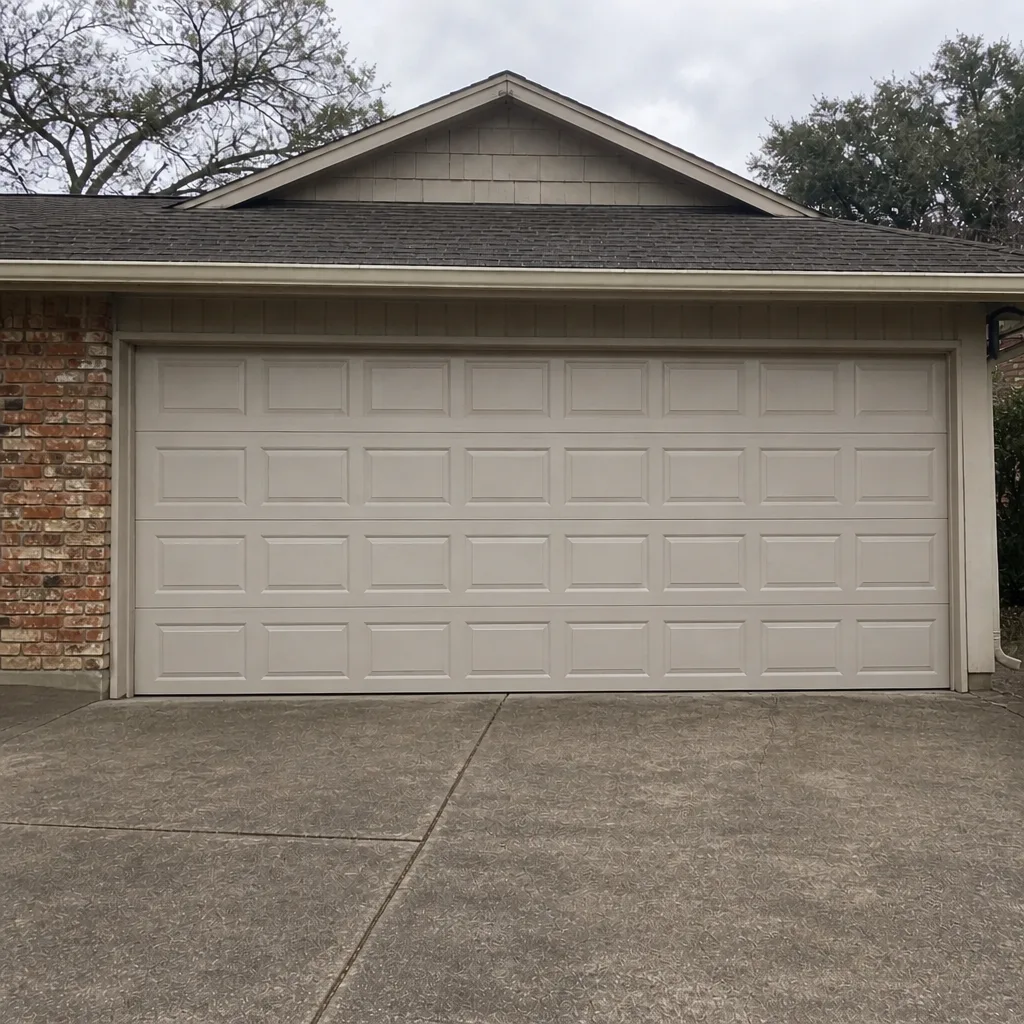 After
Frequently Asked Questions
Once in late spring before storm season, and once in fall after summer heat, is the right rhythm for Memorial. The late-spring visit is the more important of the two because it catches the hardware and seal problems that wind-driven rain exploits. The January window is a good add-on for a spring tension check, but it’s the supplementary visit, not the primary one.
Yes, in two specific ways. The thermal protection feature will cut the opener out when internal temperatures get high enough, which is normal behavior but a sign the garage is running hot. Beyond that, repeated heat cycling can stress the circuit board, especially on smart openers, causing intermittent Wi-Fi drops that track with temperature. If the door works from the wall control but not the app on hot afternoons, that’s a heat-related board symptom. Call (877) 492-2056 for a diagnosis – estimates are free.
Storm-ready means four things: hardware tension is tight (no wiggle at the hinges or roller brackets), the bottom seal is pliable and sealing fully along the width, the manual release works, and the door is balanced (holds position at roughly the halfway point when manually released). If all four check out, the door is as ready as a homeowner can make it. Anything less, and the pre-storm window is the time to fix it, not after the rain is in.
Check three things: track alignment (look down the track from a distance, not at it from an angle), panel alignment (the door should look square and all panels should sit flush), and a functional run through with a safety reverse test. If the door runs clean without new sounds and the panels are aligned, it’s likely fine. If you see track bow, panel displacement, or a new sound, have it checked before regular use. Track and panel problems that go unnoticed are the most common cause of a door coming off track.
No. A torsion spring is under significant stored energy, and improper adjustment or release can cause serious injury. Spring work – adjustment, replacement, or repair – should always be handled by a trained technician. What you can do is watch for the signs: a change in door sound, a door that starts hard, or a door that drops fast on release. Any of those is a call to a professional, not a DIY project. Call (877) 492-2056 to schedule a spring check.
On a roughly 5-to-7 year cycle for the bottom seal and most side seals, based on heat and humidity exposure. A west-facing door in direct sun will typically age faster than a shaded door. Check the seals each fall with a thumb test: pliable and springy is fine, hard, cracked, or flat means replacement is due. Replacing on schedule is far cheaper than the rust damage that comes from letting moisture into the hardware.
The Bottom Line
Memorial doesn’t need a winter garage door guide. It needs a late-spring storm prep and a fall post-summer assessment, with January as the window for a professional spring tension check. Pre-storm, focus on hardware tension, bottom seal integrity, and a manual release drill. Through summer, monitor the opener for thermal trips and heat-related Wi-Fi drops. After a storm, inspect track alignment and panel condition before assuming the door is fine. Replace weatherstripping on its 5-to-7 year cycle instead of waiting for visible failure. The two most important rules: never touch a torsion spring yourself, and call a specialist when the door’s sound, balance, or behavior changes. That’s what keeps a garage door working here for years instead of months. For Garage Door Repair Memorial, the seasonal work is what makes every other repair less likely.
Contact Us
If you need a pre-storm inspection, a post-summar assessment, or a spring tension check, we’re here to help. We work on the brand already on your home across LiftMaster, Chamberlain, Genie, Clopay, Amarr, Wayne Dalton, Craftsman, and Raynor systems, and we supply the parts to go with it. Call (877) 492-2056 for a free estimate. We answer 24/7. Fast dispatch from 7am to 7pm, Sunday through Friday.
Written by the team at Garage Door Repair Memorial.