
Last updated November 21, 2026
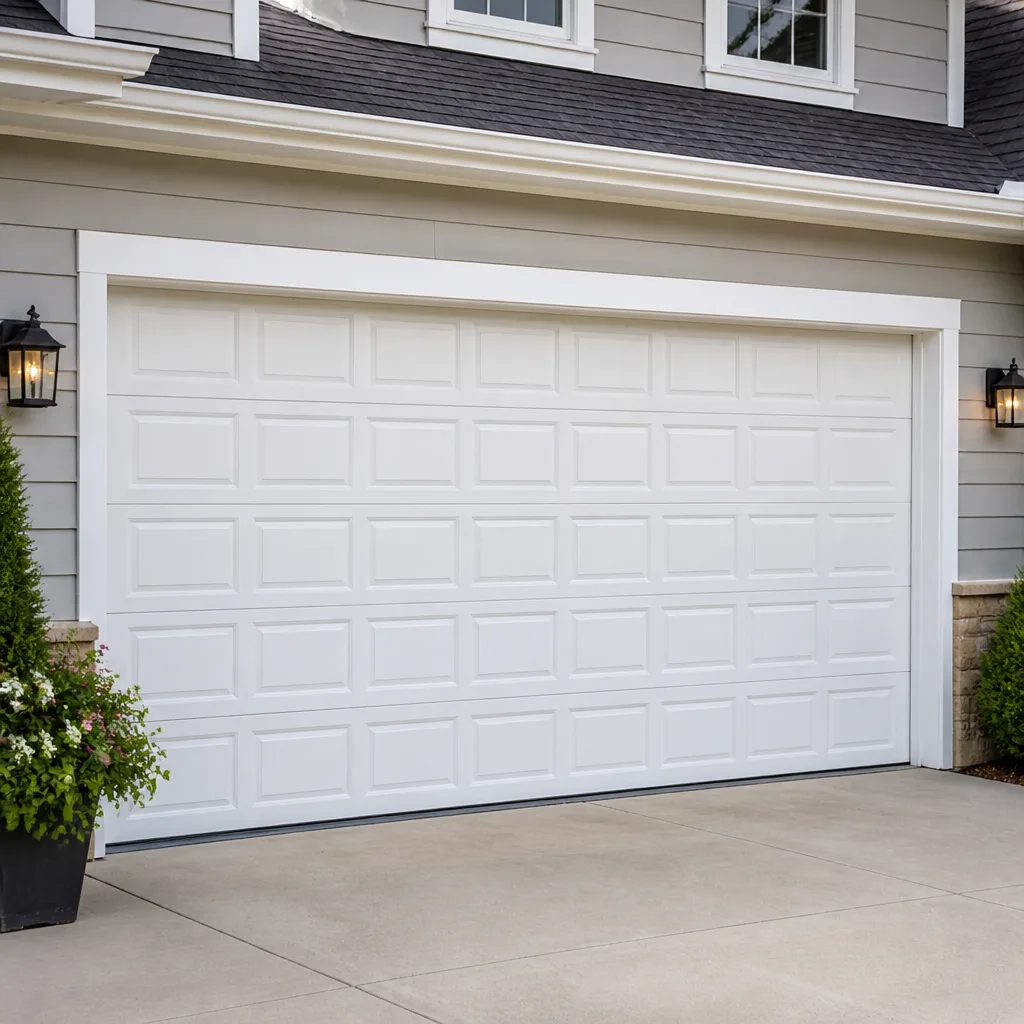 Raised-panel steel
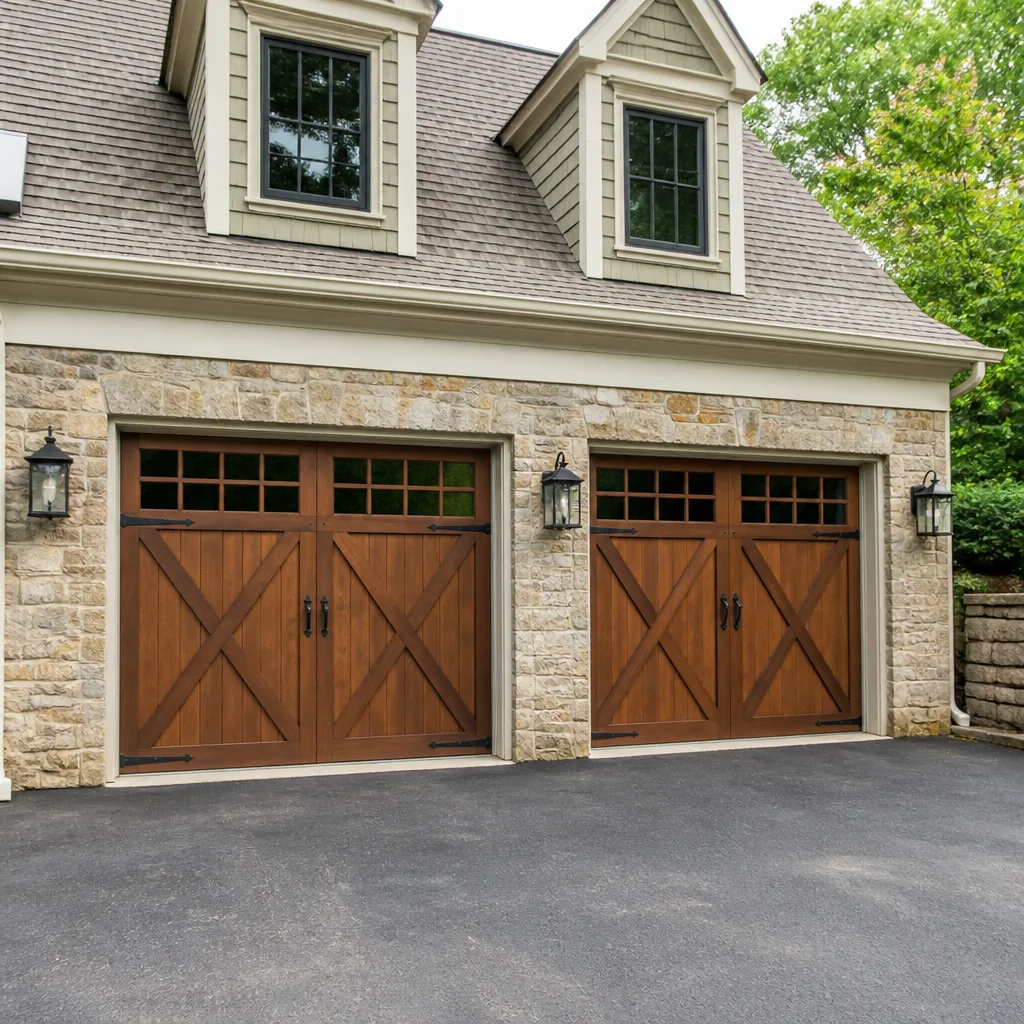 Carriage house
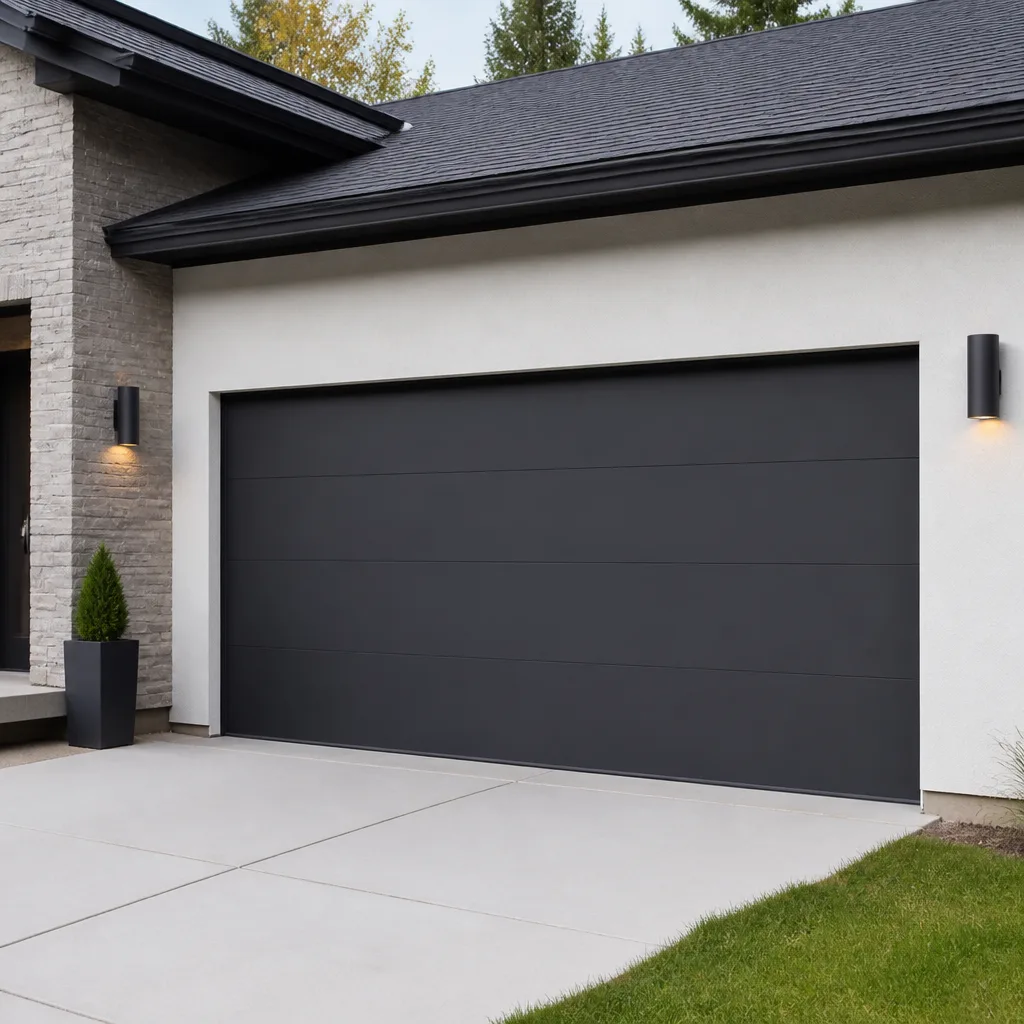 Modern flush
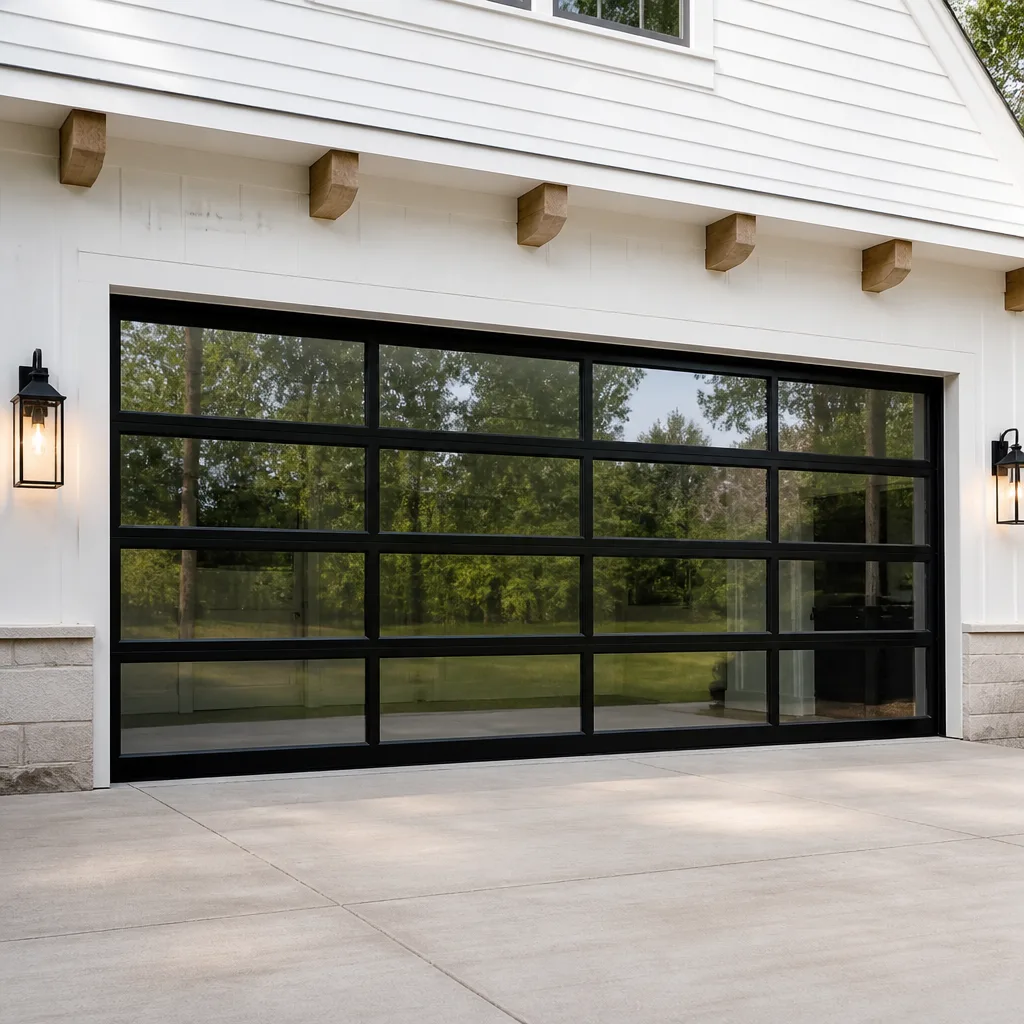 Full-view glass
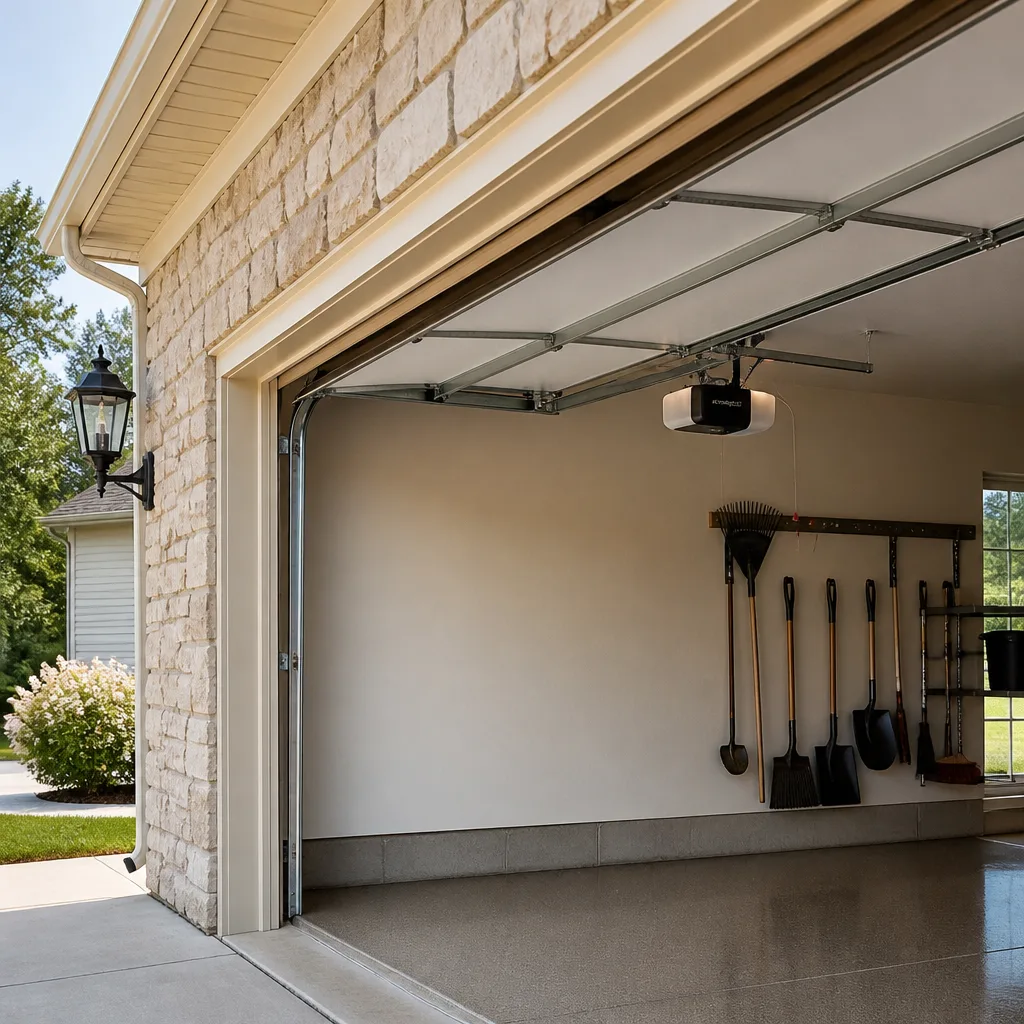 LiftMaster openers
 Chamberlain openers
Full 25-point door and opener safety check with every visit - springs, cables, rollers, tracks, and your LiftMaster or Chamberlain opener included
You get a price before we start. It does not change when the pro arrives.
Get your free estimateDIY vs Professional Garage Door: The Memorial Homeowner’s Decision Guide
Torsion spring adjustment is not a difficulty-level problem. It’s a physics problem. A fully wound torsion spring stores enough energy to turn a winding bar into a projectile in a fraction of a second, and no video tutorial changes that risk calculus. Most garage door decisions go wrong because homeowners grade tasks by how hard they look on screen instead of by what happens when a part lets go under load. In this guide we break the work down task by task, separate the jobs you can reasonably handle from the ones that carry real injury risk or void a manufacturer warranty, and show how living in Memorial shifts the math in two specific ways almost no decision guide mentions. You’ll finish knowing exactly where your skill ends and a professional’s begins.
Quick Answer
DIY is the right call for maintenance-level tasks: lubrication, safety sensor alignment, remote and keypad reprogramming, and visual inspections. Everything that involves springs, cables, or loaded torsion hardware belongs to a trained technician, and new door or opener installation usually belongs there too because self-installation commonly voids manufacturer warranty coverage. In Memorial, summer attic heat and fast post-storm decisions add two variables that make the professional side of that line wider than it looks on paper.
Styles & brands we work with
- Raised-panel steel
- Carriage house
- Modern flush
- Full-view glass
- LiftMaster openers
- Chamberlain openers
Table of Contents
- The Task-by-Task Breakdown: What’s Safe and What Isn’t
- Springs and Cables: Why Skill Level Doesn’t Matter Here
- How DIY Installation Voids Manufacturer Warranties
- Memorial Variables: Summer Heat and Post-Storm Decisions
- The True Cost Math: Parts, Tools, Time, and Rework
- What to Watch For When a Professional Does the Work
- Common Mistakes to Avoid
- When to Call a Professional
The Task-by-Task Breakdown: What’s Safe and What Isn’t
Think of garage door work as three tiers, not two. The safe tier is maintenance. The middle tier is diagnostic. The top tier carries injury risk or warranty consequences, and that’s where the DIY-versus-professional question actually lives. Here’s how the tasks sort out.
Tier 1 – Safe for most homeowners:
- Lubrication. Hinges, rollers, and the torsion bar bearings take a spray lubricant a couple of times a year. This is the single highest-value thing you can do yourself, and it’s the one most people skip.
- Safety sensor alignment. If the door reverses for no reason, the photoelectric sensors near the floor are usually out of line or blocked. Cleaning the lenses and nudging them back into aim is quick and safe.
- Remote and keypad reprogramming. Every opener platform has its own pairing sequence. On LiftMaster, Chamberlain, Genie, and Craftsman units the steps differ, but all of them are documented and none involve tools near moving parts.
- Visual inspection. Look at the door from inside with it closed. Even gaps, straight panels, intact cables, and no fraying at the drums are all things you can spot without touching anything.
Tier 2 – Diagnostic only, don’t disassemble:
- Opener force and travel limits. You can read the manual and understand what the settings do. Adjusting them wrong can defeat the door’s safety reverse, which is a genuine hazard, so treat this as a “know the symptom, call it in” task.
- Track observation. You can see that a track is bent or that a roller has jumped. Straightening a bent track under door weight is a different job entirely.
- Panel inspection. Spotting a dent, a crack, or a separated section is safe. Replacing a panel on a tensioned door is not.
Tier 3 – Professional only:
- Torsion and extension spring replacement or adjustment. This is the injury-risk task in the trade, and it’s why we treat spring repair as a core service rather than an add-on.
- Cable replacement. Cables run under the same tension as springs and can whip when they slip their drum.
- Track realignment and drum work. These require the door’s load to be handled correctly before anything is loosened.
- Full door and opener installation. Not because it’s impossible to learn, but because of what it does to your warranty.
If a task falls in Tier 3, the honest answer is that no amount of preparation makes it a good trade. Garage door repair in this category is professional work by definition, and that’s true whether the door is in Memorial or anywhere else.
Springs and Cables: Why Skill Level Doesn’t Matter Here
A torsion spring holds the entire weight of the door. When it’s wound, it holds that weight in stored rotational energy. When it fails, that energy releases in an instant, and the winding bars you’re holding are the first thing it acts on. There is no technique that makes this safer for someone without training and the right tools. The physics doesn’t care how careful you are.
The symptoms of a broken or failing spring are worth knowing even if you never touch one:
- The door opens a few inches and stops, then the opener hums without moving it.
- You hear a loud bang from the garage and the door won’t lift.
- The door feels extremely heavy when you try to lift it by hand.
- You can see a visible gap in a torsion spring, or the extension springs on either side look stretched out of shape.
Any of those means the door is out of balance and shouldn’t be cycled until a technician looks at it. Running an opener against a broken spring strips gears and can burn out the motor, which turns a spring job into a spring-and-opener job.
We work on the systems already installed on homes across Memorial, and spring work shows up on every brand we service, including Clopay doors and Wayne Dalton units with their own spring configurations. Cables get replaced for the same reason springs do: they’re under the same tension and they fail in the same sudden way. If a cable is frayed, kinked, or sitting off its drum, treat it the way you’d treat a broken spring and stop using the door.
Understanding the system is genuinely useful. You should know what a torsion spring does, how many your door has, and what a balanced door feels like. That knowledge helps you describe the problem accurately when you call and decide whether a quote is reasonable. It doesn’t transfer the risk to your favor.
How DIY Installation Voids Manufacturer Warranties
Self-installation is the DIY decision that costs homeowners the most without feeling expensive on the day. Door manufacturers and opener manufacturers both build installation requirements into their warranty terms. When a homeowner installs the product instead of a qualified installer, the manufacturer can decline a claim on panels, hardware, or the opener itself.
This matters more in Memorial than it might elsewhere because the doors here are commonly Clopay, Amarr, and Wayne Dalton, and the openers skew toward LiftMaster, Chamberlain, Genie, and Craftsman. Those are exactly the brands where warranty language is specific about who installs the product. A panel that fails early because the door was hung slightly out of square is a warranty conversation, and it’s a short one if the installer wasn’t qualified.
What typically goes wrong starts small and compounds:
- Track alignment. Tracks installed a fraction off plumb cause the door to bind, and binding stresses the opener and the panels.
- Spring tensioning. Set wrong, the door is either too heavy for the opener or slams on the way down.
- Panel seating. Sections that don’t sit flush flex with every cycle and can crack at the hinge points.
- Opener force calibration. The safety reverse is set by feel, and it’s either over-sensitive or effectively disabled.
Any one of those is a repair. Together they’re the reason a warranty claim gets denied. Garage door installation done by a specialist keeps the manufacturer’s coverage intact and gives you a single party to call if something’s wrong.
Our technicians have up to 11 years of experience across both the mechanical door brands and the connected opener platforms, which means the install is matched to the product rather than adapted from a generic template.
Memorial Variables: Summer Heat and Post-Storm Decisions
Two local conditions reshuffle the DIY-versus-professional line here, and most decision guides skip both.
The first is summer attic heat. Garage ceilings in Memorial homes get genuinely brutal from June into September. A garage with an unconditioned attic above it can hit temperatures well past what anyone should work in for an extended period, and the work that happens at ceiling height is exactly the work that requires balance and steady hands. Winding a torsion spring is a two-point-of-contact task done on a step ladder, sometimes overhead. Add heat exhaustion and a slippery grip to that equation and the risk stops being theoretical. This is one of the reasons we schedule installation and heavier repair work as measured jobs rather than same-day drop-ins: the conditions get factored in, not rushed past.
The second is post-storm decision speed. After a heavy storm line moves through, the neighborhood fills with doors that got hit by debris or pulled out of alignment by wind load. The instinct is to get the door working again before nightfall, and that instinct skips the safety checks that should come first. Before anyone cycles a door after a storm:
- Look at the tracks for bends or separation from the wall.
- Check that the door is still sitting level in the opening.
- Look for any cable that’s off its drum.
- Test the safety reverse with an object in the door’s path before trusting it.
A door that’s been knocked out of alignment can drop a panel while it’s moving. That’s a check-before-use situation, not a fix-it-quickly situation. If the door won’t pass those checks, stop and get it looked at.
A third, quieter variable is that older Memorial homes often have original doors with hardware that’s been in place for decades. Age makes springs more brittle and rollers more prone to seizing, which pushes more of those homes into Tier 3 territory.
The True Cost Math: Parts, Tools, Time, and Rework
DIY cost comparisons usually stop at the part price, which is why they’re misleading. The real comparison includes tools you’ll buy once and maybe never use again, the hours involved, and the rework rate when a first attempt is off.
Here’s what the honest math looks like for the main categories:
- Lubrication. A can of garage door lubricant and twenty minutes. DIY wins outright on every measure.
- Sensor alignment. Essentially free, and it’s often the whole problem. DIY wins.
- Remote or keypad reprogramming. Free if you read the manual. DIY wins.
- Spring replacement. Parts cost is modest, but the tools (winding bars, proper clamps) and the injury risk dominate the equation. Professional wins by a wide margin.
- Cable replacement. Same story. The part is cheap; the consequences of a mistake are not.
- Opener replacement. Parts, wiring, force calibration, and safety reverse testing. Most homeowners can physically hang an opener, and most of them end up calling to get the force settings and safety reverse dialed in properly.
- Full door installation. The tool list alone (proper ladders, winding bars, clamps, levels, and the right fasteners) usually exceeds what any homeowner will use again, and warranty exposure adds a cost that doesn’t show up until a claim is denied.
The rework rate is the number people never account for. A door that’s slightly out of balance after a DIY spring job doesn’t fail dramatically, it just wears out the opener faster and never quite seals. Tracking down that kind of slow problem takes more time than doing it right the first time, and it’s the reason we’d rather quote the job cleanly up front. The garage door opener repair work we do often starts with a door that was run against a bad spring for months before anyone called.
What to Watch For When a Professional Does the Work
Hiring out a job doesn’t mean standing in the house. The single best long-term DIY tool you can build is an understanding of your own door, and the best time to build it is while a technician is working on it.
Ask these questions, every time:
- Which spring do I have, and how many? Torsion versus extension changes what maintenance looks like and what a future repair involves.
- What’s the door’s balance like now? A properly balanced door can be lifted by hand with the opener disconnected. Knowing what that feels like gives you a baseline for spotting trouble.
- How do I test the safety reverse? It’s a simple test, and it’s the most important safety feature on the system.
- What should I lubricate, and with what? Specific products and specific points.
- What was wrong, and what did you replace? Keep the old parts if there’s anything to see. A worn roller tells you more than a description does.
- What’s my opener rated for? If you ever replace the door, the opener needs to match the new door’s weight.
A specialist should be happy to answer all of it. We work on the brand already on your home, whether that’s a Craftsman opener bolted up in the 1990s or a smart-connected LiftMaster, and explaining the system to the person who owns it is part of the job.
One thing to confirm before any work starts: the price is quoted and agreed in writing before anything is touched. That’s the answer to the invoice worry, and it should be true of any professional you hire.
Common Mistakes to Avoid
- Trying to adjust a torsion spring yourself. The energy in a wound spring doesn’t respect caution or experience level. This is the one task where the risk is genuinely out of proportion to the apparent difficulty.
- Ignoring a broken spring and using the opener anyway. The door won’t open, so the opener keeps trying, and the gears or motor eventually give out. That turns a spring job into a spring-and-opener job.
- Installing a new door or opener without checking the warranty terms first. In Memorial, where warranty-relevant brands like Clopay and LiftMaster are common, self-installing can forfeit coverage on the exact components you’d want protected.
- Cycling a door after a storm without checking the tracks. Post-storm, the fast fix is tempting and the safety check is skipped. A door knocked out of alignment can drop a panel while moving.
- Doing ceiling-height work in a summer-heated garage without accounting for it. Heat exhaustion on a ladder is a real risk, and it’s the most common reason we’d reschedule heavier work into better conditions.
- Assuming a fix worked because the door opened once. Springs, cables, and several other components need the safety reverse tested and the balance checked before the door is trusted.
- Buying cheap hardware without matching it to the door. Rollers and hinges are rated for specific loads. The wrong part installs fine and fails early.
When to Call a Professional
Call when the task involves springs, cables, drums, or track realignment under load, when a door stops mid-travel or reverses for no reason, when you hear a bang and the door won’t lift, or when an opener runs but the door doesn’t move. Call after any storm if the door is off level or the tracks are visibly bent. Call before installing a new door or opener if you care about the manufacturer warranty. And call if you’re simply not sure which category a problem falls into. Garage Door Repair Memorial offers free estimates in Memorial, and a professional look is the fastest way to know whether a task is a fifteen-minute fix or a stop-using-the-door situation. Call (877) 492-2056. We answer 24/7. Fast dispatch from 7am to 7pm, Sunday through Friday.
See the difference
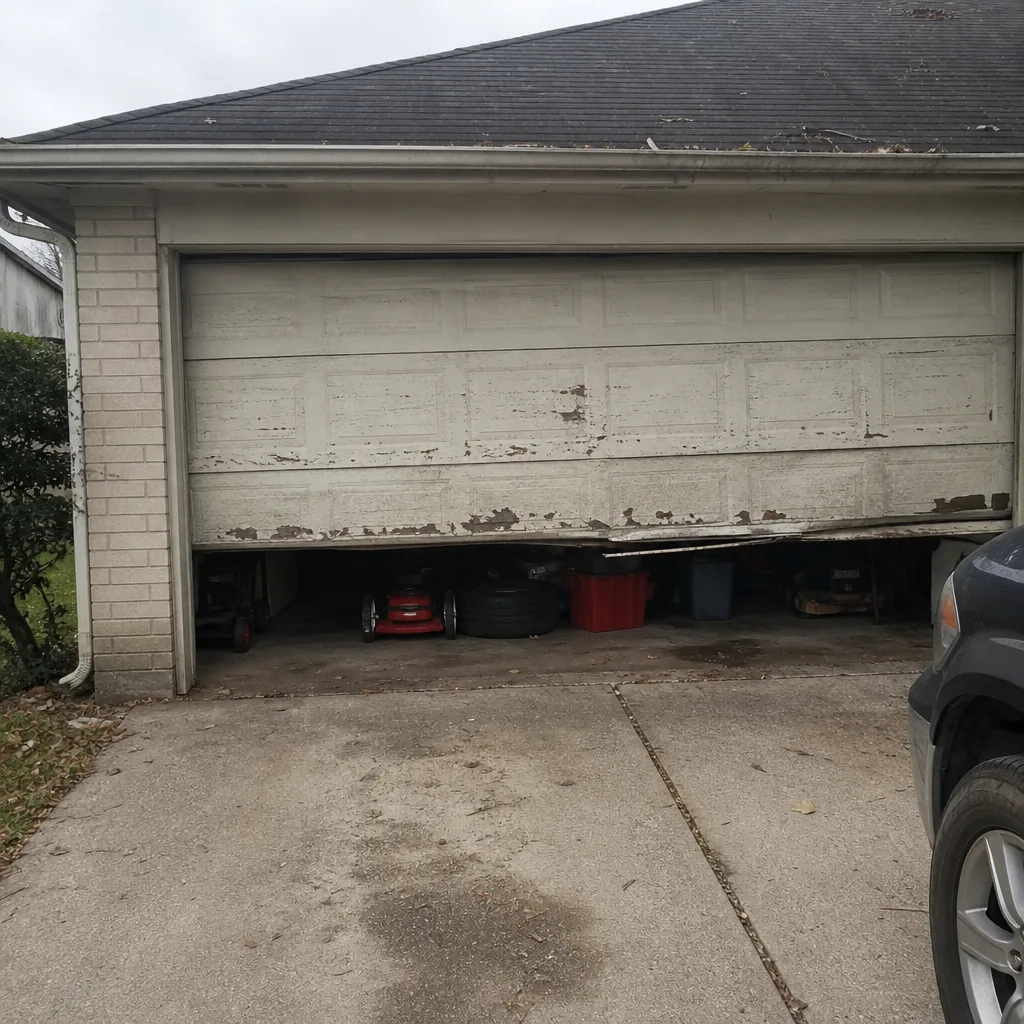 Before
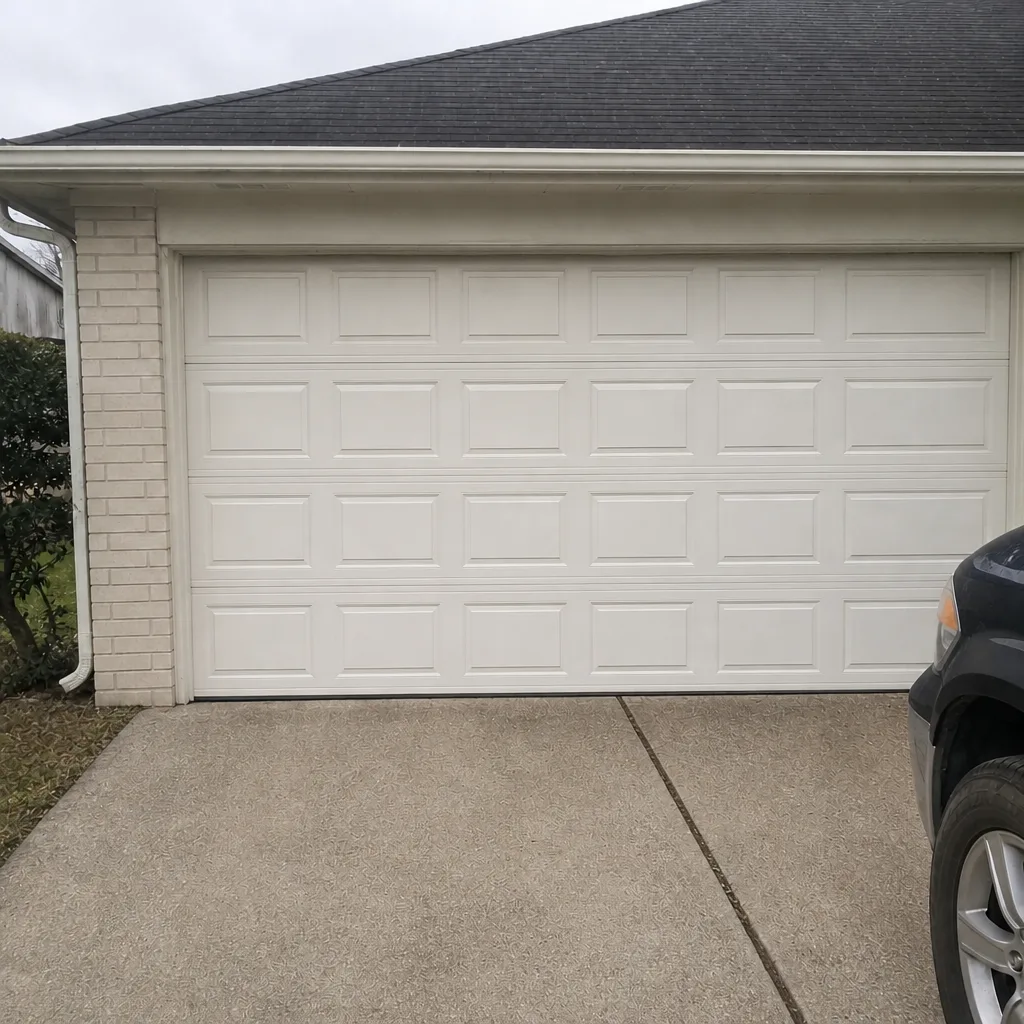 After
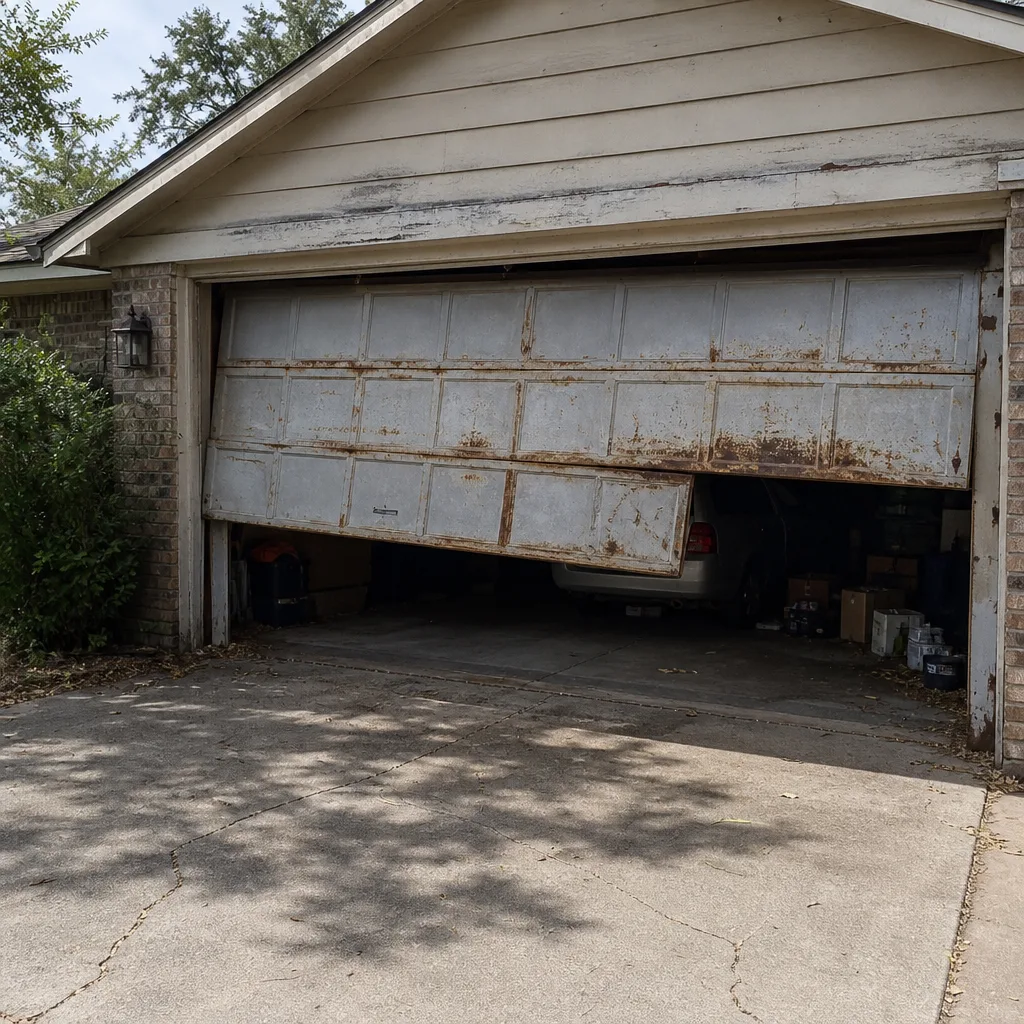 Before
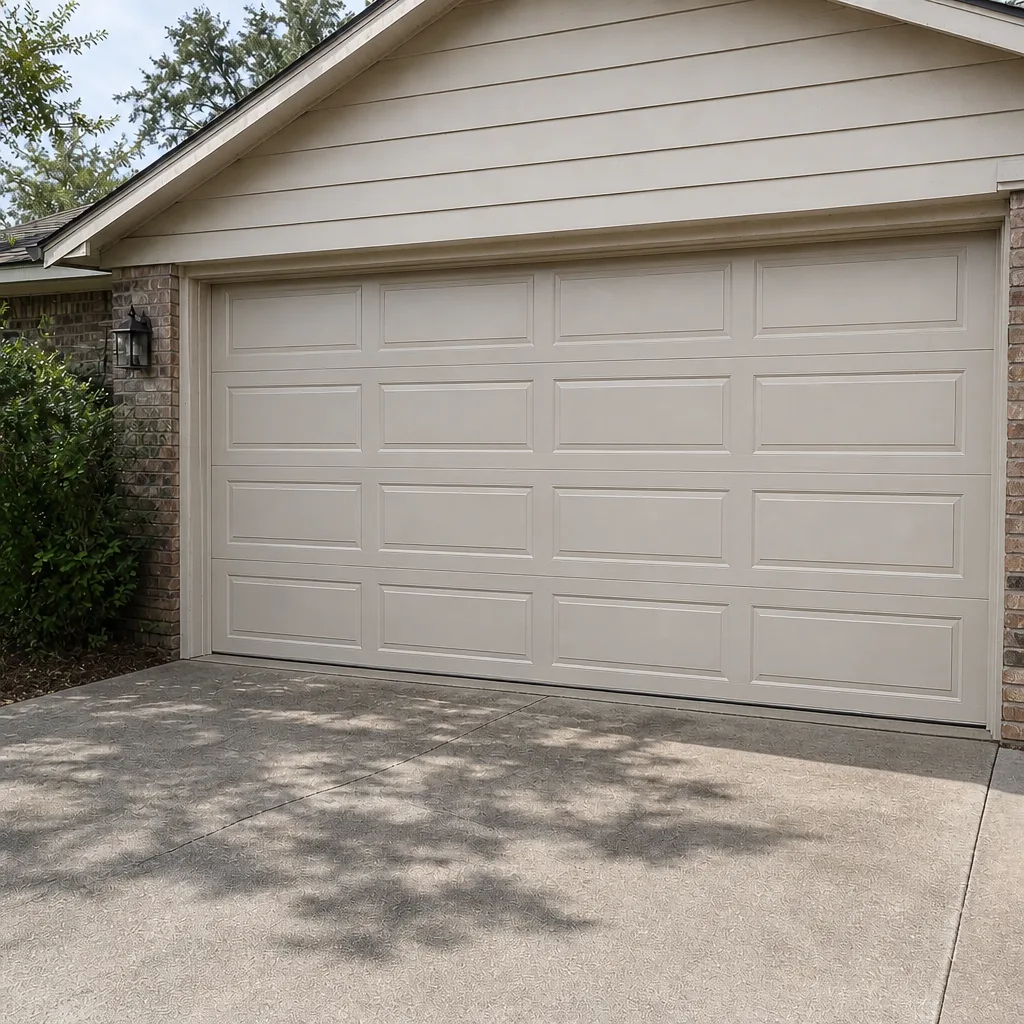 After
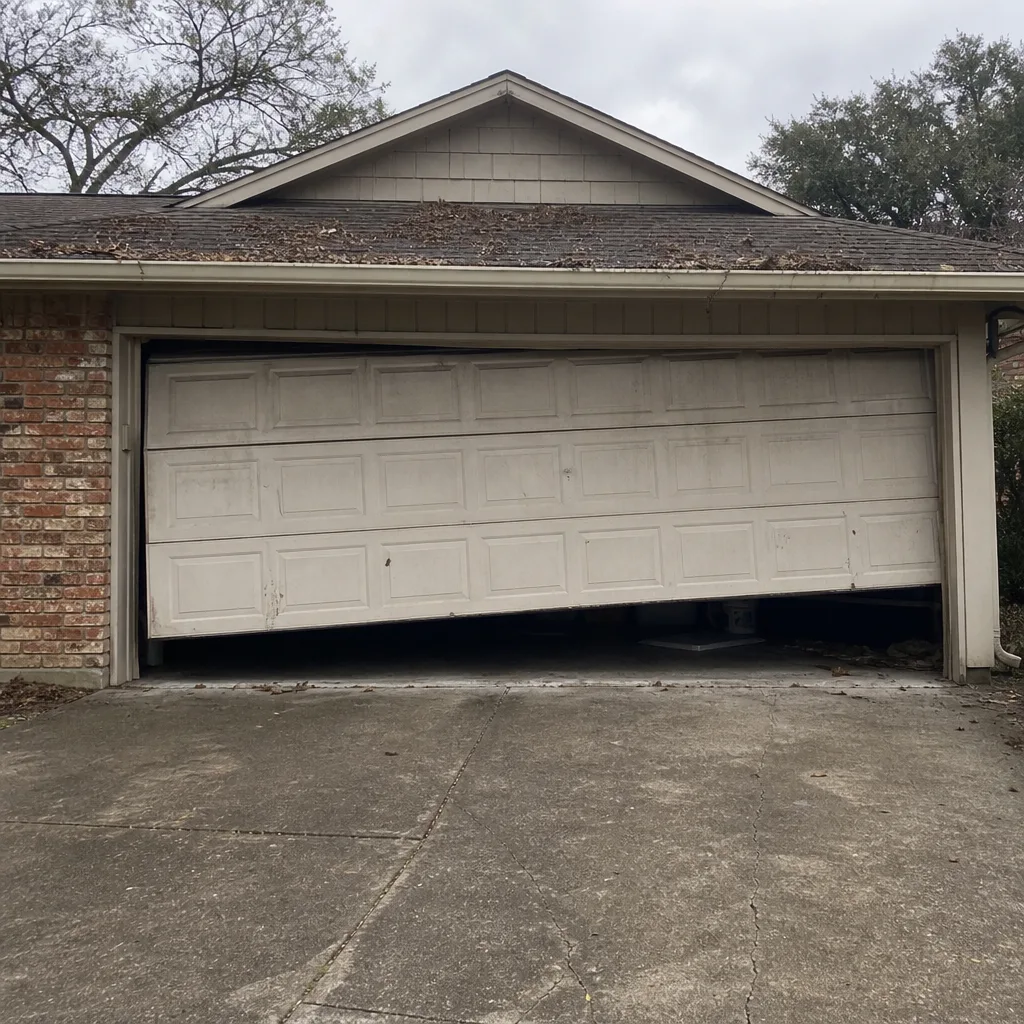 Before
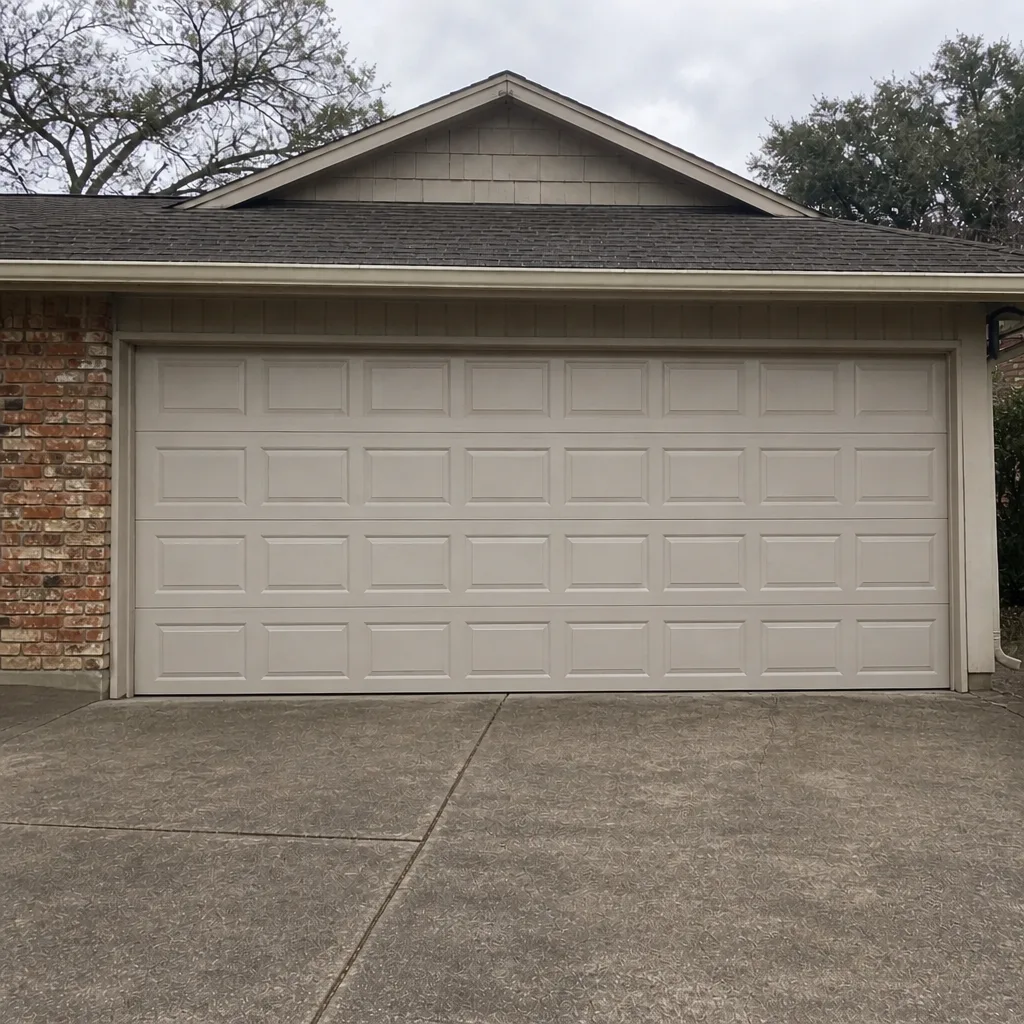 After
Frequently Asked Questions
No, and we’d steer you away from it firmly. A wound torsion spring stores enough energy to cause a serious hand injury in a fraction of a second, and no instructional video changes that. Spring replacement is professional work precisely because the danger is in the stored energy, not in the technique.
It can, yes. Door and opener manufacturers commonly require installation by a qualified installer as part of their warranty terms, and brands widely installed in Memorial like Clopay and LiftMaster are no exception. If you’re planning a new door or opener, check the written warranty terms before installing it yourself.
Lubrication, safety sensor alignment, remote and keypad reprogramming, and visual inspections are all safe for most homeowners. Those four cover a surprising share of “my door is acting up” calls. Anything involving springs, cables, drums, or straightening tracks under load is not.
Only the checking part. After a storm, inspect the tracks for bends or separation from the wall, confirm the door sits level, and verify the safety reverse before using it. If any of those fail, stop and get a professional out, because an out-of-alignment door can drop a panel while it’s moving.
We don’t quote against a self-repair number because the two aren’t comparable, but the honest difference is the tool cost and the injury risk. Winding bars and clamps aren’t expensive, yet the potential cost of a mistake is. The written estimate sets the final price.
Not necessarily, but it’s worth being there if you can. Watching and asking questions about your specific spring type, balance, and safety reverse is how you build the understanding that makes future decisions easier. Our technicians have up to 11 years of experience and are glad to explain.
The Bottom Line
The DIY-versus-professional question isn’t a skill test. It’s a risk-and-warranty test. Maintenance tasks like lubrication, sensor alignment, and remote reprogramming belong in your hands, and doing them consistently keeps a door out of trouble. Springs and cables don’t, because the energy in them makes the risk out of proportion to the difficulty, and self-installing a new door or opener can forfeit the warranty on your most valuable components. In Memorial, summer heat in the garage and the rush to fix a door after a storm both push the line further toward professional hands. Know which side of that line you’re on, and call when in doubt.
Garage Door Repair Memorial handles the full scope, from opener diagnostics to full door installation, on whatever brand is already on your home. Whether you need a quick repair or you’re ready to plan a new installation, we’ll quote the job in writing before anything starts, and the estimate is free. Call (877) 492-2056. We answer 24/7. Fast dispatch from 7am to 7pm, Sunday through Friday. Saturday we’re closed.
Written by the team at Garage Door Repair Memorial.