
Last updated November 21, 2026
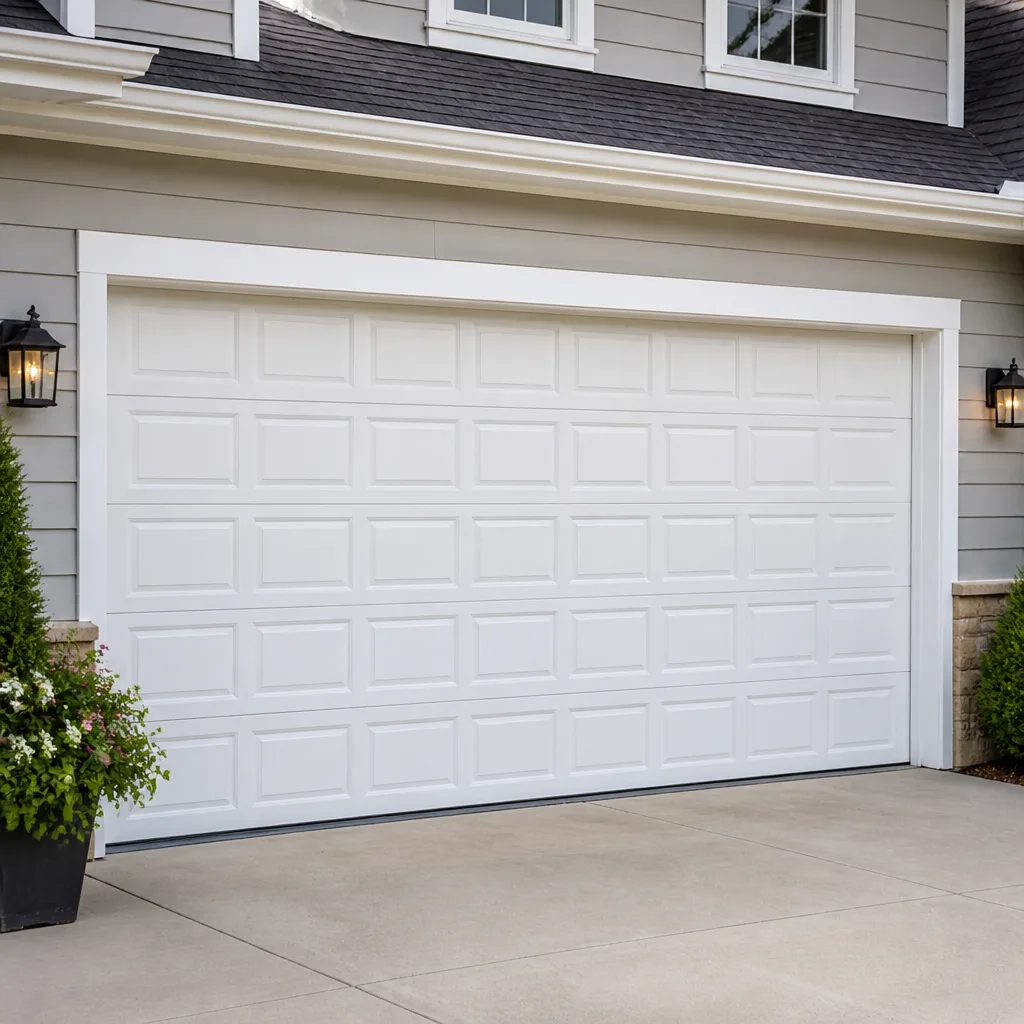 Raised-panel steel
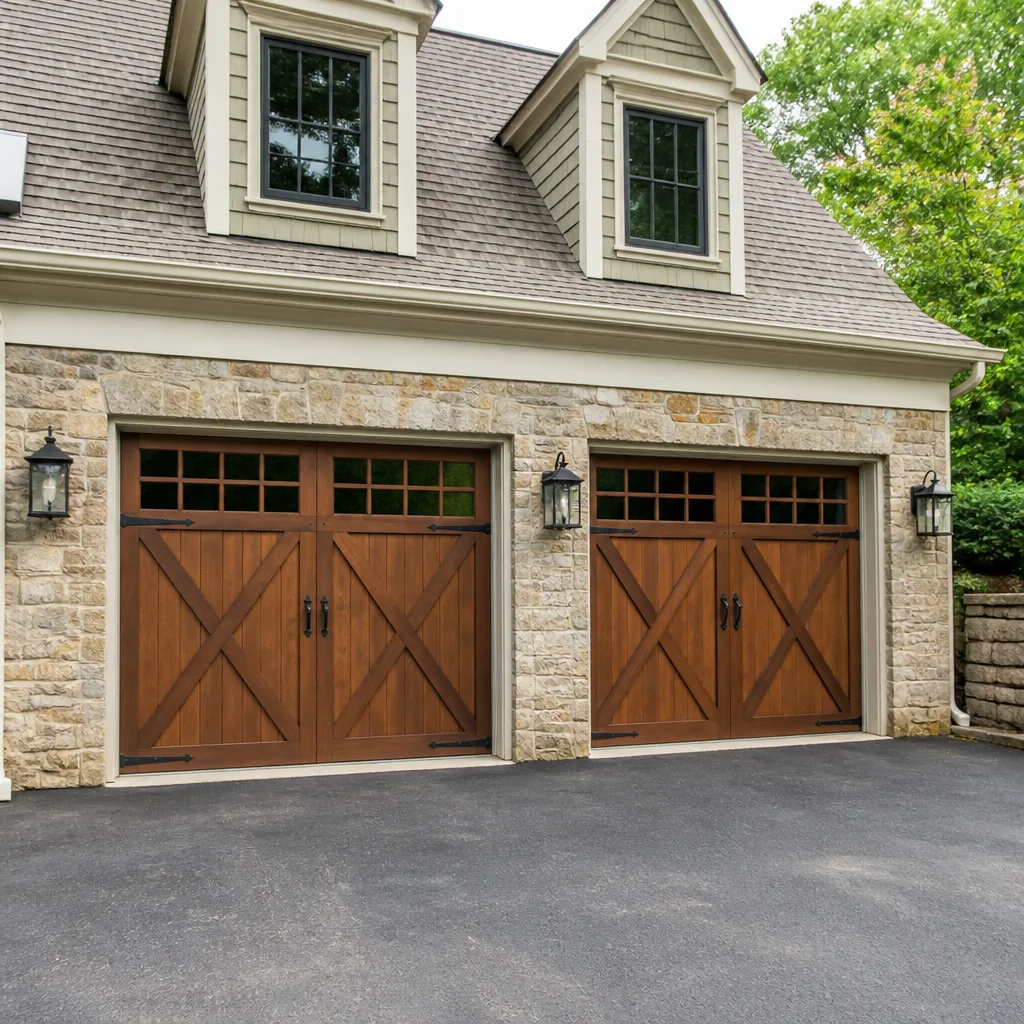 Carriage house
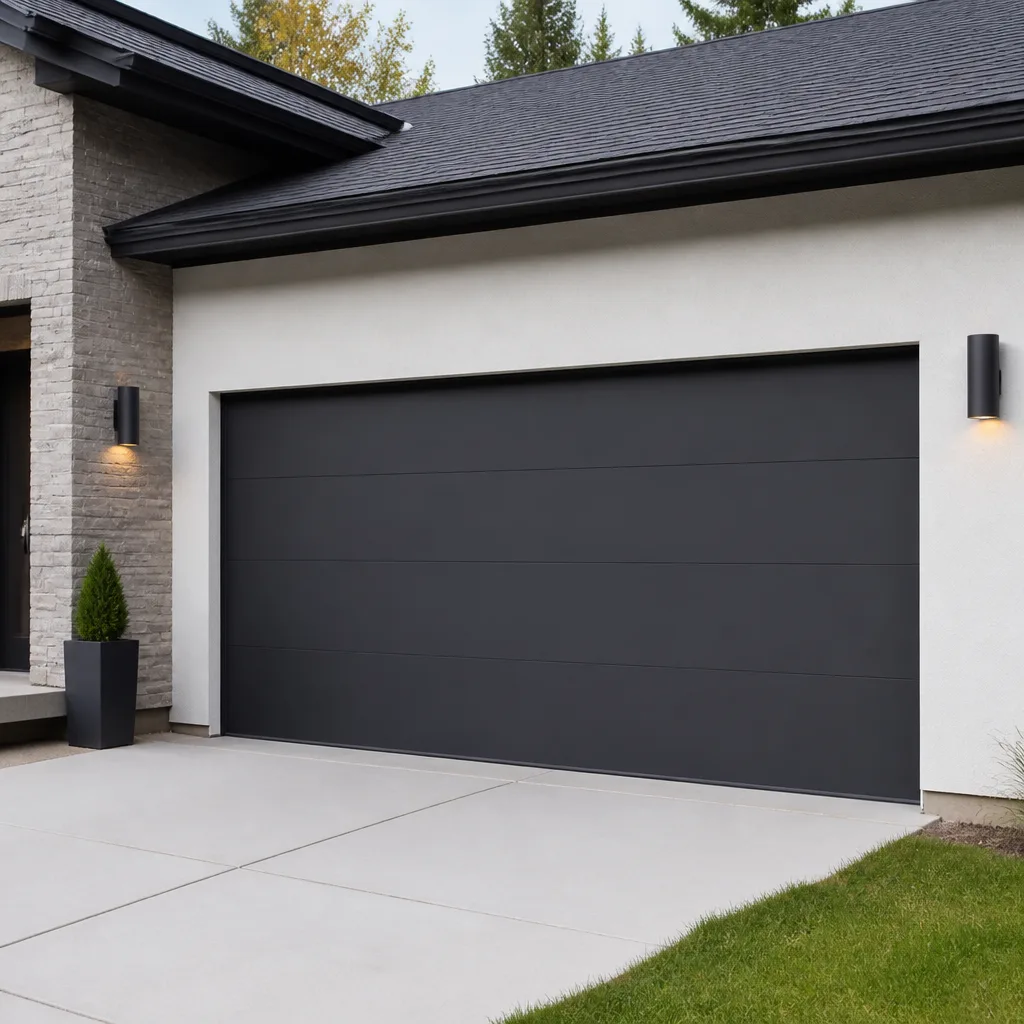 Modern flush
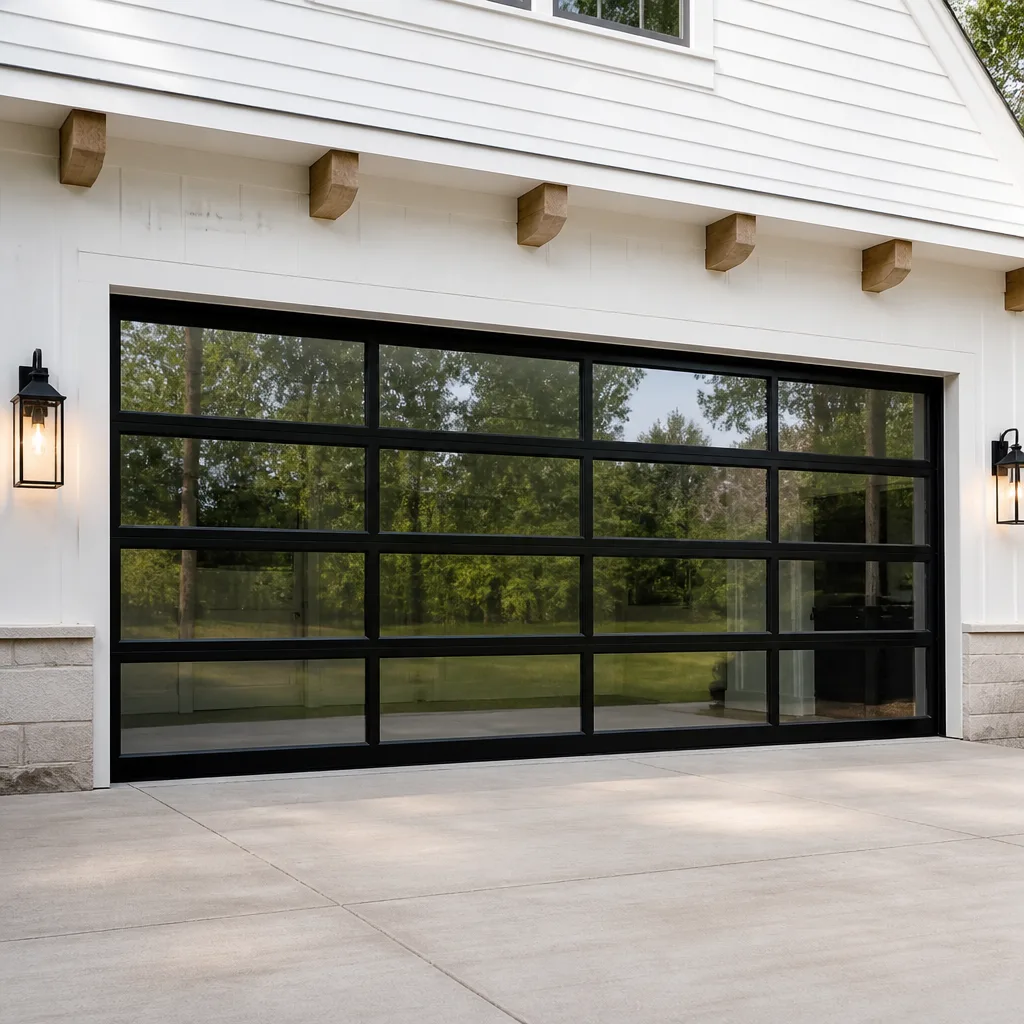 Full-view glass
 LiftMaster openers
 Chamberlain openers
Full 25-point door and opener safety check with every visit - springs, cables, rollers, tracks, and your LiftMaster or Chamberlain opener included
You get a price before we start. It does not change when the pro arrives.
Get your free estimateGarage Door Repair Maintenance Checklist for Memorial Homeowners
If your maintenance checklist mentions “winterizing,” it was written for someone else. Memorial doors fail from rust, swollen bottom seals, and opener circuit boards overwhelmed by heat, not frozen springs. Houston humidity sits in a garage most of the year, and by July that un-air-conditioned space can feel like an oven. This checklist walks through a month-by-month schedule built around that reality: hurricane prep in May, peak heat stress in July and August, and the brief cold snap in January. It also covers the tests most homeowners never run, including a bottom seal contact check that matters on Memorial’s older slab foundations.
Quick Answer
A Memorial garage door needs lubrication every three to four months, a balance and safety-reverse test monthly, a bottom seal contact check twice a year, and hardware corrosion inspection before and after summer. Spring replacement, cable work, and opener electrical repairs belong with a trained technician. Our technicians have up to 11 years of experience with the systems on Memorial homes, and we work on the brand already on your door.
Styles & brands we work with
- Raised-panel steel
- Carriage house
- Modern flush
- Full-view glass
- LiftMaster openers
- Chamberlain openers
Table of Contents
- Month-by-Month Maintenance Calendar for Memorial
- Lubrication That Survives Houston Humidity
- Testing Bottom Seal Contact on an Uneven Slab
- Corrosion Points Most Homeowners Miss
- Opener Heat Stress and Ventilation
- Hurricane Season Prep in May
- The January Cold Snap Window
- What You Should Never Touch
- Common Mistakes to Avoid
- When to Call a Professional
- Frequently Asked Questions
Month-by-Month Maintenance Calendar for Memorial
Memorial’s seasonal pattern doesn’t match the generic checklists you’ll find online, which are mostly written for places that freeze solid for months. Here, the real threats run in a different order: humidity and corrosion take up most of the year, heat stress peaks in late summer, and the only frost risk is a short window in January. A calendar built for this climate looks like this:
- January: The brief cold snap window. Test the door’s balance while the metal is at its most contracted. Check that the door hasn’t begun binding in the tracks, and listen for new noises on the first cold mornings.
- February through April: Spring cleaning for the hardware. Wipe down tracks, inspect rollers and hinges for early rust, and renew lubrication before the humid season builds.
- May: Hurricane prep. Confirm the door is rated for wind load if it’s a newer installation, check that the door closes fully and locks down, and clear anything stored near the tracks that could become a projectile in high wind.
- June: Test the safety reverse and photo-eye system before the house spends more time shut up with air conditioning running.
- July and August: Peak heat stress. Inspect the opener motor housing for heat buildup, check ventilation, and watch for the door reversing on hot afternoons.
- September and October: Post-summer corrosion check. Look at every bolt, hinge, and roller for rust bloom that started during the wet months.
- November and December: Pre-holiday inspection. Test the balance, tighten loose hardware, and address any weatherstripping gaps before the cooler, drier air settles in.
If you’re in Memorial and your door is more than a decade old, add a pro inspection to the May slot every year or two. Older hardware in this climate reaches a point where corrosion damage needs eyes on it, not just a checklist. Our Garage Door Repair Memorial service covers diagnostics for exactly this kind of seasonal-wear question.
Lubrication That Survives Houston Humidity
The wrong lubricant is worse than none, especially in this climate. Oil-based products and thin sprays attract dust and moisture, then turn into a sticky film that gums up torsion spring coils and roller bearings. Humidity keeps that film wet, and grit sticks to it. Within a season, instead of a smooth-running door, you have a sluggish one that puts extra strain on the opener.
What works in Memorial garages:
- Silicone-based spray lubricant on hinges and rollers. It stays slick without collecting grit the way oil does.
- White lithium grease on the torsion spring coils, applied lightly. It holds its consistency through humidity swings far better than oil.
- Dry-film lubricant on the track surface if you lubricate it at all. Many tracks don’t need any lubrication and work better clean and dry. Check your manufacturer’s guidance before applying anything to the tracks.
Frequency matters too. In a Memorial garage, three to four times a year is realistic: once in early spring, once before summer heat, once after summer, and once before the January cold. If your door sees heavy daily use, err toward the more frequent side.
How to apply it without making a mess:
- Wipe down hinges, rollers, and spring coils with a dry cloth to remove old lubricant and grit.
- Apply spray lubricant to each hinge pivot point, one short burst per hinge.
- Rollers get a drop at the bearing, not on the wheel itself.
- Apply a thin coat of white lithium grease along the spring coils, working it in by cycling the door once by hand.
- Test the door’s motion. If it sounds worse, you’ve likely over-applied. Wipe off the excess.
One safety note: the torsion spring and the cables that run beside it are under extreme tension. Lubricating the exterior of the coils from a stable step stool is fine. Touching the springs or cables while doing it is not. That’s a job for a trained professional.
Testing Bottom Seal Contact on an Uneven Slab
Memorial has a large stock of older homes built on slab foundations, and slabs move over time, especially in soil that swells and shrinks with the wet-dry cycle. When the slab settles even a fraction of an inch under the door’s path, the bottom seal stops making uniform contact across the full width. You end up with a gap at one end, cold air leaking in, and a small but steady stream of insects and dust making their way into the garage.
The test is simple:
- Wait until after dark, turn off the garage lights, and look at the door from outside. Any light showing under the seal marks a gap.
- Or, close the door with a piece of paper under it at several points across the width, from one end to the other. If the paper slides out with no resistance, that spot isn’t sealing.
- Check the door’s alignment in the tracks. A door that sits slightly crooked will lift one edge and break the seal on that side.
If the gap is only at one end, the fix is often a slight adjustment to the door’s travel or the bottom bracket. If the gap runs the full width, the weatherstripping itself is probably compressed or hardened. Bottom seals do wear out in this climate faster than in drier places, partly because humidity keeps the rubber soft and then the summer heat bakes it stiff. A new bottom seal costs far less than a new door and solves the draft and the insect problem at the same time.
On doors with a wood frame and an older steel bottom bracket, corrosion can make the seal replacement tricky. The bracket bolts can be seized, and forcing them risks cracking the door panel. If you find that’s the case, this is a straightforward repair for a technician who has the right tools and the replacement brackets on hand.
Corrosion Points Most Homeowners Miss
Most homeowners associate rust on a garage door with the visible panel surface, but the places that actually fail are mostly hidden. In Memorial’s humidity, rust starts in crevices that never dry out, then works its way into the joints where it eventually weakens the entire assembly. Here are the points to inspect:
- The hinges. The pivot points between hinges collect dust and moisture and go rusty first. Rust on a hinge stiffens it, which puts extra strain on the opener every time it cycles.
- The roller stems. Rollers ride in the track on a metal stem. If the stem rusts and seizes, the roller can’t rotate freely, and the door starts dragging.
- The bottom bracket. This is where the door meets the ground and where water tends to pool after rain. Check the bolt heads and the metal around them.
- The drum and cable attachment points. If these look rusty, stop and call a professional. Rusted cable hardware is a genuine safety concern.
- The lift cables themselves. Look for fraying, kinks, or rust streaks on the cable. A compromised cable can snap under tension.
- The opener’s mounting bracket on the ceiling. Less common, but worth a glance. Rust here can loosen the bracket.
- The panel bottom edges. Where the panel meets the bottom seal, moisture gets trapped. Rust starts here and can spread to the interior of a steel door.
In our experience, the most reliable pattern is to check these points twice a year, in the spring before the wet season and in the fall after it. A rusted hinge you replace in an afternoon can prevent a rusted cable that fails without warning. If any of this sounds like your door, or if you’ve never had a technician look at the hardware, our garage door repair service handles exactly this kind of wear-and-tear diagnosis. Rust repair on structural hardware – cables, drums, springs – is not a DIY project. It’s a job for a technician.
Opener Heat Stress and Ventilation
If your garage has no air conditioning – and most in Memorial don’t – then the opener lives in one of the hottest spaces in the house every summer. Attic heat bleeds down, the concrete floor radiates warmth, and the opener motor works harder to lift a door that may already be slightly stiffened by humidity. Chamberlain, Genie, and LiftMaster openers are built to handle summer heat, but they have thresholds. When the temperature inside the motor housing climbs too high, many models will shut down temporarily to protect themselves, then resume after they cool.
The result is a door that reverses or stops unexpectedly on the hottest afternoons and works fine in the morning. That pattern is a heat symptom, not a failure of the opener’s brain. Before you replace the unit, check these:
- Clear the space around the motor. If boxes or shelving have been stacked near the opener head, they’re blocking airflow. Remove everything within a couple of feet.
- Check the ventilation openings in the motor housing. They can get blocked with dust or cobwebs. A soft brush removes debris without needing to open the housing.
- Look at the ceiling insulation. If the attic above the garage isn’t well sealed or insulated, adding a bit of insulation or a radiant barrier can drop the garage temperature noticeably.
- Listen for a whining or grinding note at the end of travel. That’s often mechanical resistance on the door itself, not the opener, and it makes the motor work harder and run hotter.
- Check the opener’s travel limits. If the opener is pushing a door against a stop it shouldn’t, it’s overloading and overheating. This is usually a quick adjustment.
Heat-related opener failures are specific enough that they deserve a proper diagnosis, not a guess at the brand. Our garage door opener repair work covers both mechanical openers and the newer smart-connected platforms. If the motor is actually failing, we’ll tell you that plainly. If it’s a heat and resistance issue you can fix yourself, we’ll tell you that too.
Hurricane Season Prep in May
Hurricane season officially opens in June, but May is when the smart prep gets done. For a garage door in Memorial, prep means three things: making sure the door closes and locks securely, making sure the wind rating is appropriate for the home, and making sure nothing stored in the garage becomes a hazard in high wind.
- Test the door’s full-close position. The door should close flush with the floor, with the bottom seal fully compressed. If it stops even an inch short, it’s not sealed against driven rain and won’t resist wind pressure properly.
- Check whether your door is rated for wind load. Newer installations in the Houston area often carry a wind-load rating. If you’re not sure, a technician can tell you. If it isn’t rated, consider whether a brace or wind post is the right option for your door.
- Test the opener’s manual release. In an extended power outage, you need to be able to release the door from the carriage and lift it by hand. Make sure you know where the red release cord is and can pull it easily.
- Clear the area near the tracks. Anything leanable, rollable, or loose near the tracks can jam the door during a storm.
- Inspect the bottom seal and side weatherstripping. Gaps that let a little air through in normal weather let rain and debris through in a storm.
If any of these checks leave you uncertain, a professional inspection before the season is cheaper than mid-storm repairs. A door is one of the largest openings in the house, and getting it properly closed and sealed is one of the highest-value preventive steps you can take in May as a Memorial homeowner.
The January Cold Snap Window
The cold-snap window in Memorial is short, but it’s real, and it’s when two things happen at once: the door’s metal contracts slightly, and any spring that has been weakening all year is more likely to fail. Torsion springs are under constant tension. A cold morning can be the moment they give up, not because the cold causes the failure, but because it’s the straw that breaks a spring that was already past its limit.
What to do before and during that window:
- Test the door’s balance. Disconnect the opener (pull the red release cord) and lift the door to the halfway position by hand. It should stay roughly where you leave it. If it drops or rises on its own, the spring tension is off.
- Listen for a new sound on the first cold morning. A new rattle, a squeal at one end, or a thump when the door starts is a sign to look closer.
- Check the door’s track alignment. Cold can tighten tracks slightly. A track that’s barely out of alignment in summer can bind in January.
- Clear the tracks of debris. Have the hinges and rollers lubricated with a product that doesn’t harden in the cold.
If a spring breaks in that window, it’s a job for a professional. We say that with emphasis: spring replacement is not a DIY repair, and a garage door spring under tension can cause serious injury. The best approach is to know the signs a spring is aging so you can have it replaced before it fails. Call (877) 492-2056 and we’ll book a technician for a free estimate.
What You Should Never Touch
Most of the checklist in this guide is things a careful homeowner can do: lubrication, cleaning, visual inspection, testing the safety reverse. There are three areas that are not in that category.
- The torsion spring. It’s under enough tension that a mistake can break fingers or worse. Every manufacturer and safety organization in the trade advises against DIY spring work.
- The lift cables. They’re under the same tension as the spring, and a cable failure can whip through a garage. Even checking them demands caution. Visual inspection from a distance is fine. Touching them is not.
- The opener’s electrical supply. If you need to open the housing or test the wiring, power it off at the breaker first, and if the diagnosis honestly isn’t clear, that’s a professional’s job. We can test the opener and its connections systematically.
On everything else in this checklist – hinges, rollers, bottom seals, track cleaning, heat and ventilation checks – you’re on safe ground. Half an hour four times a year keeps most doors running for years longer than they would otherwise.
Key Takeaways
- Memorial’s humidity and heat are the main failure drivers, not cold weather. Adjust your checklist accordingly.
- Lubricate every three to four months with a product that holds up in humidity, and keep it away from springs and cables.
- Test the bottom seal contact on an uneven slab at least twice a year.
- Check hinge, roller, and cable hardware for rust twice a year, before and after the wet season.
- Opener heat stress in July and August causes many “failing opener” symptoms that are really ventilation or resistance problems.
- Hurricane prep in May and a cold-snap check in January are the two calendar anchors that matter most here.
- Never adjust torsion springs, lift cables, or opener wiring. Those are jobs for a trained professional.
See the difference
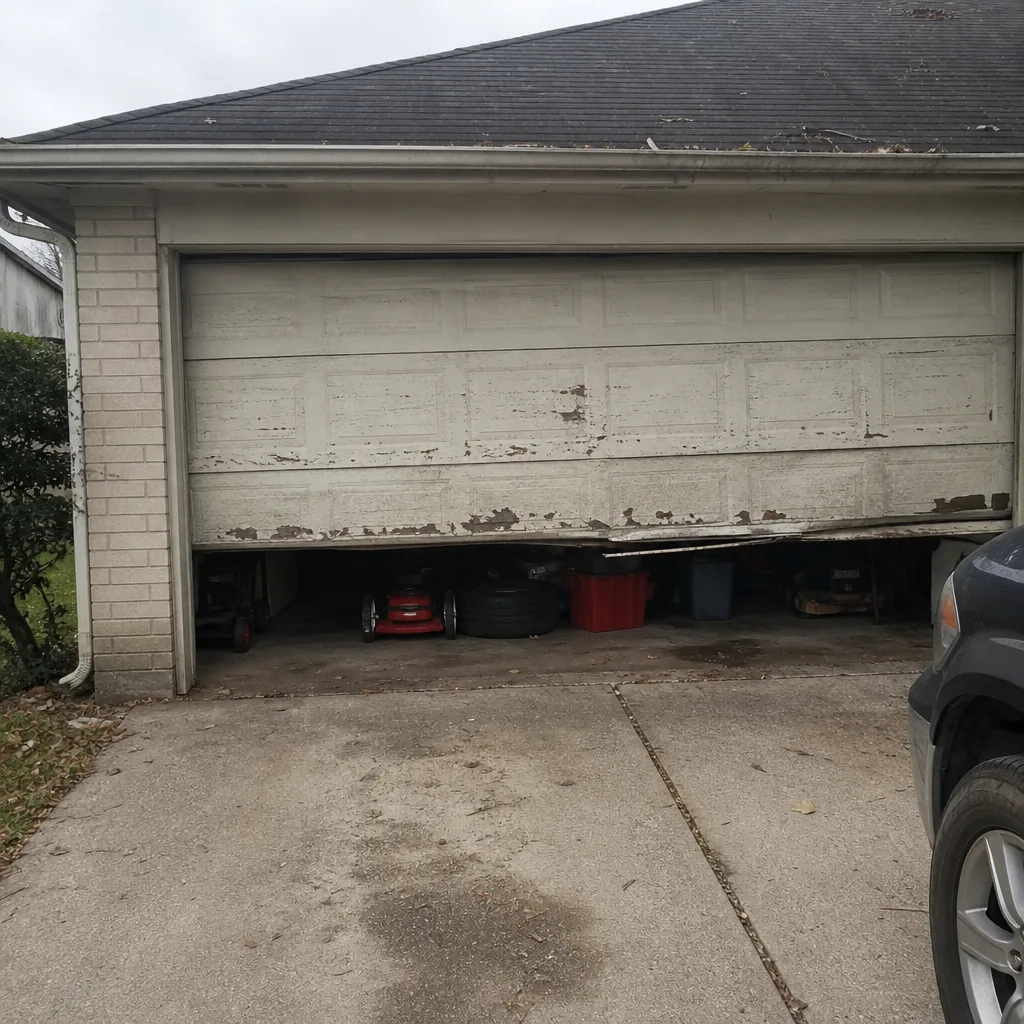 Before
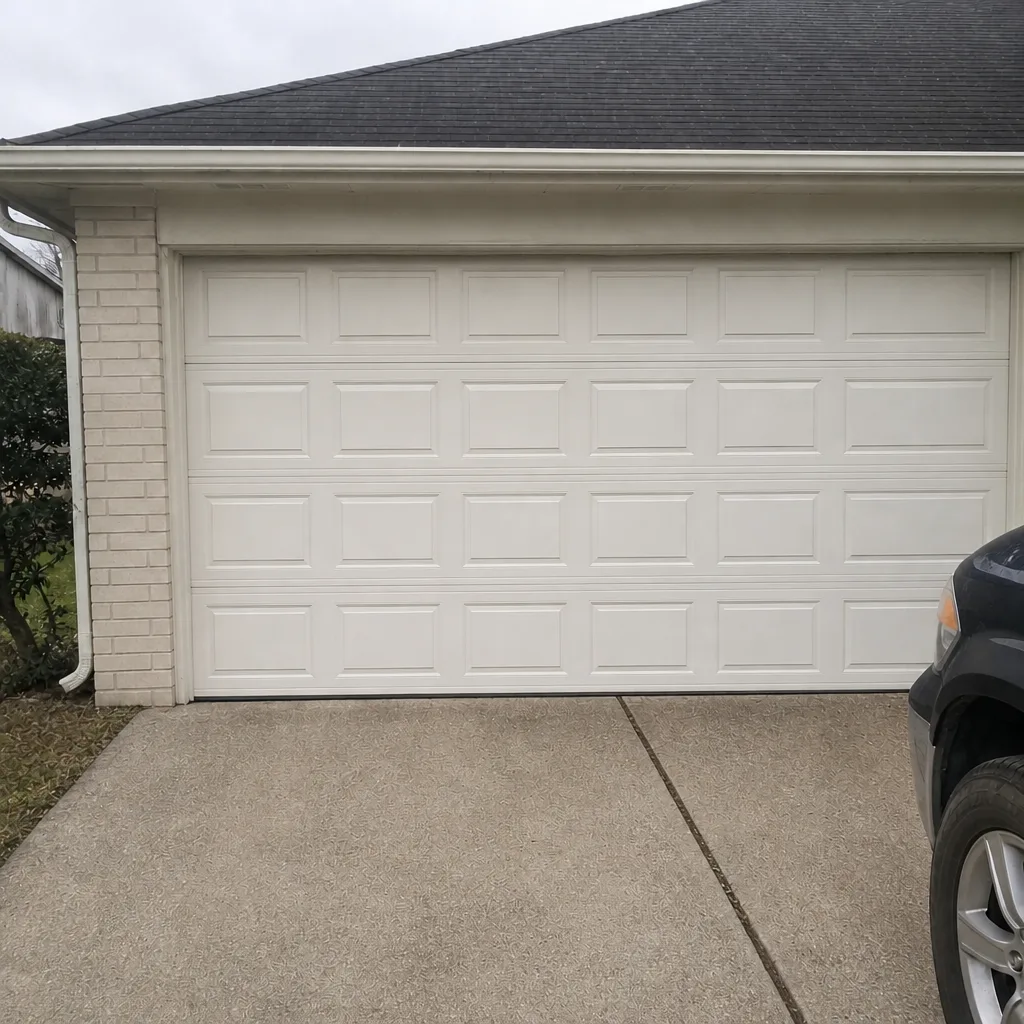 After
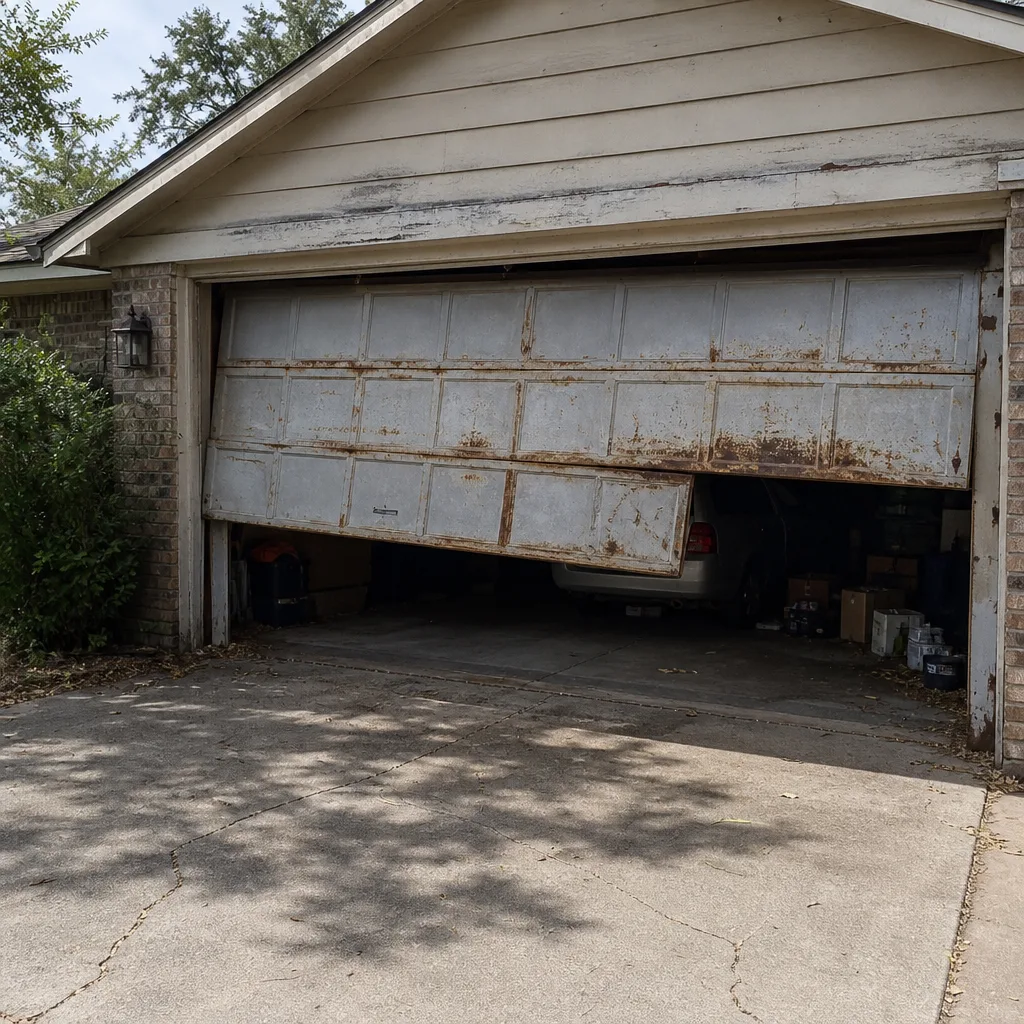 Before
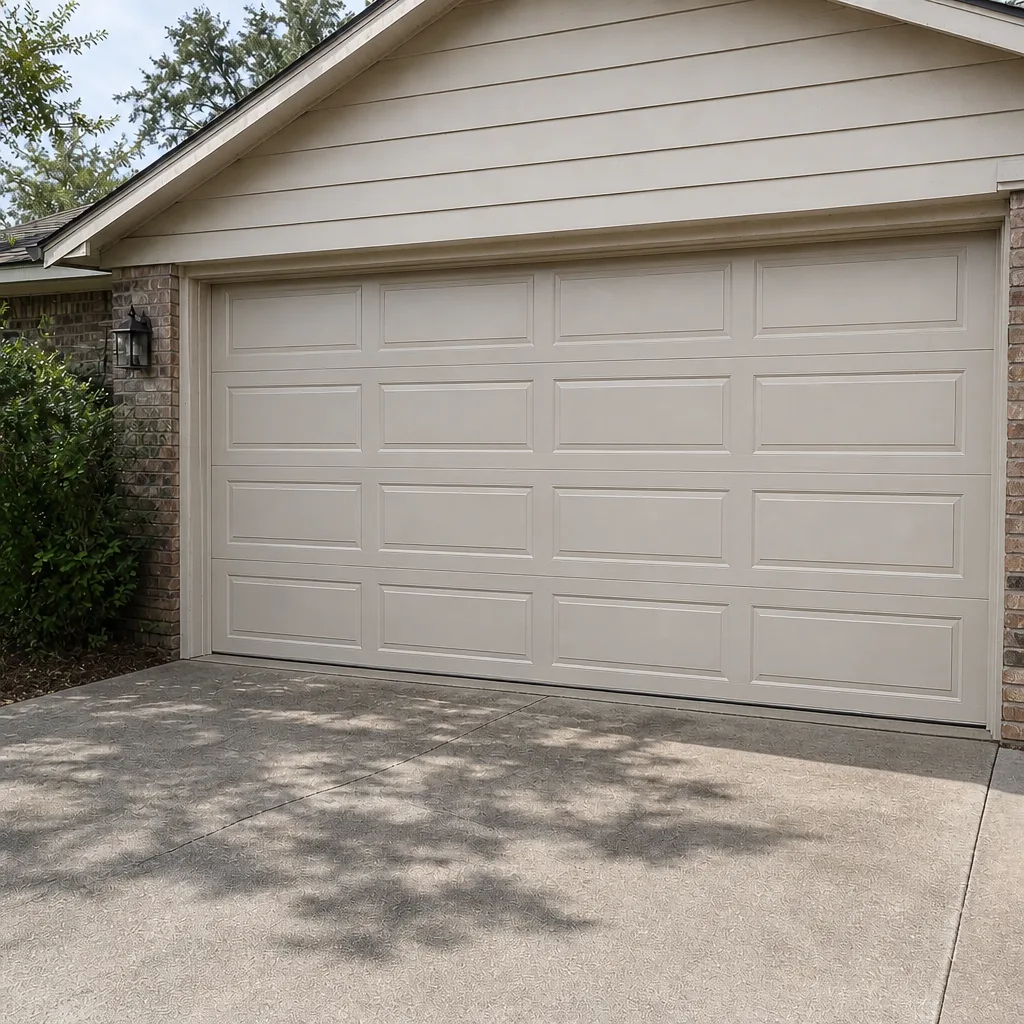 After
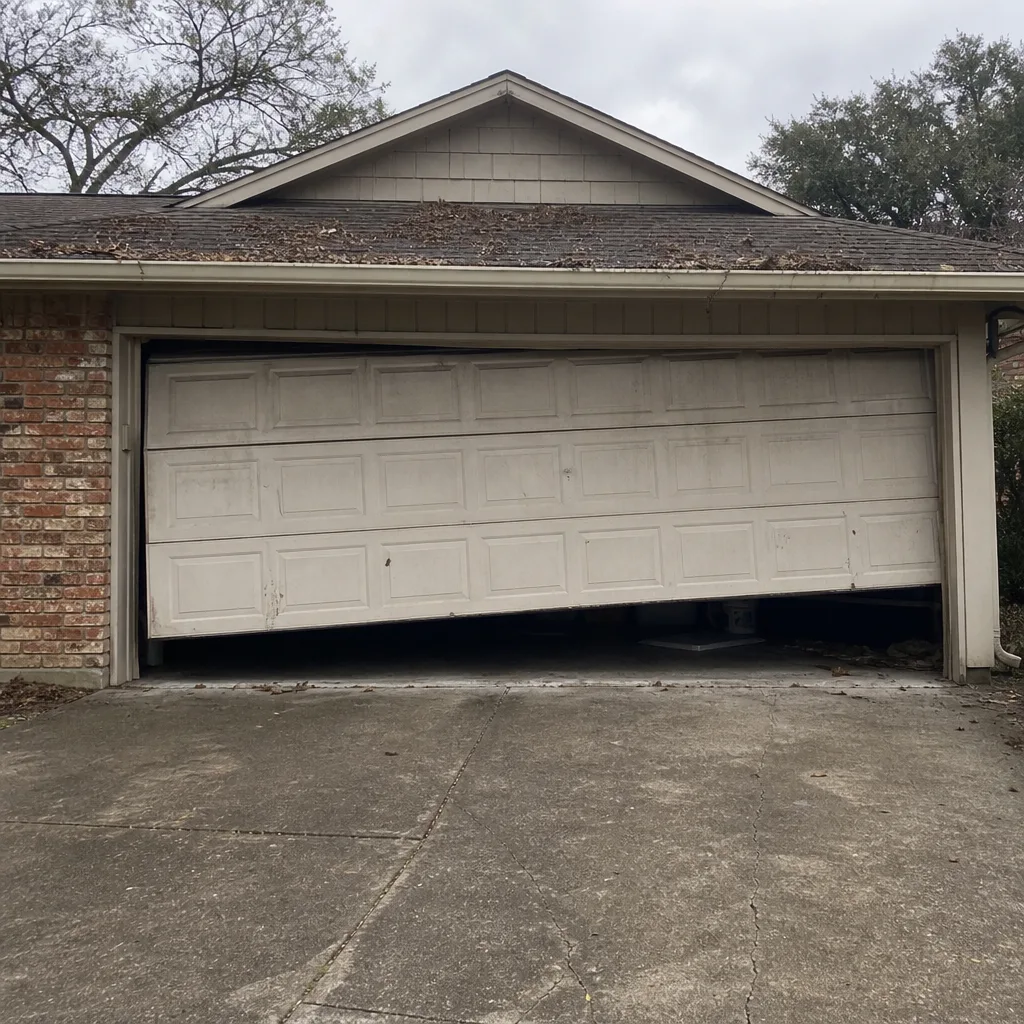 Before
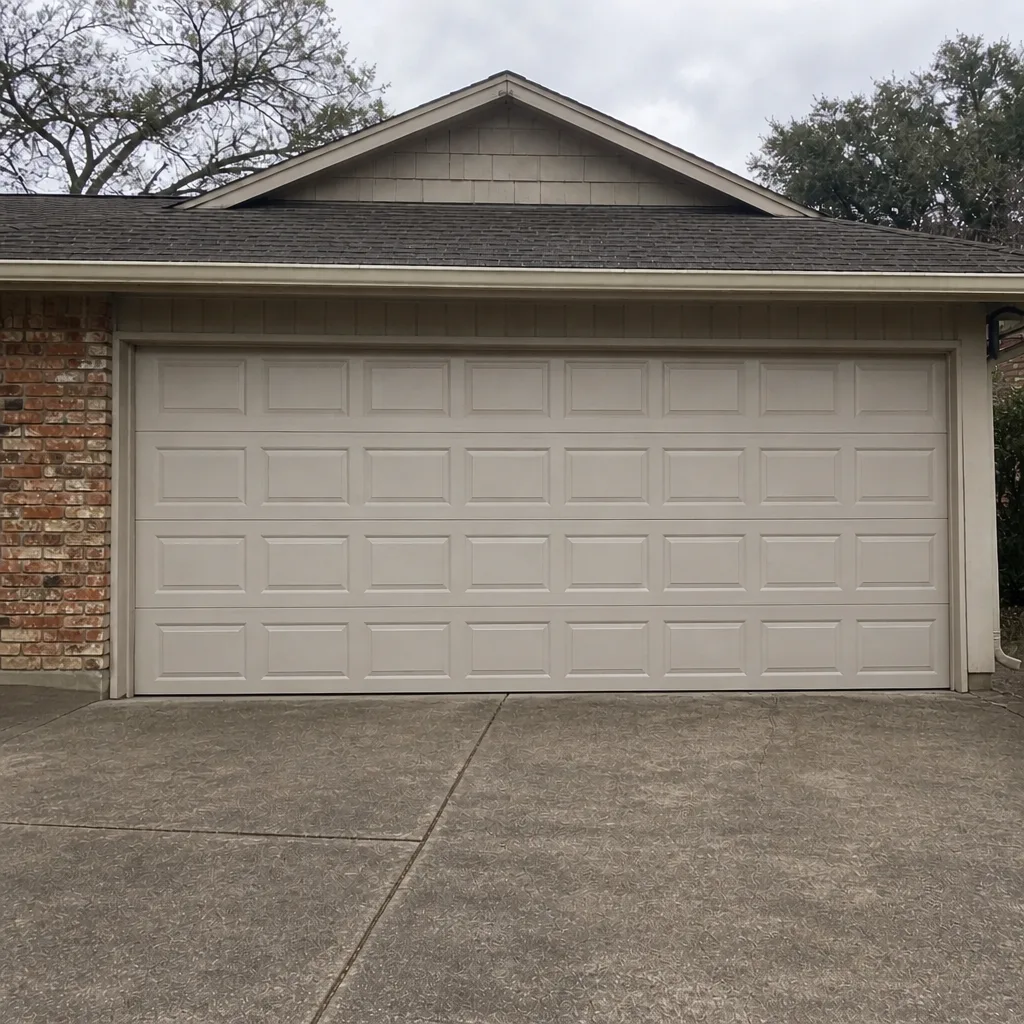 After
Common Mistakes to Avoid
- Using oil-based lubricant. It attracts dust and holds humidity. It gums up spring coils and makes the whole door sluggish within a season. Use silicone spray or white lithium grease instead.
- Skipping the bottom seal test because the door “looks fine.” A hairline gap at one end is invisible in daylight but lets in rain, insects, and cold air. Do the after-dark light test.
- Assuming every opener problem is a bad opener. Heat, friction, a slightly stiff door, and a mis-set travel limit all produce symptoms that look like a failing motor. Diagnosis first, replacement only if the diagnosis calls for it.
- Ignoring small rust on hinges and rollers. Rust on the hinge pivot stiffens the hinge, which loads the opener and adds stress to the door panels. Fixing it early costs far less than a door replacement later.
- Testing the spring by hand. Even checking whether a spring is under tension requires a technician’s approach. It’s safer to assume you shouldn’t touch it.
- Skipping hurricane prep because “the last storm missed us.” The prep takes an afternoon, and the alternative in a real event is a door that opens a house to wind and rain.
- Assuming your Memorial door was installed with the same hardware as new construction. Older homes in this area sometimes have older, heavier doors and parts that need a specialized look. A technician who has seen both old and new systems can spot the difference in minutes.
When to Call a Professional
Call us when the door is out of balance, a spring has broken or looks like it’s on its way, the door has jumped the track, a cable is frayed or rusted, or the opener has stopped responding to the remote. Also call if the opener has started reversing on hot afternoons and a ventilation check hasn’t solved it, or if you’ve never had a technician look at a door that’s more than a few years old. Those are the situations where a free estimate from a professional saves money and risk. Garage Door Repair Memorial offers free estimates in Memorial. Call (877) 492-2056. We answer 24/7. Fast dispatch from 7am to 7pm, Sunday through Friday. Our technicians have up to 11 years of experience with systems on Memorial homes, and we work on the brand already on your door – including Chamberlain, Genie, Clopay, and Amarr.
Frequently Asked Questions
A Memorial checklist includes lubrication every three to four months with a humidity-resistant product, a monthly balance and safety-reverse test, a bottom seal contact test twice a year on the full width of the door, a hardware corrosion inspection before and after the wet season, opener heat and ventilation checks in July and August, and hurricane prep in May. Cold-weather items matter only in the narrow January window.
Three to four times a year is the right cadence for Memorial’s humidity. High humidity keeps lubricant from setting and makes it more likely to collect grit, so more frequent light applications work better than one heavy coat. If the door cycles many times a day, err on the side of more often. Call (877) 492-2056 for an exact maintenance quote – estimates are free.
We can often schedule same-day for repair calls, especially for spring, opener, and track issues. We answer 24/7, and our fast dispatch runs 7am to 7pm, Sunday through Friday. A call outside those hours is booked into the next opening. Call (877) 492-2056 for the soonest available time and a free estimate.
Yes. The local professionals we connect you with are licensed and insured as their state requires, and our technicians have up to 11 years of experience. If you’d like to confirm the credentials before booking, call (877) 492-2056 and we’ll go over them with you.
No. We quote and agree on the price before any work starts, and the written estimate sets the final price. If we find something extra during the repair that you want done – a rusted roller we didn’t expect to replace, for example – we’ll quote and agree on that separately before proceeding. Design and installation work is measured and quoted the same way. Call (877) 492-2056 for a free estimate.
No. Spring replacement is not a DIY repair, and every manufacturer and safety organization in the trade advises against it. A torsion spring under tension can cause serious injury. If you suspect a spring problem – the door is heavy, drops on its own, or you heard a loud snap – leave it alone and call (877) 492-2056. Spring repair is one of our dedicated services, and estimates are free.
Run a short diagnosis first: check the power, test the manual release, look for heat-related symptoms, and clean the photo-eye lenses. If the opener reverses only on hot afternoons, that’s often a ventilation or resistance issue, not a motor failure. If the motor itself is failing, or the control board has gone out, replacement is often the better call. Our garage door opener repair service can diagnose it and tell you which is genuinely needed. Call (877) 492-2056.
In May, before hurricane season opens, test the door’s full close, verify the bottom seal is flush, confirm the manual release works, clear the area near the tracks, and do a corrosion check on hinges, rollers, and cables. A technician can check the wind-load rating if you’re not sure. A free estimate takes about half an hour and could save the door later.
The Bottom Line
A Memorial garage door needs the kind of maintenance that matches its actual climate, not a checklist written for snow country. Humidity, not frost, drives most of the wear. Heat, not cold, is what stresses the opener. A few simple steps four times a year – lubrication, a balance test, a bottom seal contact check, a corrosion walk-through, and a ventilation check in the heat of summer – will keep most doors running for years longer than a skipped-maintenance door. The one thing to leave alone is the spring. That’s a professional’s job, and it’s worth every minute of the estimate. If any part of your checklist brings up something you’d rather not handle, call (877) 492-2056. We answer 24/7. Fast dispatch from 7am to 7pm, Sunday through Friday. Free estimates, and the price is quoted and agreed before any work starts.
Written by the team at Garage Door Repair Memorial.