
Last updated November 21, 2026
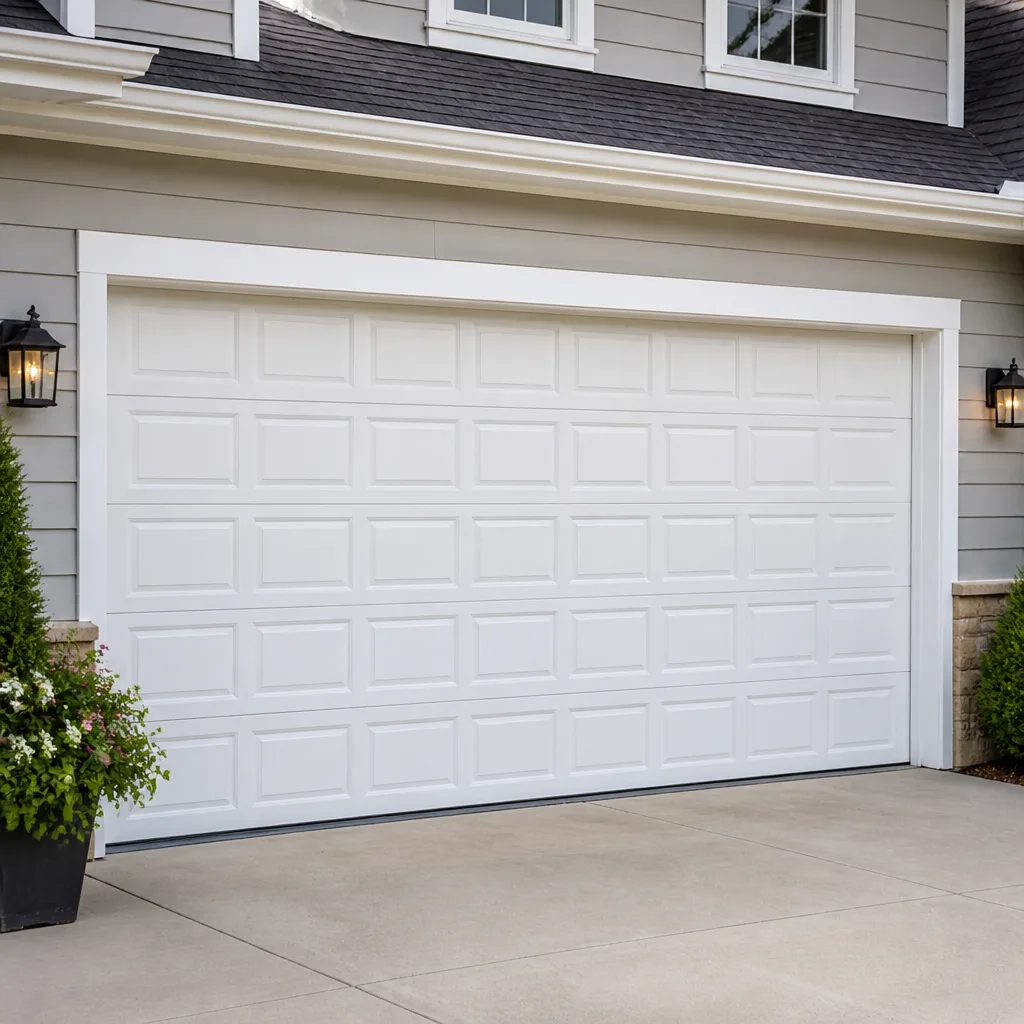 Raised-panel steel
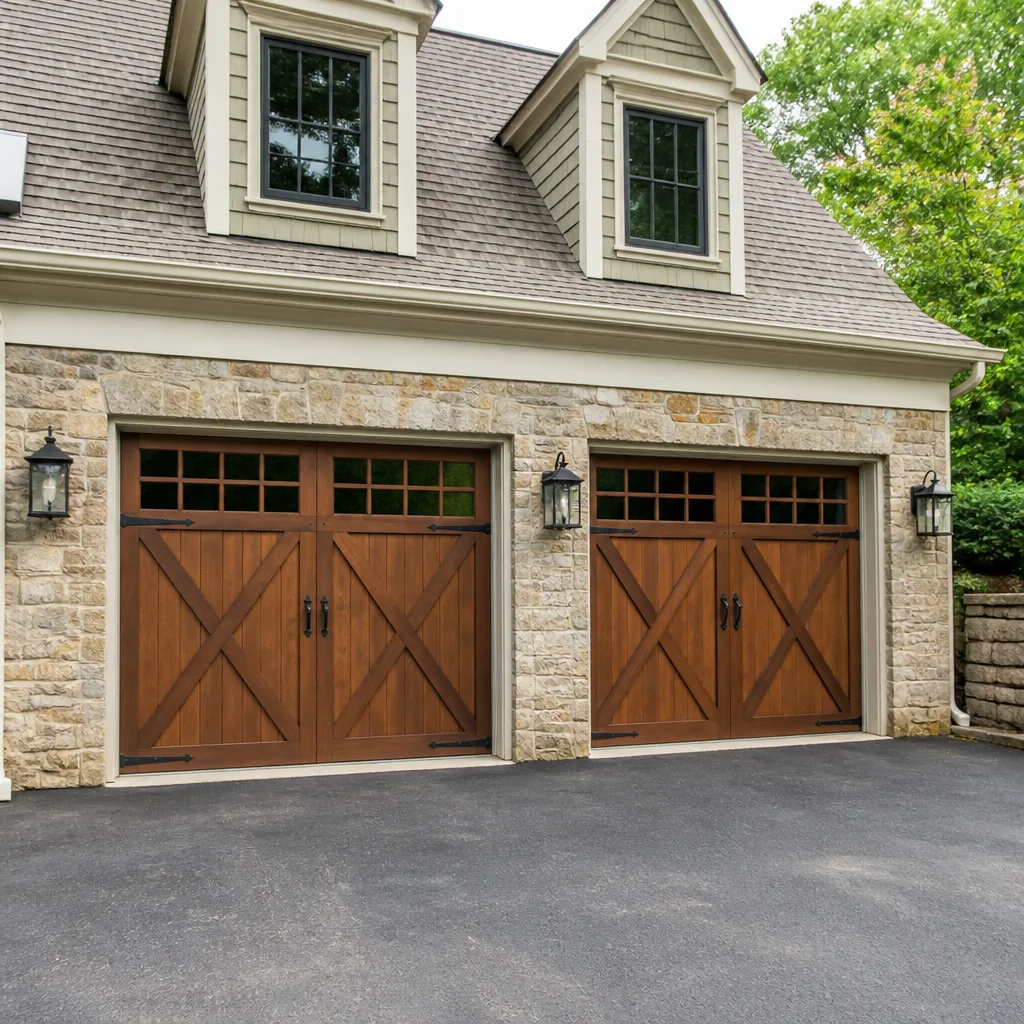 Carriage house
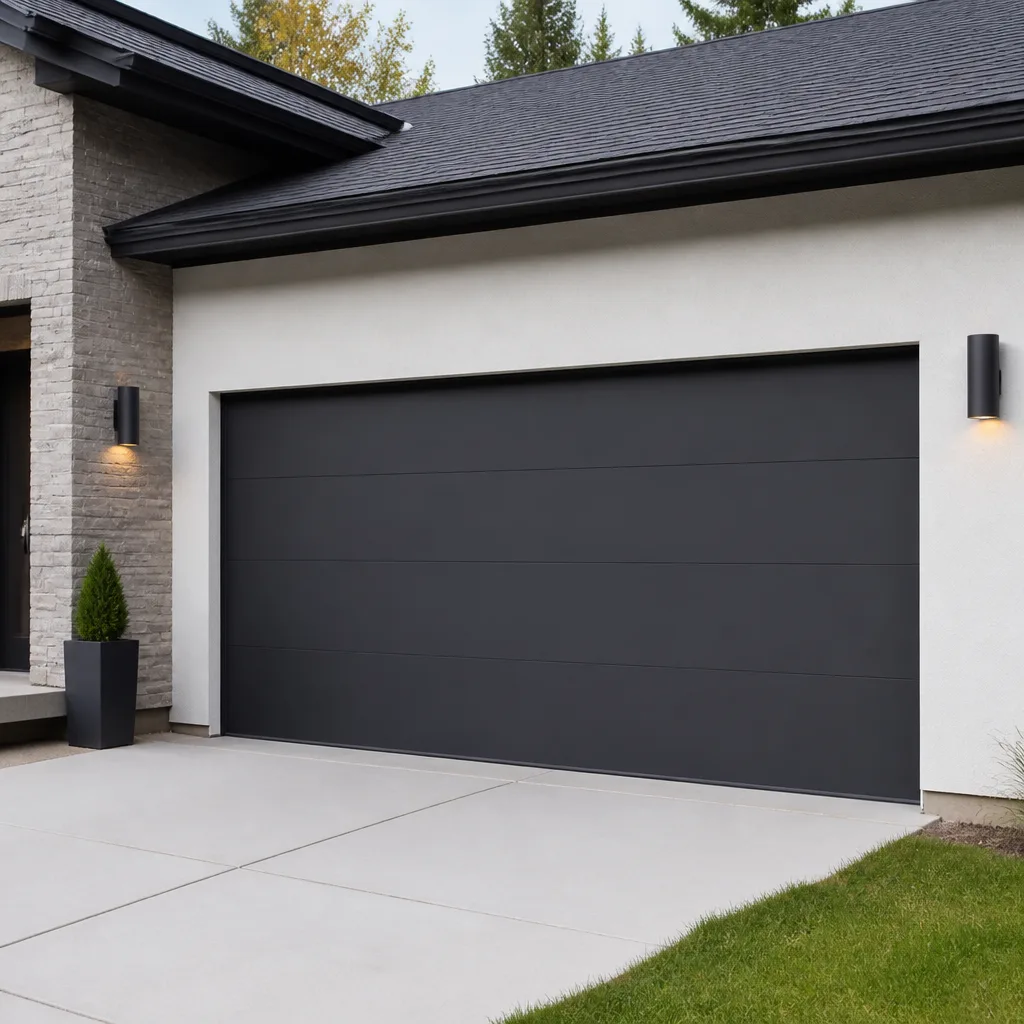 Modern flush
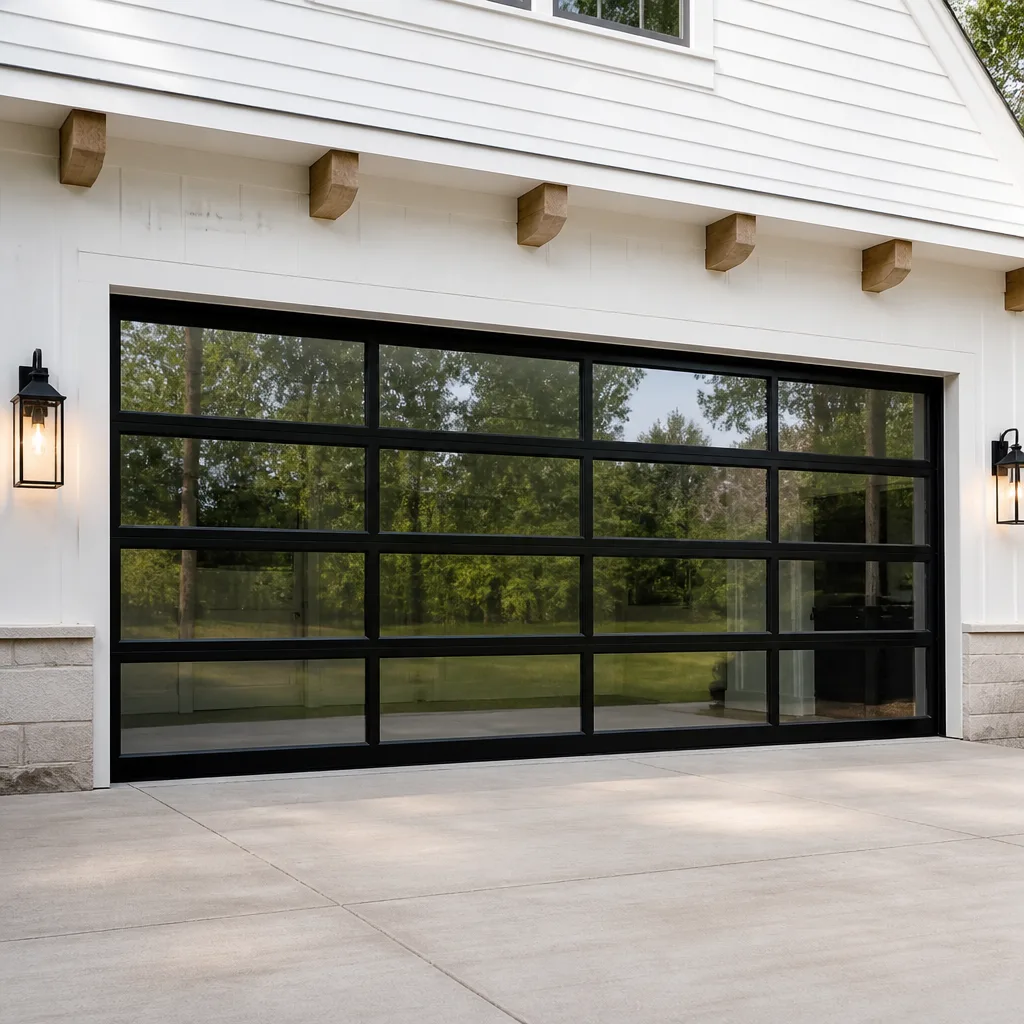 Full-view glass
 LiftMaster openers
 Chamberlain openers
Full 25-point door and opener safety check with every visit - springs, cables, rollers, tracks, and your LiftMaster or Chamberlain opener included
You get a price before we start. It does not change when the pro arrives.
Get your free estimateGarage Door Repair Troubleshooting in Memorial: Common Problems and How to Fix Them
A noisy door and a door that reverses mid-travel look like different problems. They’re often the same problem: a spring losing tension. That’s the trouble with chasing symptoms instead of systems. You tighten a track that didn’t need tightening, you replace a photo-eye that was working fine, and a cheap fix turns into a service call you didn’t need. Garage doors fail in predictable categories, and each category has its own fingerprint. Once you know which fingerprint you’re looking at, diagnosis gets much faster. This guide maps the failures we see most often in Memorial to their root causes, draws clear lines around what’s safe to check yourself, and shows you how to read what your opener is already telling you.
Quick Answer
Most garage door problems in Memorial fall into one of six categories: mechanical (springs and cables), electrical (opener board and wiring), sensor, track and roller, weather seal, and balance. Match the symptom to the category first, and you’ll usually know whether it’s a five-minute adjustment or a job for a trained technician. Anything involving stored spring tension is never a DIY repair. Springs, cables, and the hardware that holds them under load are the one part of this system where a mistake can cause serious injury.
Key Takeaways:
- Diagnose by category, not by symptom. Six categories cover nearly every failure.
- Houston-area humidity is hard on cables and photo-eye lenses, and fogged lenses mimic sensor misalignment.
- You can safely check balance, tracks, rollers, seals, and error codes. You should not touch springs or cables.
- Blinking opener lights are a diagnostic code, not a random malfunction. Count the blinks before you call.
- Buying parts before diagnosis wastes money more often than it saves it.
Styles & brands we work with
- Raised-panel steel
- Carriage house
- Modern flush
- Full-view glass
- LiftMaster openers
- Chamberlain openers
Table of Contents
- The Six Failure Categories That Cover Almost Every Problem
- Springs and Cables: The Mechanical Category
- Opener Faults: Reading Error Codes on LiftMaster, Chamberlain, and Genie
- Photo-Eye Sensors and Why Memorial Humidity Confuses Them
- Tracks, Rollers, and the Balance Test
- Weather Seals, Humidity, and the Memorial Climate Factor
- The Safe DIY Boundary: What You Can Check and What You Can’t
- Parts-First vs. Labor-First: When Buying a Part Saves Money
The Six Failure Categories That Cover Almost Every Problem
Every garage door problem we diagnose in Memorial fits into one of six buckets. Sorting the symptom into a category takes about a minute and tells you most of what you need to know about urgency, cost, and safety.
- Mechanical. Springs, cables, drums, and hinges. Symptoms: a loud bang, a door that won’t lift, a door that slams down, a visible gap in the spring coil.
- Electrical. The opener’s control board, wiring, and power supply. Symptoms: no response to the remote, lights that flicker, a motor that hums without moving the door.
- Sensor. The photo-eye pair near the floor. Symptoms: the door closes a foot and reverses, or won’t close at all with the wall button held.
- Track and roller. The guide rails and the wheels that ride in them. Symptoms: grinding, binding, a door that racks sideways as it rises.
- Weather seal. The bottom rubber and the perimeter stops. Symptoms: daylight under the door, drafts, water intrusion, pests.
- Balance. The relationship between spring tension and door weight. Symptoms: a door that drifts down on its own, strains the opener, or feels heavy by hand.
The categories overlap, and that’s the point. A balance problem strains the opener until it becomes an electrical problem. A bad seal lets humidity in, which corrodes cables until you have a mechanical failure. When you call for Garage Door Repair Memorial, describing the category you think you’re in helps us route the right diagnostic on the first visit.
Springs and Cables: The Mechanical Category
A torsion spring stores enough energy to lift a door weighing hundreds of pounds, and when it breaks, that energy releases all at once. That bang you heard from the garage is usually a spring letting go. After a break, the door becomes extremely heavy and the opener should not be used, because it will try to lift a door it was never designed to carry alone.
What to look at, safely, from a distance:
- A clean gap in the coil of a torsion spring above the door.
- A door that lifts a few inches and stops, or won’t budge at all.
- A cable that’s jumped its drum or is hanging slack on one side.
- A door that hangs crooked, with one side higher than the other.
What not to do: don’t try to wind, unwind, or “test” a torsion spring with hand tools, and don’t cut or loosen a cable to relieve tension. Springs and cables are under load even when the door is down, and the winding process requires specific rods and a working knowledge of how the assembly behaves. Manufacturers and safety organizations advise against DIY spring work for good reason. In our experience, spring replacement is not a DIY repair, and the injuries we hear about come from homeowners who were careful and still got hurt.
If you’ve confirmed a broken spring, stop operating the door and call for help. Our garage door repair service handles spring and cable work as a dedicated job, and the price is quoted and agreed before any work starts. Call (877) 492-2056. We answer 24/7. Fast dispatch from 7am to 7pm, Sunday through Friday.
Opener Faults: Reading Error Codes on LiftMaster, Chamberlain, and Genie
Your opener is already diagnosing itself. Most modern units flash the main light in a pattern when something’s wrong, and counting those blinks is the fastest troubleshooting step available to a homeowner. A common pattern on LiftMaster and Chamberlain units is a specific number of flashes that points to a sensor issue, a different count for a travel-limit problem, and another for a logic board fault. Genie units use their own sequences, often paired with a diagnostic LED on the motor head.
How to read the blinks:
- Unplug the opener for thirty seconds, plug it back in, and try the wall button once.
- Watch the main light on the motor head and count the flashes in the repeating pattern.
- Write the count down. The pattern repeats, so you can verify it.
- Check the owner’s manual or the label inside the motor cover for that count’s meaning.
What the codes usually tell you: one or two flashes often means the safety sensors aren’t communicating, three to five often points to a travel limit or force setting, and six or more frequently indicates a logic board or wiring fault. The exact mapping varies by model, and that’s why the count matters more than the guess. Older Craftsman units and newer smart-connected openers both follow this logic, just with different sequences.
When an opener hums but doesn’t move the door, or clicks and resets, the issue may be the board, the capacitor, or the drive gear rather than the door itself. That’s a distinct repair from the door hardware, which is why we treat garage door opener repair as its own specialty. We work on LiftMaster, Chamberlain, Genie, and the other brands already on your home. If you’d rather hand off the diagnosis, call (877) 492-2056 for a free estimate.
Photo-Eye Sensors and Why Memorial Humidity Confuses Them
The photo-eye pair sits a few inches off the floor on each side of the opening, and the door reverses if anything interrupts the beam. In Memorial, the most common false alarm isn’t a misaligned sensor at all. It’s a fogged or filmed lens. Houston humidity keeps a thin layer of moisture and dust on the lens surface, and that film scatters the infrared beam just enough to break the signal. Homeowners spend an afternoon realigning sensors that were perfectly aligned the whole time.
Before you assume misalignment, run this check:
- Wipe both lenses with a dry, soft cloth. No cleaners that leave residue.
- Look at the indicator light on each sensor. A steady light on both means they see each other.
- Check for spiderwebs or debris on the lens housing, which collects faster in humid weather.
- Shut off the breaker and confirm the sensor brackets are snug, not bent.
- Check that the sun isn’t hitting one eye directly at the same time each day. Late-afternoon glare can trip the beam.
If wiping the lenses fixes it, you found your problem. If one light stays dark or flickers after cleaning, the sensor or its wiring needs attention. Don’t bypass or tape over a sensor to force the door closed. It’s a safety device, and it exists because a closing door can injure a child or a pet. When cleaning doesn’t solve it, that’s a good moment to call (877) 492-2056 and describe what the lights are doing.
Tracks, Rollers, and the Balance Test
Your door should travel smoothly and stay put when you let go of it halfway up. That’s the balance test, and it’s the simplest mechanical check a homeowner can do safely. It also tells you whether your opener is working harder than it should, which is a common root cause behind electrical symptoms.
How to run the balance test:
- Pull the emergency release cord to disconnect the opener from the door.
- Lift the door by hand to about waist height and let go.
- A balanced door stays roughly in place. A door that drops or rises on its own is out of balance.
- Reconnect the opener by running it until the carriage re-engages, then test the wall button.
An unbalanced door points to spring tension, which puts you back in the do-not-touch category. But if the door moves smoothly by hand and still binds when connected, look at the tracks and rollers. Tracks get knocked out of alignment by a bump from a car or a bicycle, and rollers wear flat spots that cause grinding. In our experience working Memorial homes, we see bent track sections near the floor line more than anywhere else, usually after someone backed into the opening at an angle.
You can safely tighten loose track brackets and wipe down the tracks. Don’t lubricate tracks with grease, because it collects grit and turns into an abrasive paste. Rollers get a light silicone spray, not tracks. If a track is visibly bent or a roller is cracked, that’s a part replacement, and we supply the right part rather than a universal one that fits “close enough.”
Weather Seals, Humidity, and the Memorial Climate Factor
Weather seals don’t fail dramatically. They fail quietly, and Houston humidity finds every gap. A worn bottom seal lets moist air into the garage, and that moisture settles on the steel cables, the hinges, and the bottom section of the door. Over a few seasons, cables that would have lasted much longer start to corrode, and corrosion is what turns a cable into a mechanical failure.
Signs your seal needs attention:
- Daylight visible under the door when it’s closed.
- Water pooling at the threshold after a heavy rain.
- A bottom rubber that’s cracked, flattened, or peeled away at the edges.
- Insects or small pests getting in around the perimeter.
- A visible gap where the door meets the frame on the sides or top.
Replacing a bottom seal is one of the few jobs a careful homeowner can do, provided the door is balanced and the opener is disconnected. Perimeter stops and the seal between sections are trickier and often need the door off its tracks, which is why we handle those as part of a repair call. The payback is real: a tight seal keeps the garage drier, and a drier garage slows cable corrosion, which is the failure category we’d most rather help you avoid. If you’re in Memorial and unsure whether your seal is the problem, call (877) 492-2056 and we’ll talk it through.
The Safe DIY Boundary: What You Can Check and What You Can’t
Here’s the line. On one side, checks and adjustments that need no special tools and carry no risk. On the other, anything holding stored energy. Cross that line without training and you’re gambling with your hands.
Safe to check or adjust yourself:
- Wipe photo-eye lenses and confirm both indicator lights are steady.
- Run the balance test with the opener disconnected.
- Look at your opener’s blink code and write the count down.
- Clear debris from tracks and check for obvious bends.
- Test the wall button, the remote, and the safety reverse with a small object.
- Replace a bottom seal on a balanced door with the opener disconnected.
Not safe. Call a trained technician:
- Winding, unwinding, or replacing torsion or extension springs.
- Tightening, cutting, or reinstalling cables.
- Adjusting drums or the center bearing plate.
- Replacing hinges or rollers under a door that’s still under tension.
- Any repair that requires the door to come off its tracks.
Garage doors are our only business, and we’ve learned that the homeowners who troubleshoot well are the ones who know exactly where to stop. Our technicians have up to 11 years of experience, and the jobs we handle most are the ones homeowners were right not to attempt.
Parts-First vs. Labor-First: When Buying a Part Saves Money
Buying a part before you know the failure is a common way to waste money. The symptom points at the sensor, so you order a sensor, and the real problem was a corroded wire connection that a five-minute diagnostic would have found. Now you own a part you don’t need, and you still need a technician.
Buy a part first when you know the exact model and the exact failure. Replace a cracked roller, a worn bottom seal, or a remote that’s been dropped one too many times, and you’ll save on the part. Verify the model number on the motor head label before ordering, because a LiftMaster remote won’t pair with a Chamberlain opener just because they look similar.
Call first when the symptom is ambiguous. Reversing doors, humming openers, and blinking lights all have multiple possible causes, and the diagnosis is the valuable part. Once we’ve identified the failure, we supply the part directly, which keeps the repair on the first visit instead of waiting on a third-party order. Our garage door installation work follows the same logic: measure, quote, order, install, no hand-offs.
Common Mistakes to Avoid
- Forcing a door with a broken spring. Running the opener after a spring snaps puts the full weight of the door on the opener and can bend the rail or burn out the motor. Stop using the door until it’s repaired.
- Taping over or bypassing the photo-eye sensors. It’s tempting when the door won’t close, but the sensor is the device that keeps the door from closing on a person or pet. Fix the sensor or call for help.
- Greasing the tracks. In Memorial’s humidity, grease traps grit and turns the track into an abrasive surface. Use a light silicone spray on rollers, not on the tracks themselves.
- Assuming a fogged lens is misalignment. The lenses in a humid garage film over, and the beam scatters. Wipe first, then check alignment.
- Ordering a part before diagnosis. A new opener board won’t fix a sensor problem, and returning electrical parts is often more trouble than the purchase was worth.
- Testing spring tension by hand. Don’t try to gauge a torsion spring’s load by winding it a little yourself. It’s the most dangerous component in the system, and the injury risk is real.
- Ignoring a door that reverses for no reason. An intermittent reverse often points to a loose sensor connection or a worn drive gear. Letting it go strains the opener until the failure gets bigger and more expensive.
See the difference
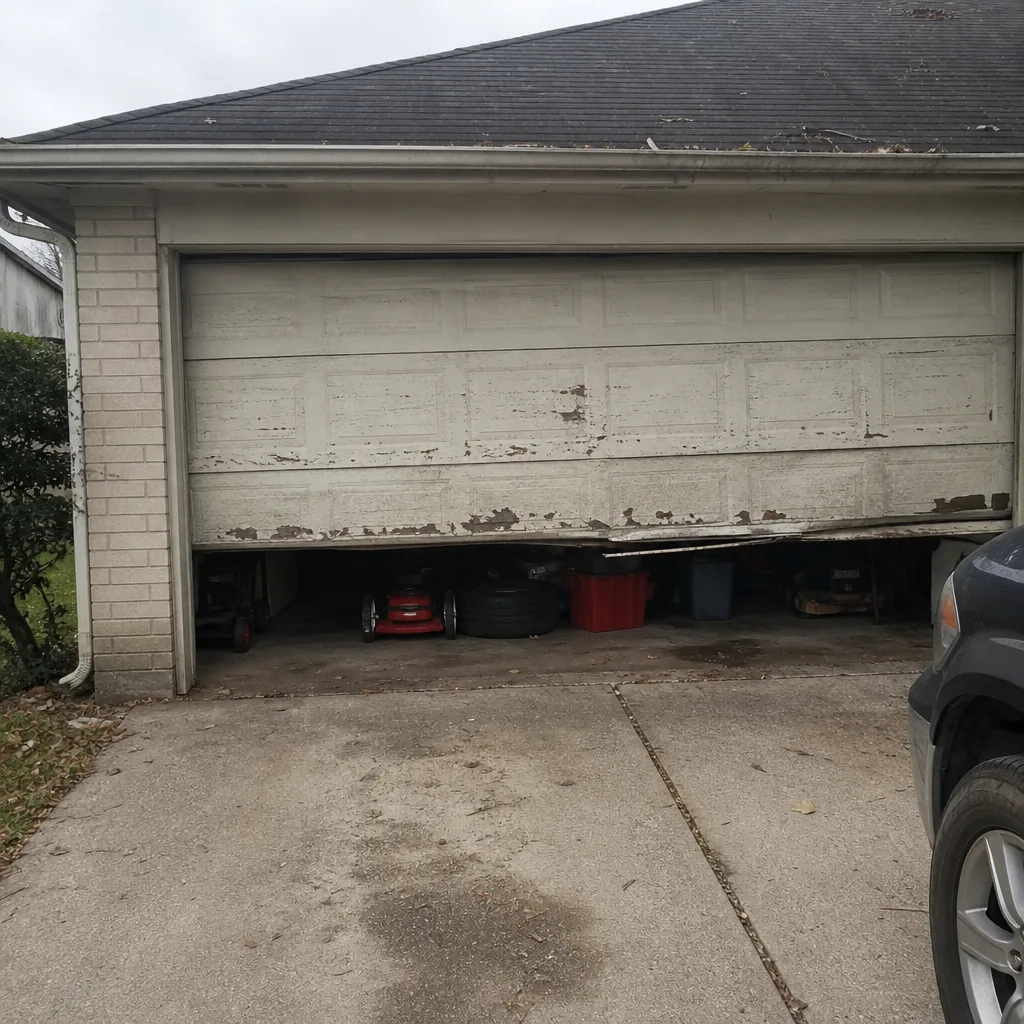 Before
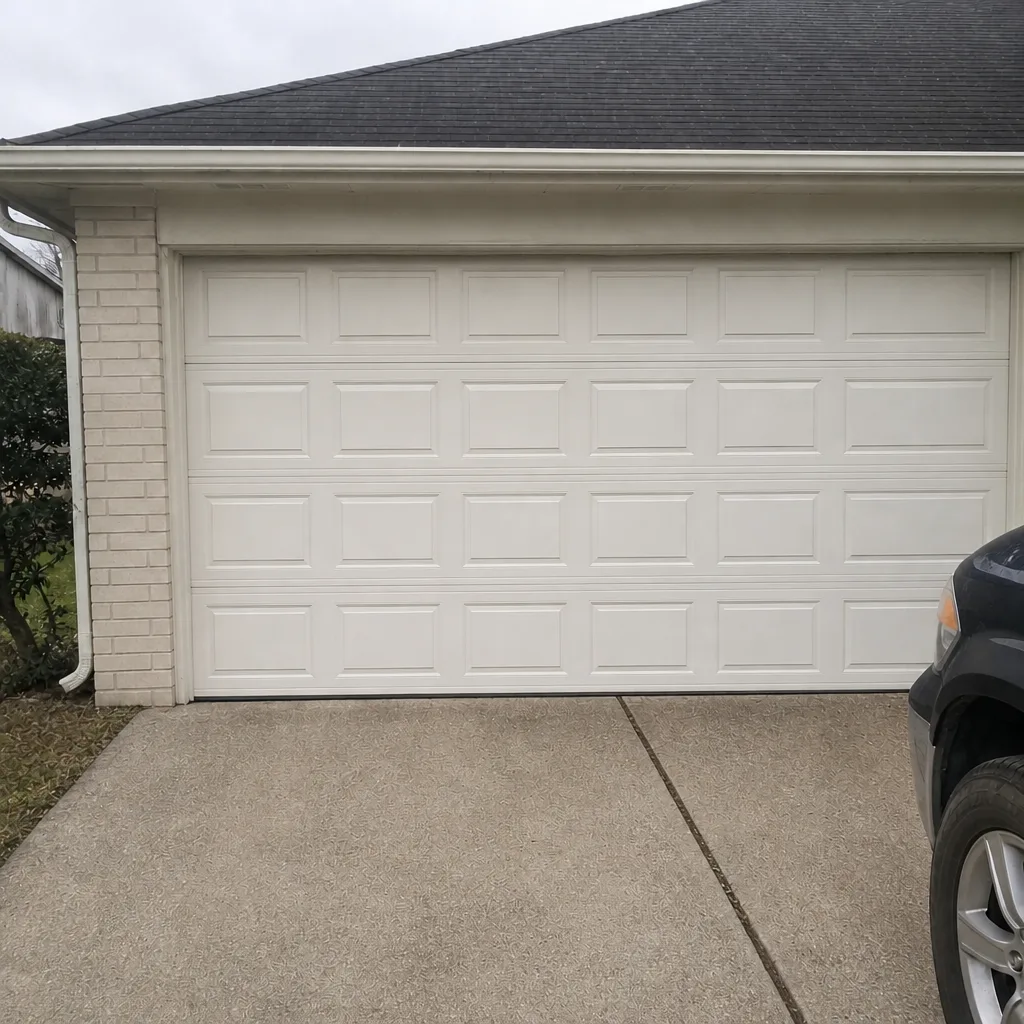 After
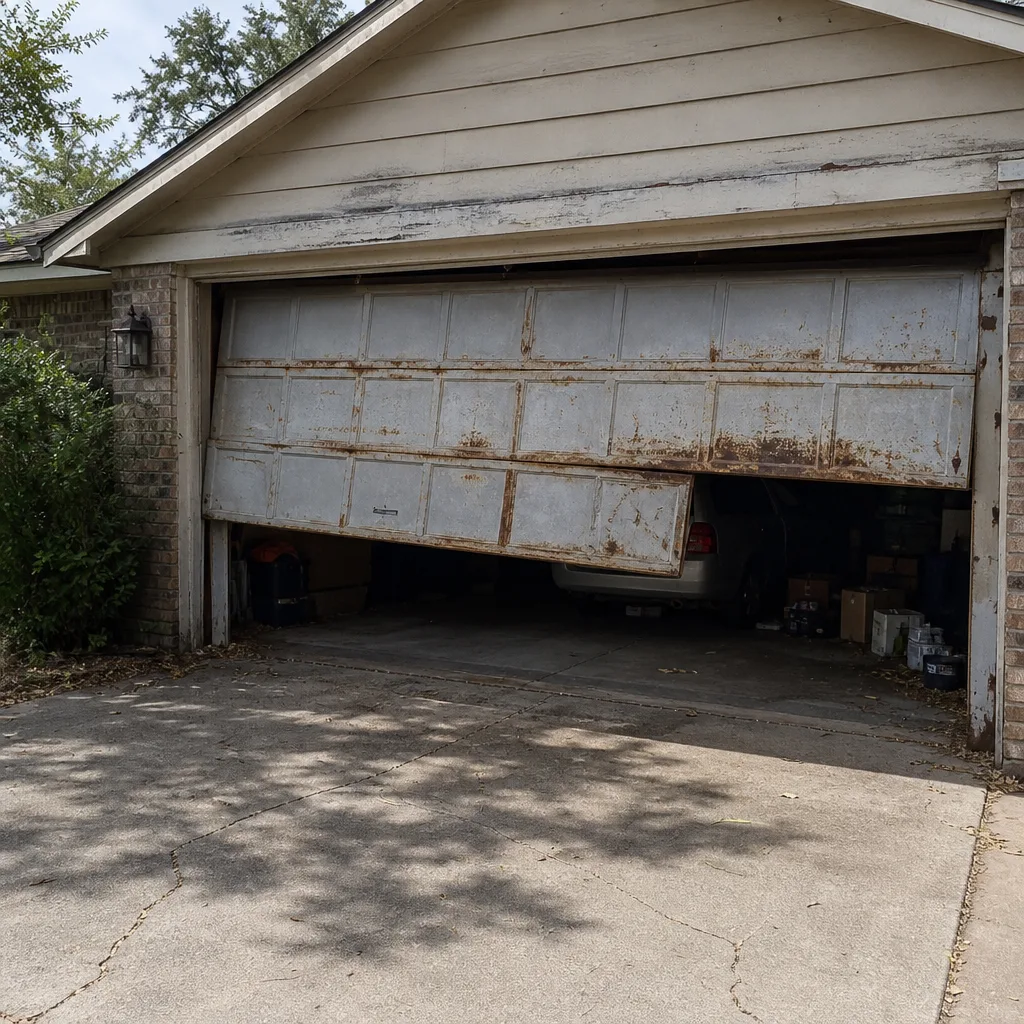 Before
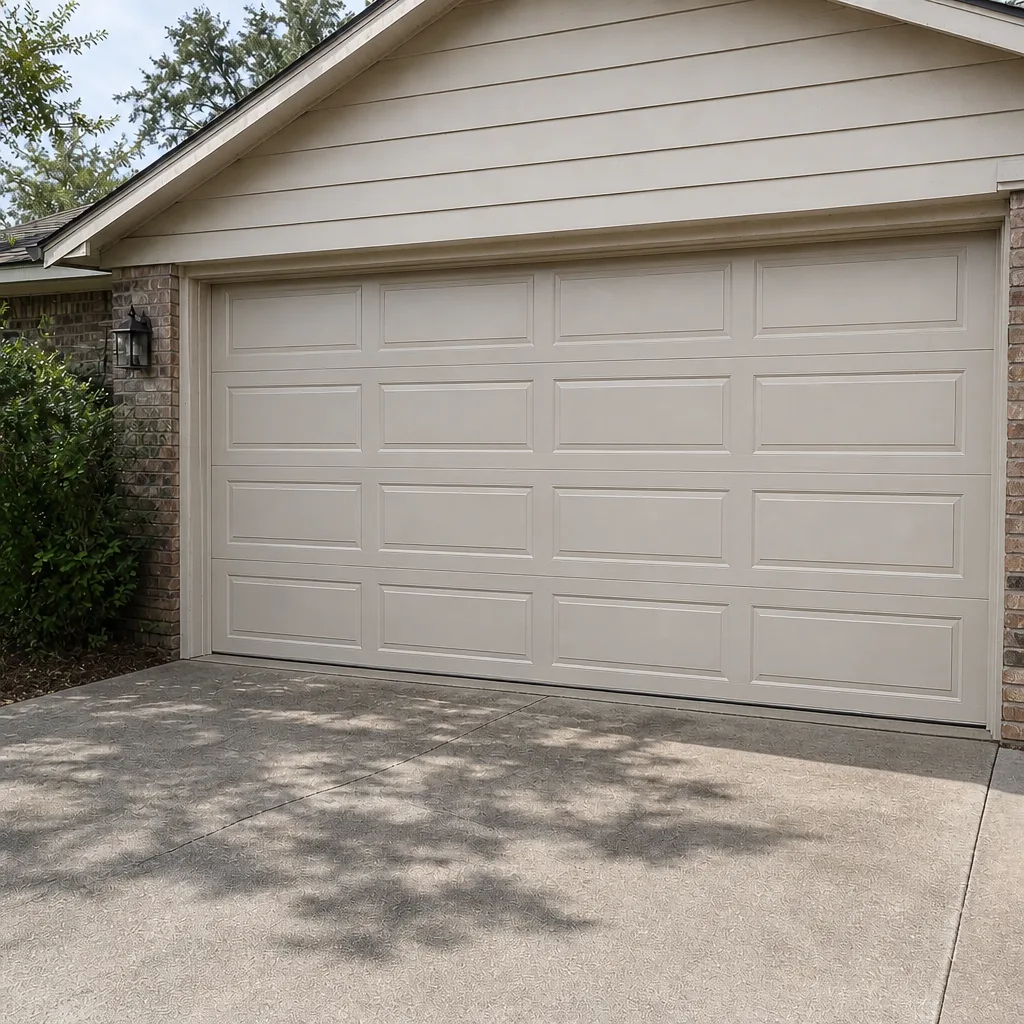 After
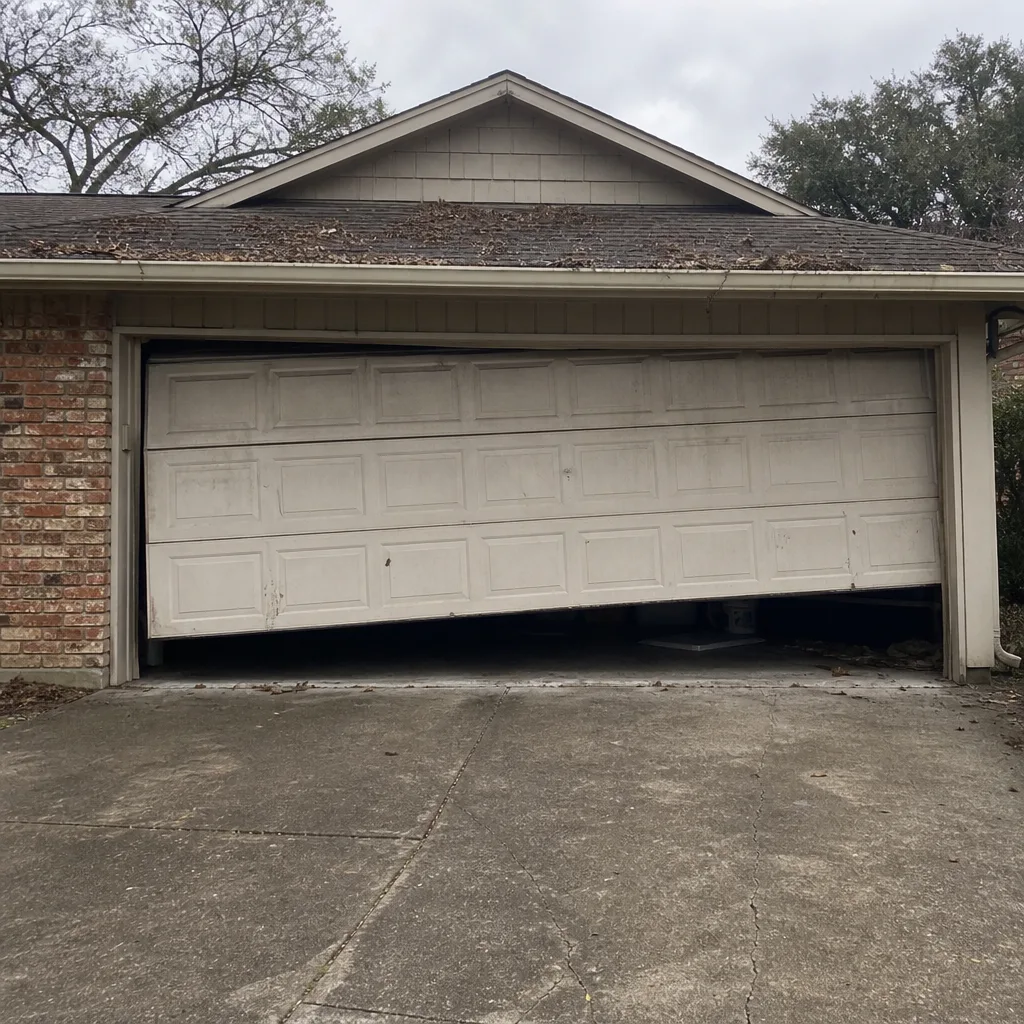 Before
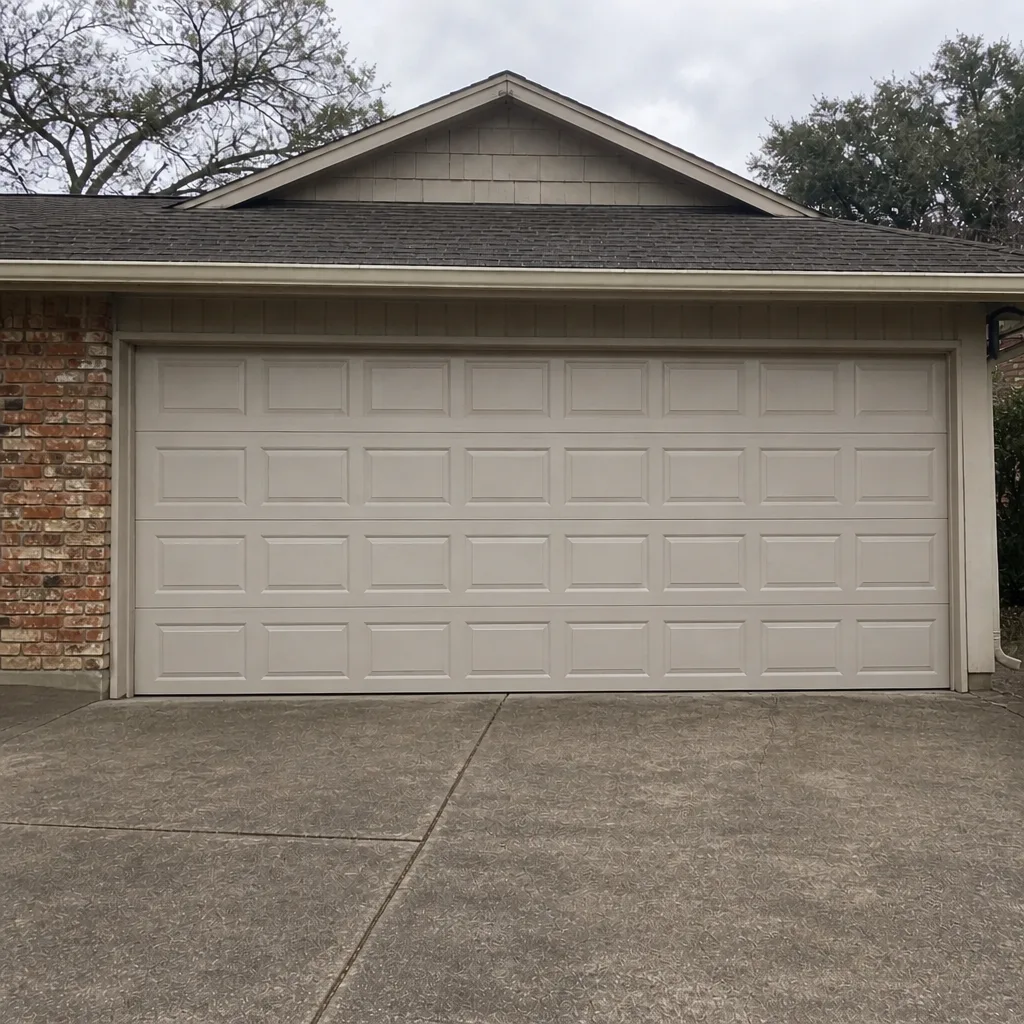 After
When to Call a Professional
Call a technician when the failure involves spring tension, cables, drums, or anything that requires the door off its tracks. Call when the door reverses on its own, when the opener hums without moving, when a blinking code keeps coming back after a reset, or when you’ve tried the safe checks and the door still isn’t reliable. If the door won’t close at all and stays open, that’s a security matter and worth treating with urgency. Garage Door Repair Memorial offers free estimates in Memorial. Call (877) 492-2056. We answer 24/7. Fast dispatch from 7am to 7pm, Sunday through Friday. The price is quoted and agreed before any work starts, so the written estimate is the number that matters.
Frequently Asked Questions
Disconnect the opener with the emergency release cord and try lifting the door by hand. If it’s extremely heavy and won’t stay up, the spring or cable is the problem. If the door lifts smoothly by hand but the opener doesn’t move it, the fault is in the opener. Don’t force a heavy door up by hand. Call (877) 492-2056 and describe what you felt, and we’ll help you figure out the next step.
The count of flashes in the repeating pattern is a diagnostic code, and the meaning depends on the model. One or two flashes usually points to a photo-eye problem, three to five often means a travel limit or force setting, and six or more frequently indicates a board or wiring fault. Check the manual for your specific model or call (877) 492-2056 with the count. We work on LiftMaster, Chamberlain, Genie, and the other brands already on your home.
A door that reverses at the same point on the travel usually has a travel limit set too short, a sensor issue, or a mechanical bind in the track at that height. In Memorial, the humidity often makes the sensor lens the culprit, so wipe both lenses first. If the reverse continues, call (877) 492-2056 for a diagnostic.
No. Replacing a torsion spring requires specialized winding rods, a working knowledge of how the assembly behaves, and an understanding of how much stored energy the spring holds. Manufacturers and safety organizations advise against DIY spring work because the injury risk is genuine, even for careful homeowners. Our technicians have up to 11 years of experience, and spring replacement is one of the most common repairs we handle.
Every job is priced per job by a written estimate, and the estimate is free. The price you’re quoted is the price you pay, and we agree to it before any work starts. Call (877) 492-2056 for an exact quote.
Most likely, yes. We service LiftMaster, Chamberlain, Genie, Clopay, Amarr, Wayne Dalton, Craftsman, and Raynor. That covers the mechanical doors and the smart-connected openers that show up in Memorial garages, so we work on what’s installed rather than steering you toward a different brand. Call (877) 492-2056 to confirm your model.
The Bottom Line
Diagnose by category, not by symptom. Mechanical, electrical, sensor, track and roller, seal, and balance cover nearly every garage door failure in Memorial, and sorting your problem into the right bucket tells you whether it’s a five-minute fix or a job for a trained technician. Houston humidity makes the sensor and cable categories the ones we see most. You can safely clean lenses, run a balance test, count blinks, and check your tracks. You should never touch spring tension. When in doubt, describe the category and let a specialist confirm it before you buy a part. The right part, installed correctly, is worth more than a part you didn’t need.
Call Garage Door Repair Memorial at (877) 492-2056 for a free estimate. We answer 24/7. Fast dispatch from 7am to 7pm, Sunday through Friday. The price is quoted and agreed before any work starts.
Written by the team at Garage Door Repair Memorial.