
Last updated November 21, 2026
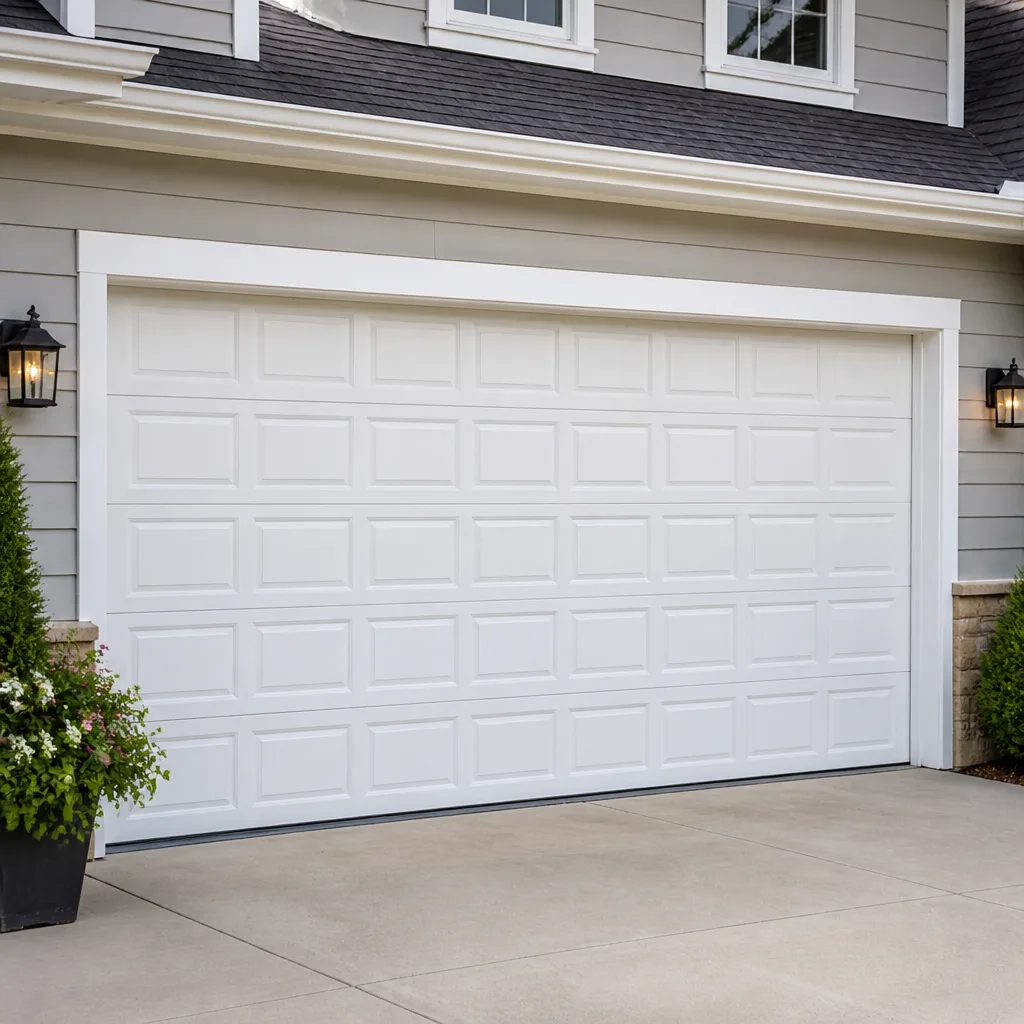 Raised-panel steel
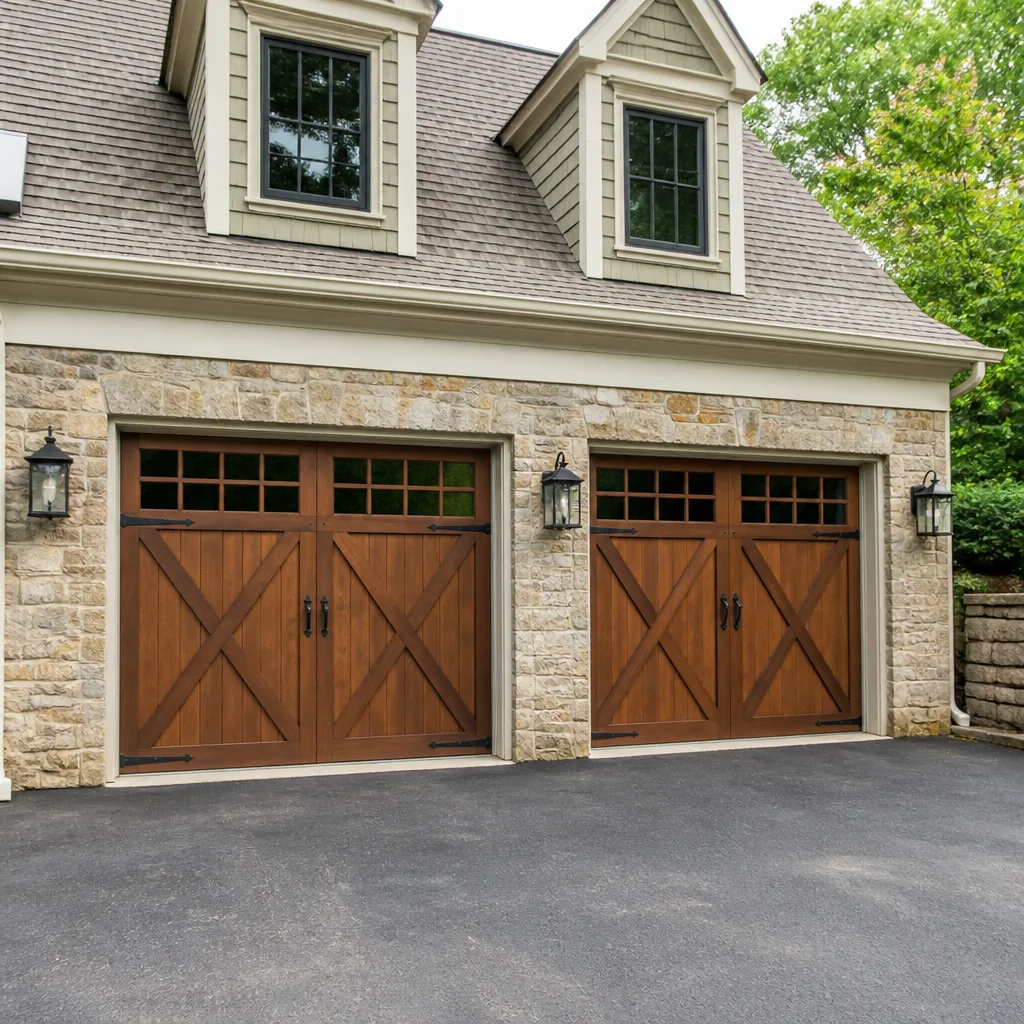 Carriage house
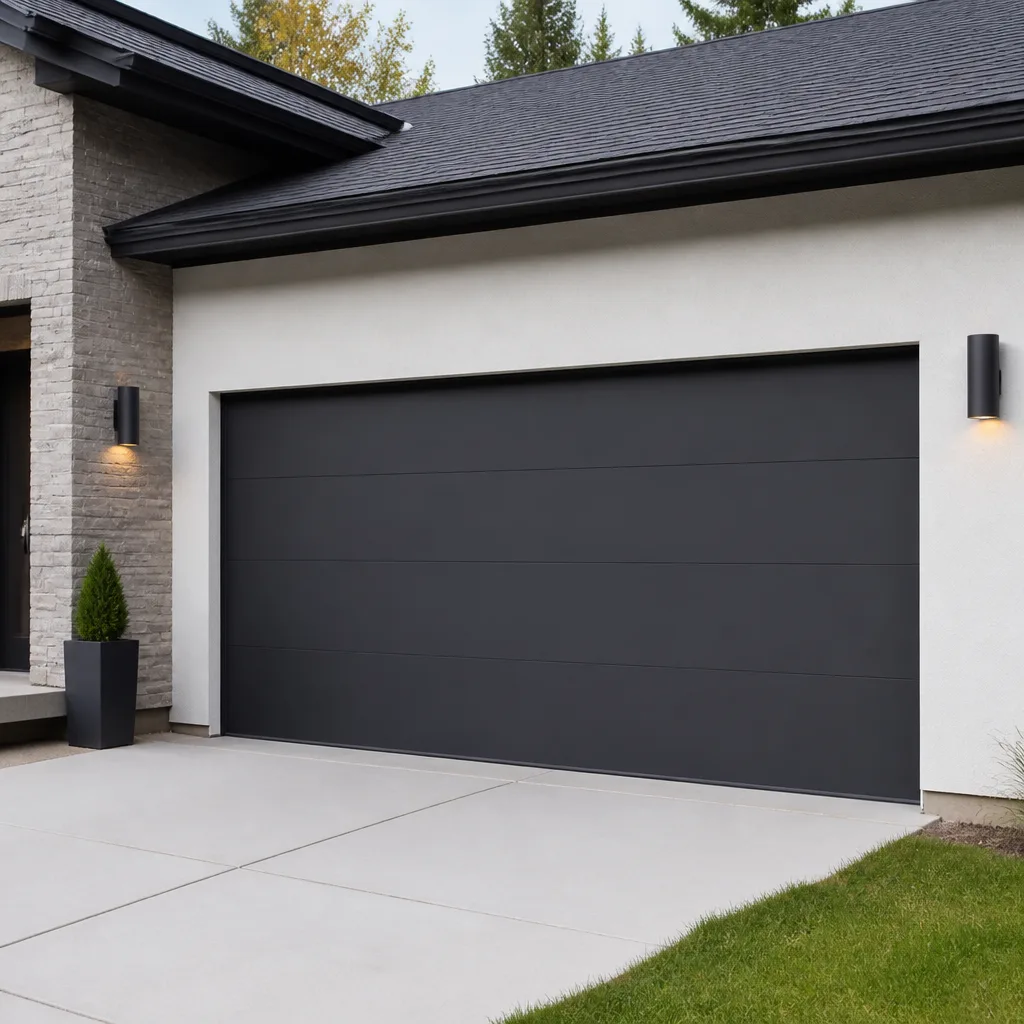 Modern flush
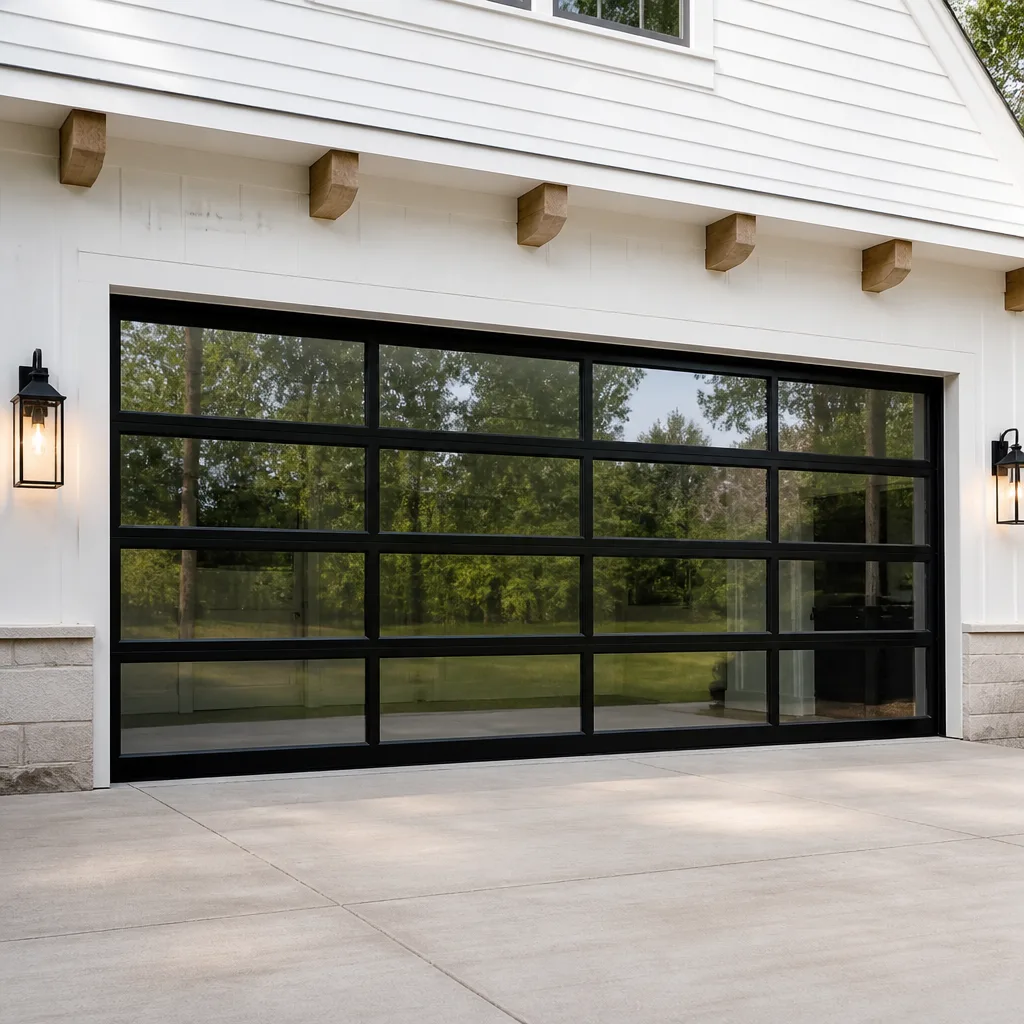 Full-view glass
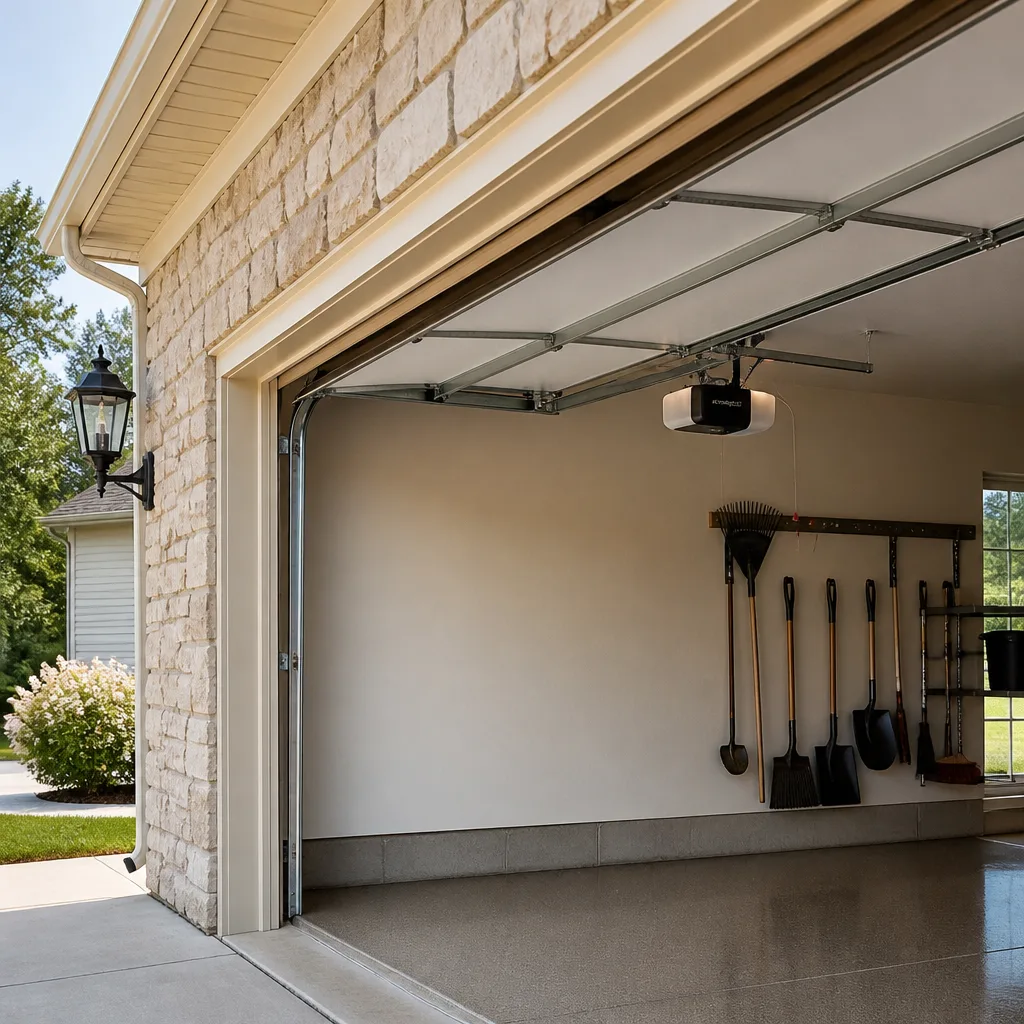 LiftMaster openers
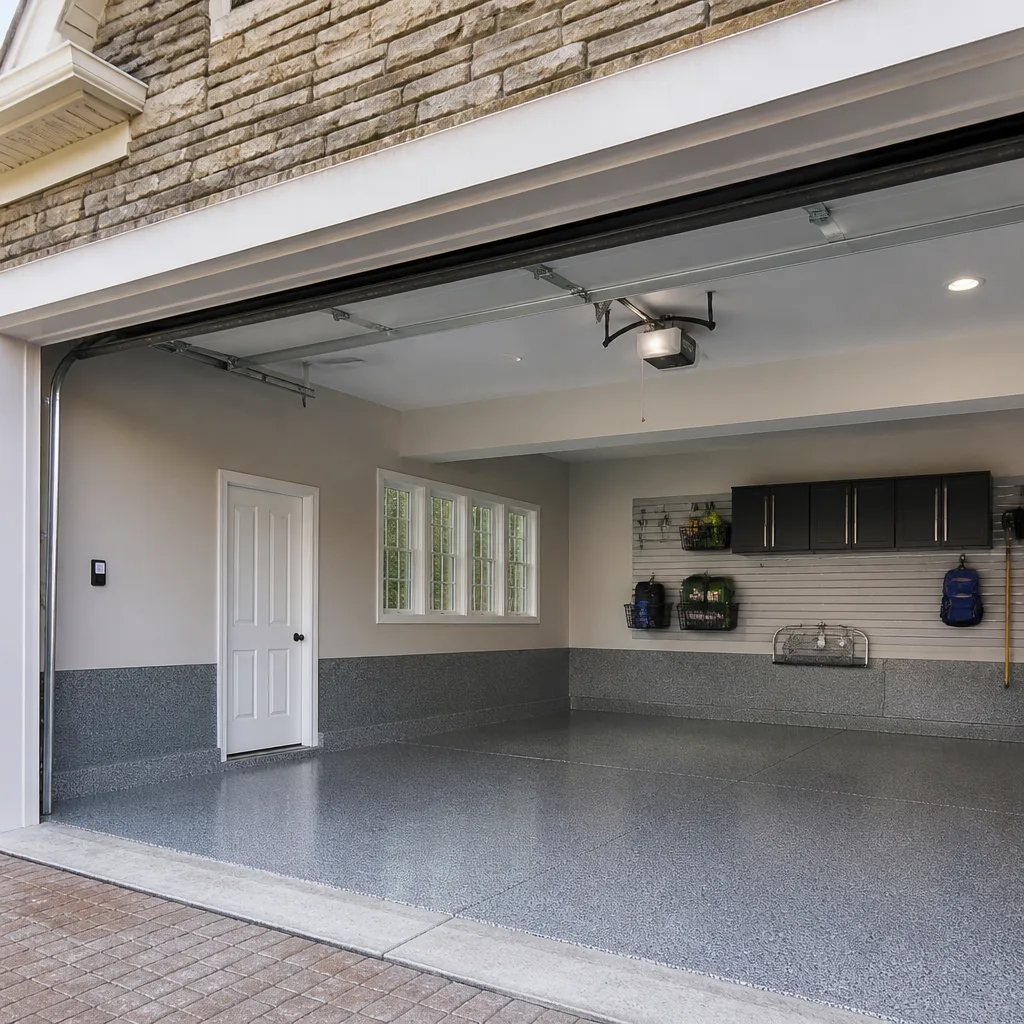 Chamberlain openers
Full 25-point door and opener safety check with every visit - springs, cables, rollers, tracks, and your LiftMaster or Chamberlain opener included
You get a price before we start. It does not change when the pro arrives.
Get your free estimateThe Complete Guide to Garage Doors in Memorial
Most garage door guides are written for Phoenix or Chicago. Memorial homeowners live in a different operating environment. For close to six months a year, the air sits around 90% humidity, and that moisture works its way into hinges, rollers, and every steel skin on the door. The clay soil under Memorial expands and contracts with that same moisture, and when it moves, the opening the door rides in can twist just enough to throw the tracks out of plumb. Add deed restrictions in the Villages that can reject a panel after it’s already installed, and the national advice stops being useful. This guide covers what Memorial actually demands from a garage door, from alignment and HOA rules to coatings that survive the Gulf Coast and what a door really costs over its life.
Quick Answer
A garage door in Memorial needs three things national guides skip: regular alignment checks because clay soil movement re-frames openings, hardware and coatings rated for sustained high humidity, and HOA approval of material, color, and window configuration before you order. Budget for the full ownership lifecycle, not just the purchase price, and match the door to the local wind requirements without over-building beyond what the code asks. A free written estimate is the only reliable way to price your specific opening and door.
Styles & brands we work with
- Raised-panel steel
- Carriage house
- Modern flush
- Full-view glass
- LiftMaster openers
- Chamberlain openers
Table of Contents
- How Memorial’s Clay Soil Affects Your Door Frame
- Humidity and Hardware: What Survives in Memorial
- HOA and Deed Restrictions in Memorial Villages
- The Full Ownership Lifecycle Cost
- Matching Door Specs to Memorial’s Wind Requirements
- Door Types Common in Memorial’s Housing Mix
- Openers: Mechanical vs. Smart-Connected Systems
- A Maintenance Schedule That Fits Memorial
How Memorial’s Clay Soil Affects Your Door Frame
Memorial sits on expansive clay that swells when it takes on water and shrinks as it dries. That movement is gradual, but it acts on the foundation and the framing around your garage opening, and a door that tracked perfectly two summers ago can start catching on one side without anything being wrong with the door itself. When the opening racks even a quarter inch out of square, the panels bind, the rollers wear unevenly, and the opener starts working harder than it was built to. Homeowners often blame the opener when the real problem is the frame.
This is why Memorial homes need alignment checks more often than homes in drier climates. In a place where the ground moves seasonally, checking squareness is routine upkeep, not a sign something failed. A technician measures the opening diagonally corner to corner, checks the tracks for plumb, and confirms the door travels evenly through its full range. If the tracks are out of line, adjusting them is usually straightforward. If the opening itself has shifted, that’s a conversation about what the door can tolerate before the frame needs attention.
In our experience, the tell is a door that closes fine on cool dry mornings and scrapes on humid afternoons. That pattern points to movement, not to a failing motor. Catching it early keeps a small track adjustment from turning into worn panels and a strained opener. Neighborhoods across Memorial, from the older streets near the Villages to the newer enclaves, all deal with the same clay, so an alignment check belongs on every homeowner’s annual list. It’s one of the least expensive things you can do and one of the most protective.
Humidity and Hardware: What Survives in Memorial
Sustained humidity is where cheap hardware gives itself away. The parts that fail first in Memorial are rarely the big ones. They’re the hinges, the rollers, the bottom brackets, and the fasteners, all of which sit in damp air for months and corrode from the inside out. A standard zinc-plated hinge can start to seize within about 18 months in this climate, while the same hinge in a dry market lasts years longer. When a roller seizes, it stops rolling and starts dragging, which wears the track and loads the opener.
What holds up better in Memorial:
- Stainless or heavy galvanized hinges and rollers resist the moisture that eats plated steel.
- Nylon rollers run quieter and don’t rust, though they wear faster under heavy use.
- Factory-applied finishes on steel doors outlast field-painted ones because the coating cures evenly and seals the edges.
- Powder-coated or anodized aluminum tracks handle damp air far better than bare steel.
Finish choice matters as much as metal. On a steel door, a baked-on factory finish with a proper primer layer is the best defense against the humidity, and it’s the reason we lean toward brands like Clopay and Amarr when a Memorial homeowner is choosing new. On wood doors, which some of the older homes still have, the story is different: the finish needs refreshing far more often here than a national guide would suggest, because moisture works at every joint and end grain. If a wood door in Memorial goes more than a couple of seasons without attention, the lower panels start to show it first, since that’s where water sits longest.
HOA and Deed Restrictions in Memorial Villages
In the Memorial Villages and the surrounding enclaves, deed restrictions can shape your door choice before you ever shop. Many associations require approval of material, color, and window configuration, and some have architectural review committees that look at the finished product as much as the paperwork. The single most expensive mistake we see is a homeowner ordering a door, having it installed, and then learning the panel style or the window layout doesn’t conform. Replacing a door twice because of an approval you didn’t get first is a cost no one plans for.
Before you buy, do these in order:
- Pull your association’s architectural guidelines and read the door section specifically. Look for language on material, panel profile, and glazing.
- Submit the product spec sheet and a rendering to the architectural review committee if your association requires it. Get the approval in writing.
- Confirm color against the guidelines, not just against your house. Associations sometimes approve a style but restrict the finish.
- Keep the approval and the door’s spec sheet together. If you sell, the next owner benefits from the paper trail.
Which details get restricted varies from one association to the next across Memorial. Some care about window configuration and nothing else. Others are strict about material and insist on a look that matches the street. We can’t tell you what your specific association allows, because that’s set by your deed restrictions, so the work of confirming falls to you before the order. What we can do is supply the manufacturer spec sheets and renderings the committee usually asks for, so the approval process moves without a back-and-forth that delays your install.
The Full Ownership Lifecycle Cost
The purchase price is the smallest part of what a garage door costs you over time. The number that matters is the lifecycle cost: purchase, plus installation, plus the parts that wear, plus the repairs humidity and soil movement will eventually trigger. A door that’s a little cheaper up front but uses hardware that corrodes in this climate can cost more across a decade than a better-specified door that needs less attention. Memorial’s mid-century homes and its newer construction tend to push this in different directions, so it helps to think in terms of the door you have.
Typical range in Memorial, by job type, set by written estimate:
- New door installation: quoted per door based on size, material, insulation, and window options. A basic steel door and an insulated carriage-style door are far apart, so the estimate is what sets the number.
- Spring replacement: one spring is a set range; a matched pair, which is usually replaced together, costs about twice that. We quote per spring, never one price for both.
- Opener repair or replacement: priced by the opener type, whether it’s a legacy unit or a smart-connected platform.
- Parts and hardware refresh: hinges, rollers, and cables replaced as a set, quoted per job.
On the older homes in Memorial, the lifecycle math often favors replacing tired hardware and keeping a solid door, because the door itself has decades left and only the moving parts have worn out. On newer construction, the door is usually fine and the opener or a seal is what needs attention. Either way, the price is quoted and agreed before any work starts, so the written estimate is the number you plan around. If you want to understand the repair side in detail, our guide to garage door repair walks through what each failure typically involves.
Matching Door Specs to Memorial’s Wind Requirements
Wind ratings are where Memorial homeowners either under-build or over-build, and both cost money. Local building requirements call for doors rated to handle the wind loads this area sees, and a door that isn’t rated for them can fail inspection or, worse, fail in a storm. But there’s a real tendency to over-engineer: buying the heaviest reinforced door available when a properly rated standard door would pass and perform fine. The goal is to meet the requirement with margin, not to buy protection you’ll never use.
How to get the spec right:
- Ask your city’s building department what wind rating your door needs to meet at your address. The requirement can vary, and the department is the source.
- Match the door’s rated wind pressure to that requirement, with a modest margin. Don’t go two steps above what’s asked.
- Confirm the reinforcement matches the rating. A rated door with the wrong struts or brackets doesn’t deliver the number on the label.
- Have the installation match the spec. A rated door installed to an unreinforced opening loses much of its rating.
Brands like Wayne Dalton build doors across a range of wind ratings, so the same style can often be specified to meet local requirements without jumping to a heavier, more expensive class. The installation matters as much as the door. A properly rated door on a correctly reinforced opening is the combination that passes inspection and holds up. When you’re ready to price a new door, our garage door installation service starts with a free measure and a written price, and we’ll flag the wind spec as part of the quote.
Door Types Common in Memorial’s Housing Mix
Memorial’s housing stock splits roughly into mid-century homes and newer construction, and each brings its own door type. The older homes often have single-car openings, sometimes with a wood door that’s been refinished more than once, and those doors carry character that’s hard to match with steel. The newer homes tend toward wider double doors in steel or aluminum, often with windows, and those are usually insulated for a garage that shares a wall with living space. Knowing which camp you’re in tells you what to prioritize.
Sectional steel doors dominate new construction in Memorial because they hold a factory finish well and tolerate humidity better than wood. Insulated sectional doors make sense when the garage sits under or beside conditioned space, which is common in the newer homes. Carriage-style doors show up where the architecture calls for it and the association allows it. Wood doors still exist on some of the older properties and reward a homeowner who keeps up with the finish. Each type has a different weak point in this climate: steel fights corrosion at the hardware, wood fights moisture at the joints, and aluminum needs its finish maintained to stay looking right.
When a door has aged past reliable repair, the decision is usually about matching the replacement to the house and the street rather than chasing the cheapest panel. Our team at Garage Door Repair Memorial works across the brands already on Memorial homes, so the recommendation starts from what you have, not from what we’d prefer to sell.
Openers: Mechanical vs. Smart-Connected Systems
Openers fail differently depending on their generation. The mechanical units on many older Memorial homes are simple and repairable: a gear, a capacitor, a logic board, or a safety sensor that’s drifted out of alignment. The smart-connected units on newer homes add Wi-Fi modules, app pairing, and battery backups, and their failures tend to be in the electronics or the connectivity rather than the motor. Treating both the same leads to replacing a perfectly good opener because a sensor was misaligned, or chasing a software issue on a unit that just needs a new gear.
We separate opener work as its own specialty for that reason. On a legacy unit, the diagnostic is usually mechanical, and a repair is often the right call. On a smart unit, we check the sensor alignment and the door’s balance first, because an opener that seems to have failed is often just straining against a door that’s out of balance. We work on LiftMaster, Chamberlain, Genie, and Craftsman openers, which covers most of what’s installed in Memorial, so the diagnosis fits the system you actually have. If your opener is the problem, our garage door opener repair page explains what we check and how the repair is priced. A smart opener that keeps losing its connection is usually a pairing or module issue, not a reason to replace the whole unit.
A Maintenance Schedule That Fits Memorial
A garage door in Memorial needs more frequent attention than the national checklists suggest, mostly because of the humidity and the soil movement. What works here is a simple schedule tied to the seasons. You don’t need to be handy to follow it, and most of it is looking and listening rather than adjusting anything yourself. The one thing to leave alone is the springs and cables, which are under extreme tension and are not a DIY repair.
A schedule that fits this climate:
- Every few months: listen for scraping or grinding and watch whether the door travels evenly. A door that hesitates on one side is telling you the tracks or the balance need a look.
- Before the humid season: have hinges, rollers, and cables checked for corrosion. Replacing a seized roller early is cheap; letting it wear the track is not.
- Once a year: get an alignment and balance check, given the clay movement. This is the single most valuable item on the list for Memorial homes.
- On a wood door: inspect the finish at the lower panels and end grain, and refresh before moisture gets in.
Anything involving the springs, the cables, or the brackets that hold them is a job for a trained technician. Springs store enormous energy, and a spring that lets go while someone is working on it can cause serious injury. If a spring breaks, don’t try to open the door by hand to inspect it; call and we’ll take it from there. Knowing when a repair is routine and when it’s urgent saves both money and risk.
Common Mistakes to Avoid
- Ordering a door before checking the deed restrictions. In the Memorial Villages, an unapproved panel or window layout can mean replacing a brand-new door. Get written approval first.
- Blaming the opener for a frame problem. When clay movement racks the opening, the door binds and the opener strains. Replacing the opener won’t fix a door that’s out of square.
- Buying the cheapest hardware for a humid climate. Standard plated hinges and rollers corrode fast in Memorial, and a seized roller damages the track it rides in. Spec hardware for the moisture.
- Over-building the wind rating. Meeting the local requirement with a modest margin is right; buying the heaviest reinforced door available is money spent on protection you don’t need.
- Letting a wood door’s finish go. In this humidity, a wood door that goes a couple of seasons without attention starts to fail at the lower panels and joints.
- Treating a smart opener like a mechanical one. A unit that keeps dropping its connection usually needs a module or pairing fix, not a new motor.
- Trying to inspect a broken spring yourself. Springs are under extreme tension. A broken spring is a call-a-professional situation, not a look-and-see.
See the difference
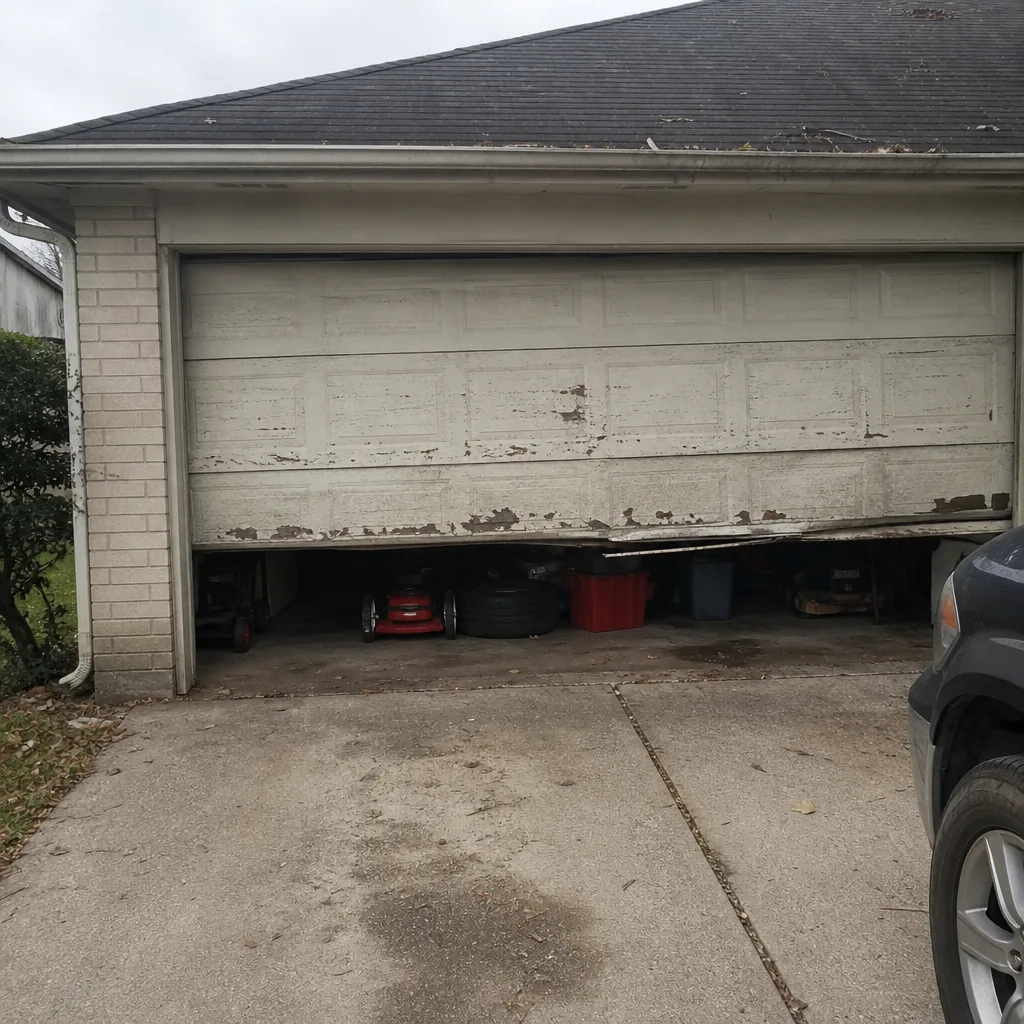 Before
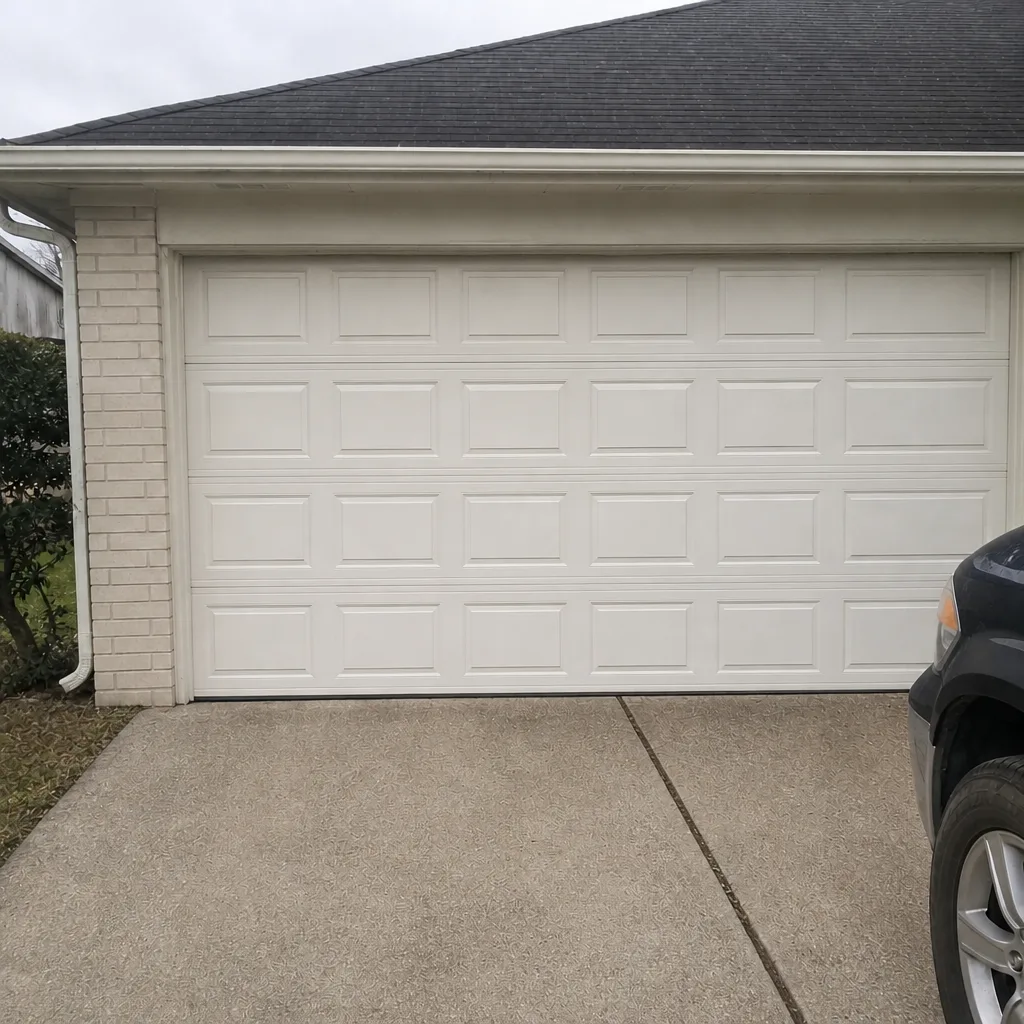 After
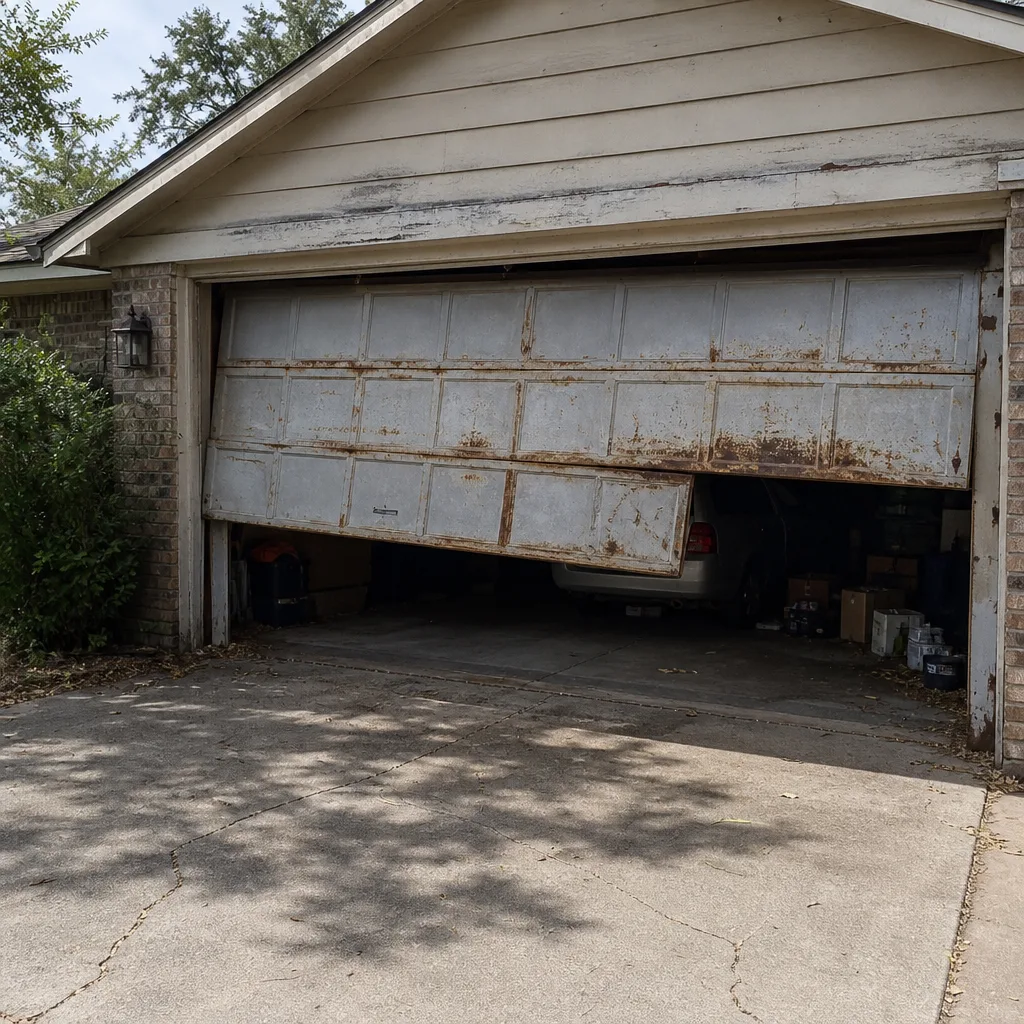 Before
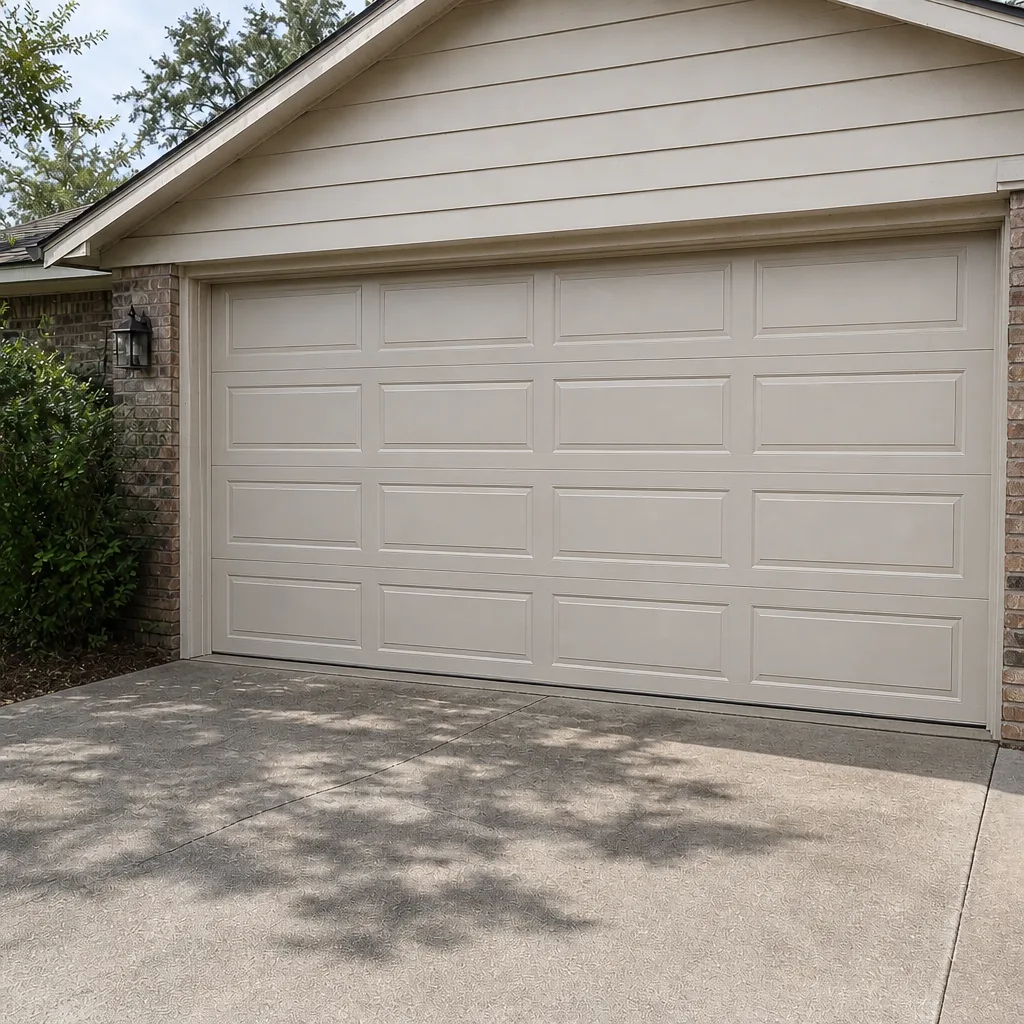 After
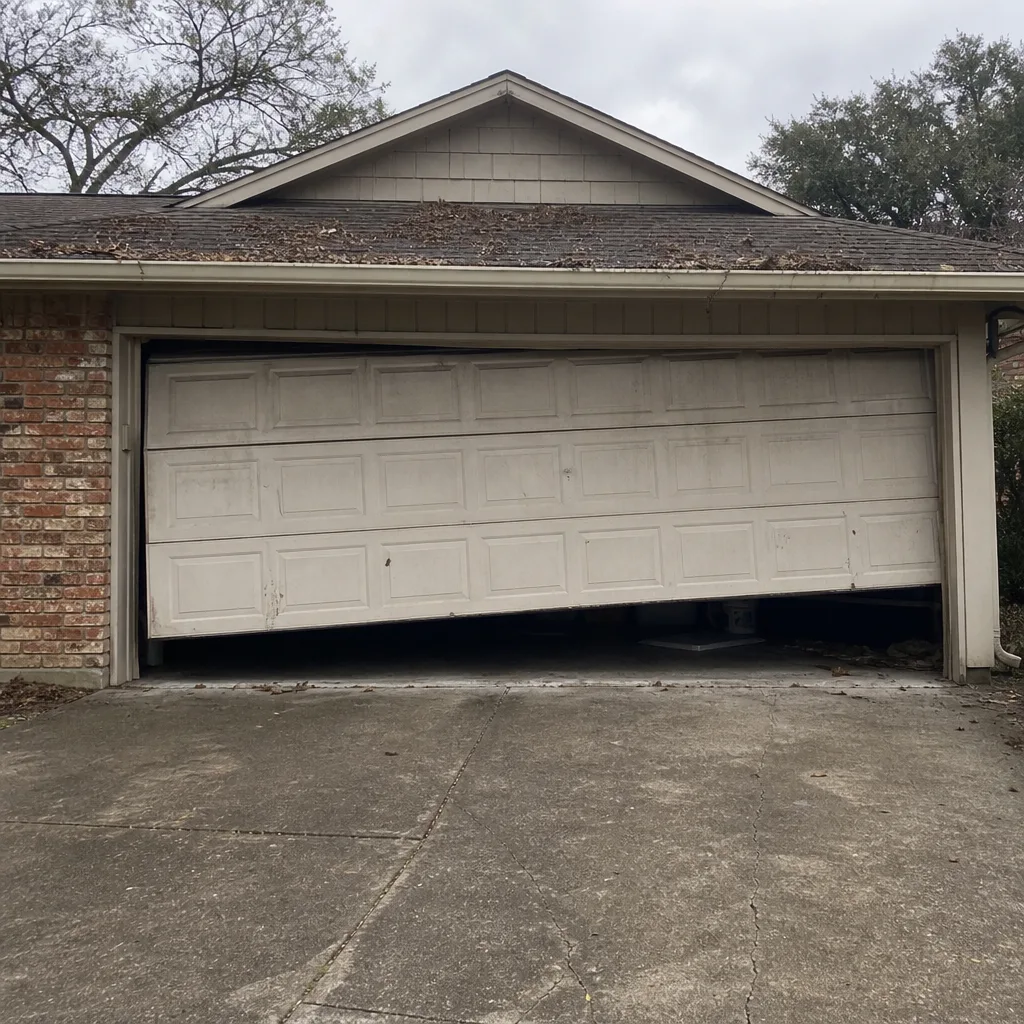 Before
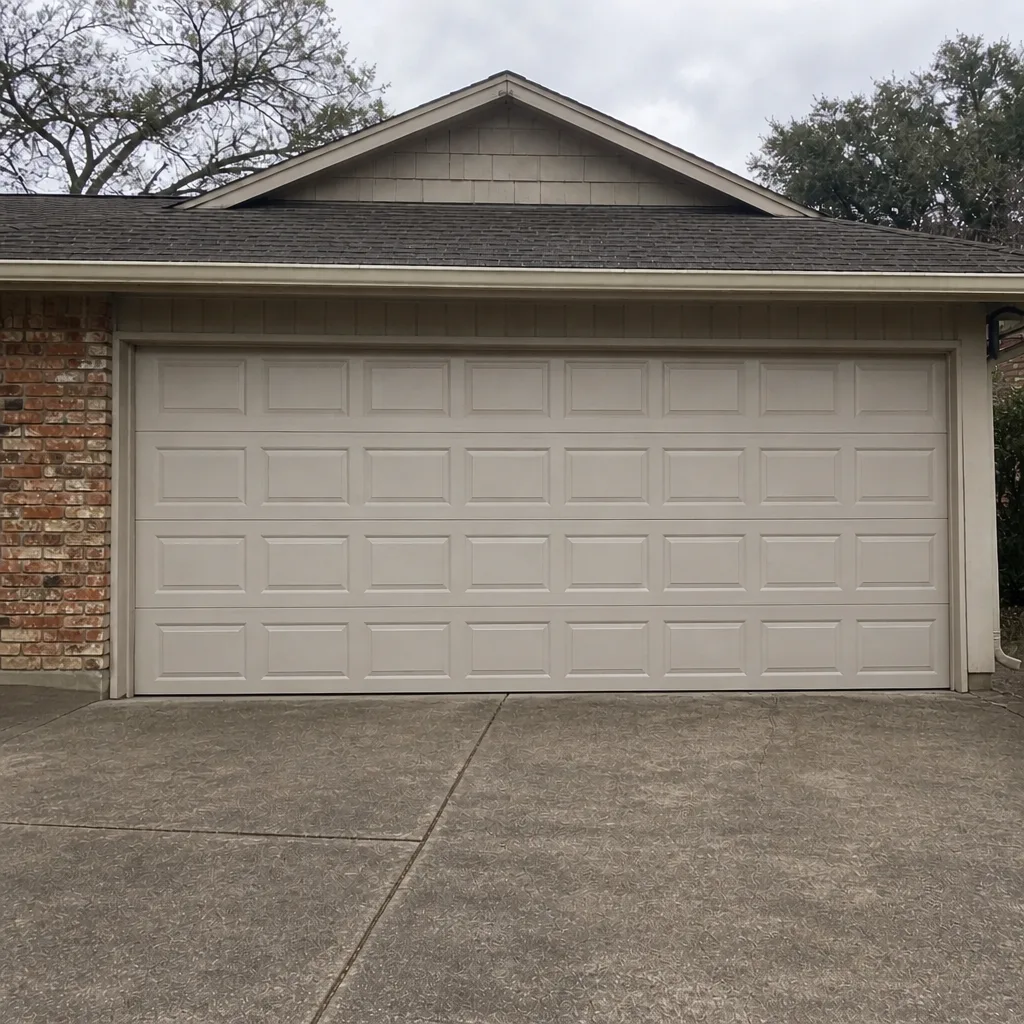 After
When to Call a Professional
Call a professional when a spring breaks, when the door comes off its tracks, when the opener runs but the door doesn’t move, or when a door that used to close smoothly starts catching on one side. Those are the situations where a wrong guess costs more than a service call, and where the springs and cables make DIY genuinely dangerous. Call us when you’re planning a new door too, so the measurement, the wind spec, and the HOA paperwork all line up before you order. Garage Door Repair Memorial offers free estimates in Memorial. Call (877) 492-2056. We answer 24/7. Fast dispatch from 7am to 7pm, Sunday through Friday. The price is quoted and agreed before any work starts, and our technicians have up to 11 years of experience.
Frequently Asked Questions
Once a year is a good baseline in Memorial, because the clay soil moves seasonally and can rack the opening over time. If you notice the door scraping on humid afternoons or hesitating on one side, check sooner. An alignment check is inexpensive and prevents worn panels and a strained opener.
Often yes, so confirm with your association before you order. Many Memorial Villages deed restrictions limit material, color, and window configuration, and some require architectural review. Get the approval in writing, and ask us for the manufacturer spec sheets and renderings the committee usually wants.
Brands with factory-applied finishes and good hardware options hold up best, which is why we work with Clopay, Amarr, Wayne Dalton, and others across the range of doors installed here. The finish and the hardware matter more than the name on the door. We’ll recommend based on your opening, your budget, and your association’s rules.
We quote per spring, not one price for both. Most doors use a matched pair that’s replaced together, so a pair costs about twice a single spring. The written estimate sets the final price, and it’s quoted and agreed before any work starts. Call (877) 492-2056 for an exact quote, estimates are free.
In many cases yes, since opener repair is a repair job and we offer same-day service. We diagnose the actual cause first, whether it’s a misaligned sensor, a worn gear, or a connectivity issue on a smart unit. Call (877) 492-2056. We answer 24/7. Fast dispatch from 7am to 7pm, Sunday through Friday.
No, the price is quoted and agreed before any work starts, and the written estimate is what you pay. If we find something unexpected, we discuss it with you before doing anything further. That’s why we measure and inspect before quoting rather than after.
The Bottom Line
Memorial asks more of a garage door than the national guides account for. Clay soil moves the openings, sustained humidity attacks the hardware, and deed restrictions shape what you can install before you shop. Get the alignment checked yearly, spec hardware for the moisture, secure HOA approval in writing before you order, and plan around lifecycle cost rather than purchase price. Match the wind rating to what your city’s building department requires without over-building. Do those things and a door here lasts and performs the way it should. When you’re ready for a free written estimate, call (877) 492-2056.
Written by the team at Garage Door Repair Memorial.